

 News
News  Coin Information
  About us
  Customer Service



FTX will begin its fifth round of creditor distributions on July 31, allocating roughly $900 million as the collapsed exchange continues to unwind one of crypto’s most consequential bankruptcies. The payout schedule lands as Washington debates a potential U.S. ‘strategic Bitcoin reserve’ and as major asset managers expand regulated crypto access through new ETF structures.
FTX to start $900 million distribution on July 31
FTX Recovery Trust and FTX said the next creditor distribution—its fifth—will commence on July 31. Eligible creditors are expected to receive funds within one to three business days via BitGo, Kraken, or Payoneer, according to the update.
Under the restructuring plan, so-called convenience class claims under $50,000 are slated to receive 120% recoveries, while other claims are expected to be paid at roughly 103% to 105% levels. FTX filed for bankruptcy in November 2022, and the Recovery Trust has distributed around $10 billion to date, the report said.
Sam Bankman-Fried, FTX’s former CEO, was sentenced in 2024 to 25 years in prison. A recent appeal challenging his conviction and sentence was denied, according to the same briefing.
Congress discusses ‘U.S. Reserve Modernization Act’ tied to Bitcoin holdings
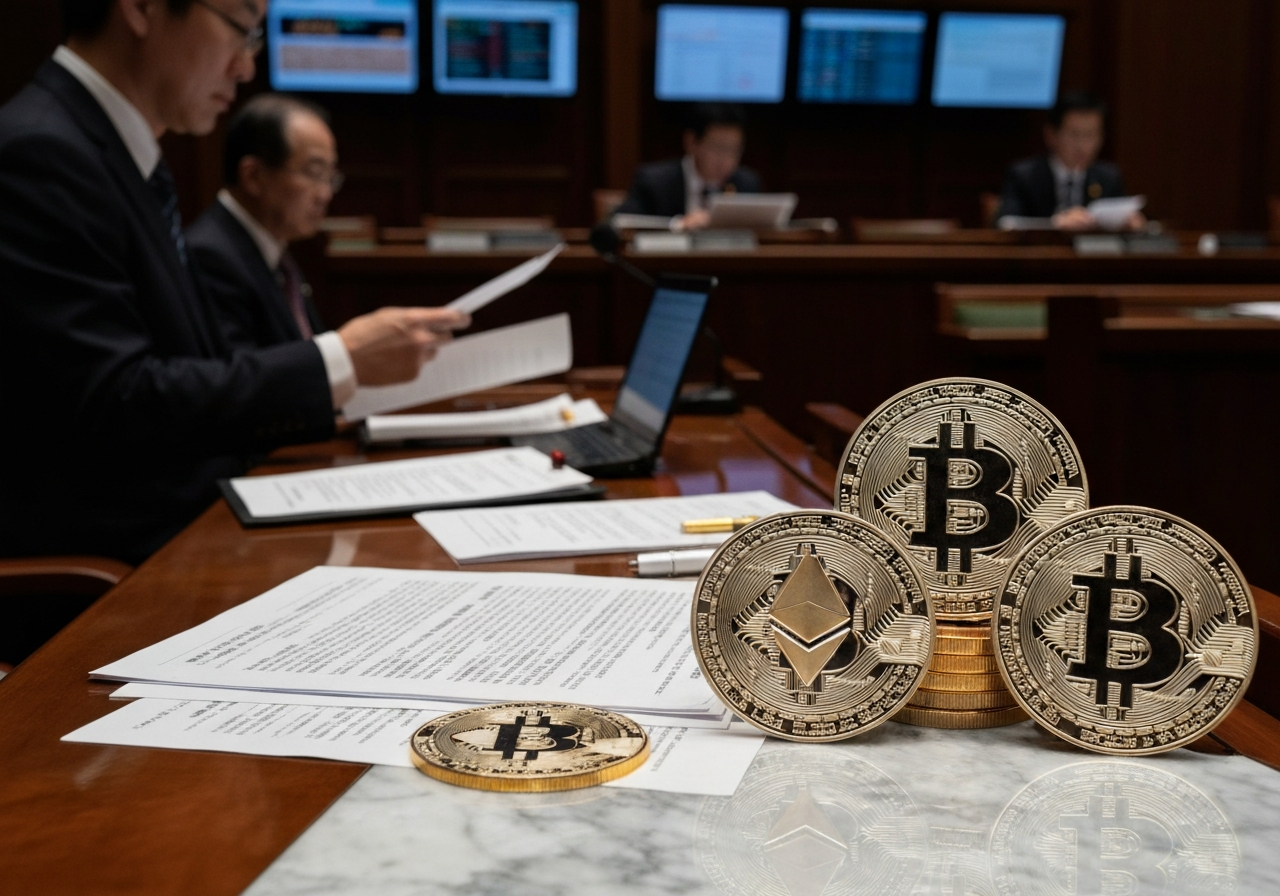
In Washington, lawmakers are set to discuss H.R. 8957—the ‘U.S. Reserve Modernization Act’—during a field hearing in New York connected to the broader ‘Clarity’ legislation focused on digital-asset policy.
The proposal would allow the U.S. Treasury to acquire Bitcoin (BTC) in a ‘budget-neutral’ manner without new taxpayer spending, while requiring regular audits, secure custody standards, and public disclosure of the government’s Bitcoin holdings. Supporters argue the framework could formalize BTC as a long-term strategic reserve asset alongside other sovereign holdings, keeping the idea in active circulation as crypto regulation advances through Congress.
T. Rowe Price launches active multi-token spot crypto ETF
Asset manager T. Rowe Price introduced an actively managed, multi-token spot crypto ETF, adding momentum to the institutionalization of digital assets through regulated wrappers. The fund, TKNZ, trades on NYSE Arca after the U.S. Securities and Exchange Commission approved its listing and trading on June 12, 2026, the report said.
TKNZ is managed by Blue Macellari, head of digital assets at T. Rowe Price, with a mandate that allows the portfolio manager to adjust allocations based on market trends, momentum shifts, and sector rotation—an approach that stands out in a market still dominated by passive single-asset spot ETFs.
As of July 17, the fund’s holdings were led by Bitcoin at 41.13% and Ethereum (ETH) at 18.31%, followed by BNB (BNB) at 11.12%, Solana (SOL) at 9.46%, XRP (XRP) at 9.42%, and Hyperliquid at 6.14%. Those six assets comprised more than 95% of the portfolio, underscoring how quickly large-cap tokens have become the core building blocks for institutional products.
Uniswap moves to route new protocol fees into UNI burn
Uniswap is pushing governance proposals that would direct new protocol fees into a full UNI burn, potentially strengthening the token’s ‘supply reduction’ narrative if volume remains elevated. Uniswap founder Hayden Adams said two governance proposals have been submitted for a final on-chain vote.
The proposals would activate v2 and v3 protocol fees on Robinhood Chain, and activate v4 protocol fees across Ethereum, Base, Arbitrum, Robinhood, BNB Chain, Polygon, and Optimism. Adams said all new fees would flow into the existing UNI burn mechanism, adding that current volumes—particularly activity tied to Robinhood—could make the impact meaningful.
Ethereum spot ETFs post $36.7 million net inflow Thursday ET
Ethereum spot ETFs recorded a net inflow of $36.73 million on Thursday ET, data cited in the report showed. BlackRock’s iShares Ethereum Trust ($ETHA) led with $31.68 million, while Fidelity’s Fidelity Ethereum Fund ($FETH) added $5.05 million.
$ETHA’s cumulative net inflows reached $11.31 billion and $FETH’s stood at $2.13 billion. Total net assets across U.S. Ethereum spot ETFs were reported at $9.97 billion—about 4.48% of Ethereum’s market capitalization—with cumulative net inflows of $11.08 billion.
Democrats seek major changes to ‘Clarity’ bill amid ethics debate
Democrats are pressing for substantial revisions to the crypto-focused ‘Clarity’ legislation, CNBC reported Thursday ET, according to a post by journalist Eleanor Terrett. The report said Democrats argued that elected officials should not profit from crypto, raising ethics concerns linked to President Trump’s crypto-related earnings.
The dispute highlights the political friction that can shape the final contours of U.S. digital-asset rules—especially where disclosures, conflicts-of-interest provisions, and oversight of public officials intersect with market structure regulation.
ECB accelerates digital euro work as stablecoins gain ground
The European Central Bank is intensifying work on a digital euro, warning that broad stablecoin adoption could erode commercial banks’ retail deposit base and alter competitive dynamics in the banking system. ECB Executive Board member Piero Cipollone said stablecoins, if adopted at scale, risk weakening bank deposits—still the backbone of lending and payment intermediation in much of Europe.
This week, the ECB selected 36 payment service providers—including banks, fintechs, and payments companies—to participate in a 12-month pilot program for digital euro functionality. The pilot is scheduled to begin in the second half of 2027 and is aimed at testing operational feasibility for a retail central bank digital currency (CBDC) across the eurozone. Cipollone said a digital euro could help preserve public money’s role in the payments landscape while keeping banks embedded in the evolving ecosystem.
Bank of America names new digital asset platform leadership
Bank of America ($BAC) has appointed Sonali Tyson as head of its global digital asset platform, according to the report. Tyson will oversee the design, development, scaling, and governance of the platform, with an emphasis on integrating it into existing financial infrastructure.
In parallel leadership moves, Adam Dixon was tasked with tokenized deposits and stablecoins, digital collateral transfers, and crypto trading settlement and custody, while Kevin Milsom was named platform AI transformation lead to drive AI adoption across business platforms and day-to-day operations.
Across these developments—FTX’s continued repayments, active policy debates on a potential ‘strategic Bitcoin reserve,’ and a new wave of institution-led product and infrastructure launches—the market is increasingly being shaped by regulated access and public-sector scrutiny, a combination likely to influence liquidity, transparency standards, and adoption pathways through the rest of 2026.
🔎 Market Interpretation
- FTX distributions are turning bankruptcy resolution into a liquidity event: A fifth payout round (~$900M) signals continued balance-sheet normalization after one of crypto’s largest failures, with potential short-term sell/buy pressure depending on creditor behavior and channel choice (BitGo/Kraken/Payoneer).
- Regulation is increasingly the market’s “macro” driver: U.S. debate over a budget-neutral Treasury Bitcoin acquisition framework and revisions to the ‘Clarity’ bill show policy risk remains two-sided—supportive market-structure clarity vs. stricter ethics/disclosure constraints.
- Institutional access keeps widening via regulated wrappers: T. Rowe Price’s actively managed multi-token spot crypto ETF (TKNZ) reflects a shift from single-asset passive products toward allocation-based, portfolio-style exposure favored by traditional allocators.
- Ethereum ETF inflows reinforce mainstream demand signals: Positive net flows (led by BlackRock and Fidelity) support the narrative that spot ETH exposure is becoming a strategic allocation, not just a trading vehicle.
- Token value-capture narratives are resurfacing: Uniswap’s proposal to route new protocol fees into UNI burn (if passed and sustained by volume) strengthens “cash-flow-to-scarcity” positioning, potentially impacting valuation frameworks used by investors.
- Europe’s CBDC push is a direct response to stablecoin adoption: The ECB frames stablecoins as a deposit-disintermediation risk, accelerating a digital euro pilot path—evidence that payments competition is now a policy priority.
- Large banks are preparing for tokenized finance rails: Bank of America’s leadership appointments indicate incumbents are investing in tokenized deposits, stablecoins, and settlement/custody—bridging crypto concepts into regulated banking infrastructure.
💡 Strategic Points
- Watch July 31 as a sentiment + flow catalyst: Creditor receipts arriving within 1–3 business days can create tactical volatility (profit-taking vs. reinvestment into BTC/ETH/large caps). Track exchange net deposits around the window.
- Policy optionality for Bitcoin is rising: Any credible path to audited, disclosed Treasury BTC holdings could become a multi-cycle narrative tailwind; however, the “budget-neutral” constraint and political friction may slow implementation.
- ETF product design is evolving beyond beta exposure: TKNZ’s active allocation/rotation approach may attract advisors seeking managed risk and diversification, but introduces manager risk and higher turnover dynamics compared with passive spot ETFs.
- Large-cap concentration remains the institution-friendly basket: TKNZ holdings show BTC/ETH plus select majors (BNB, SOL, XRP) dominating—signals which networks are most likely to benefit from further regulated product packaging.
- UNI burn impact depends on sustained real usage: Fee activation across multiple chains and Robinhood-linked volume is key; governance approval is necessary but not sufficient—monitor on-chain fee revenue, volume persistence, and implementation scope.
- ETH ETF flows are a checkpoint for broader risk appetite: Continued inflows can support ETH-relative strength and DeFi/L2 narratives; flow reversals may indicate macro risk-off or rotation back toward BTC-only exposure.
- EU payments strategy could reshape stablecoin growth: A digital euro pilot (targeting 2027) may create stricter competitive/operational requirements for stablecoins and payment providers operating in the eurozone.
- Bank infrastructure moves hint at next-wave adoption: Tokenized deposits and stablecoin settlement initiatives at major banks could accelerate enterprise use cases (collateral mobility, settlement compression), but timelines depend on regulatory permissioning.
📘 Glossary
- FTX Recovery Trust: The entity administering asset recovery and creditor repayments under the bankruptcy restructuring plan.
- Creditor distribution: Bankruptcy repayment event where eligible claimholders receive recovered funds according to a court-approved schedule.
- Convenience class claims: Smaller bankruptcy claims (here, under $50,000) often receiving simplified and sometimes enhanced treatment to speed resolution.
- Budget-neutral (policy): Designed to avoid new taxpayer spending—funding acquisitions via offsets, reallocation, or other non-additional budget mechanisms.
- Strategic reserve asset: An asset held by a sovereign for long-term financial/strategic purposes (traditionally gold/FX; proposal extends concept to Bitcoin).
- Spot crypto ETF: An exchange-traded fund that holds the underlying crypto assets directly (as opposed to futures-based exposure).
- Actively managed ETF: An ETF where a manager changes holdings/weights based on a strategy (momentum, rotation, valuation), not a fixed index.
- Protocol fees: Fees generated by a blockchain or decentralized application protocol, potentially used for treasury, incentives, or tokenholder-aligned mechanisms.
- Token burn: Permanent removal of tokens from circulation, typically by sending them to an irrecoverable address to reduce supply.
- Net inflow (ETF): New money entering a fund minus redemptions over a given period; often used as a proxy for demand.
- CBDC (Central Bank Digital Currency): A digital form of central bank money intended for retail and/or wholesale use.
- Tokenized deposits: Bank deposits represented on digital rails (often blockchain-based) to enable programmable settlement while remaining a bank liability.



















Comment 0