

 News
News  Coin Information
  About us
  Customer Service



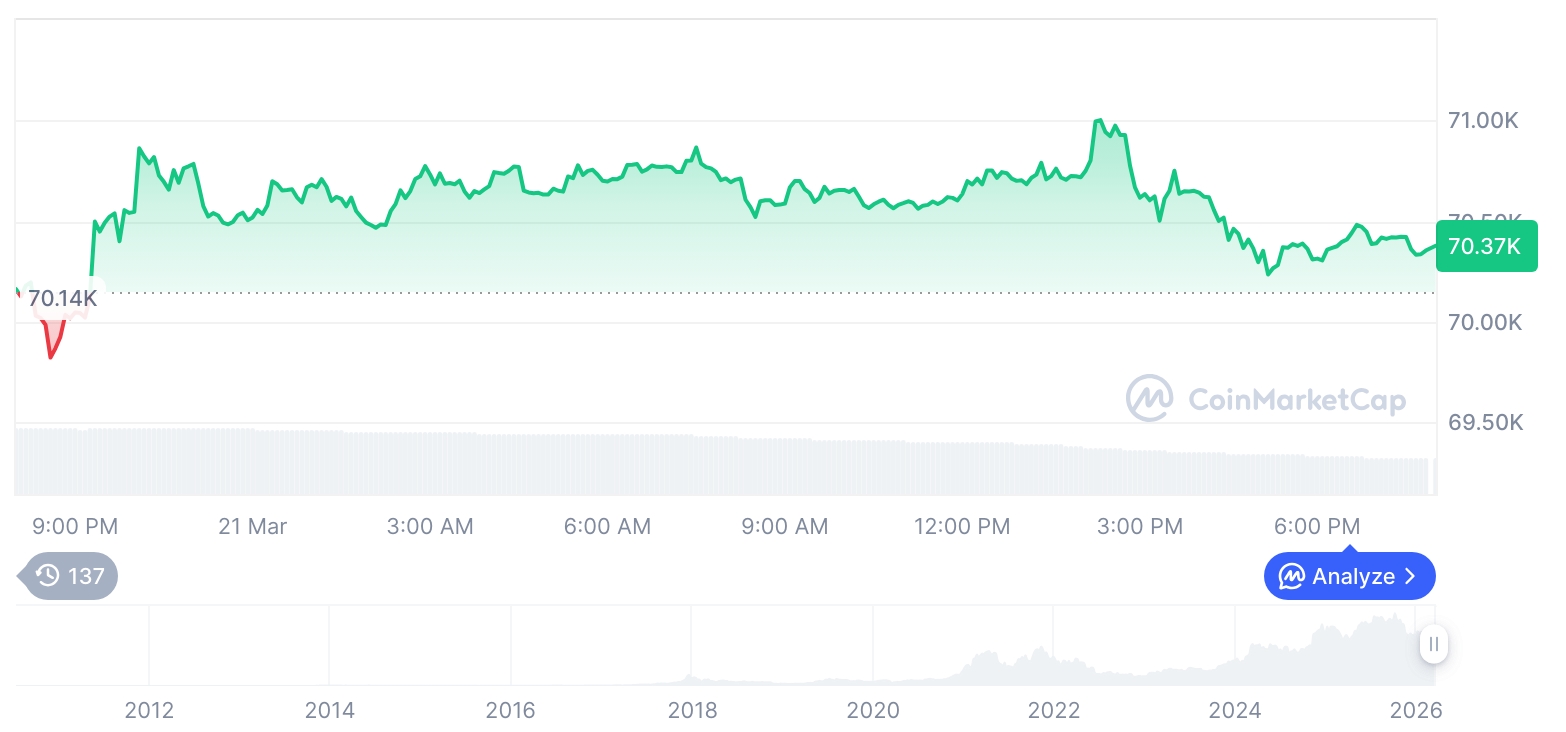
Bitcoin (BTC) markets turned risk-off as a surge in energy prices and escalating Middle East tensions raised fresh concerns about miner profitability, while U.S. regulators unveiled new guidance for crypto-related market activity. The combination of macro uncertainty, geopolitical headlines, and growing demand for downside protection in derivatives has added to short-term volatility across digital assets.
The immediate pressure point is mining. With power costs rising alongside energy benchmarks amid heightened regional instability, Bitcoin miners are facing a tighter margin environment. Analysts warn that if large operators are forced to sell treasury holdings to finance operations—particularly during periods of weaker fee revenue—BTC could face additional ‘sell-side pressure’ in spot markets. Miner-driven distribution has historically been a significant variable during stress periods, as operational expenditures are largely denominated in fiat, while revenues are primarily in BTC.
Geopolitics added another catalyst. BTC briefly fell after President Trump’s remarks tied to the Strait of Hormuz, where he warned of severe consequences if the passage was not reopened within 48 hours. The strait is a critical chokepoint for global oil shipments, and any perceived disruption risk can quickly ripple into energy prices, inflation expectations, and broader risk assets—crypto included.
Derivatives positioning suggests investors are increasingly focused on protection rather than upside exposure. VanEck said the Bitcoin options market is showing a distinctly defensive stance, with demand for downside hedges pushing put option premiums to record levels. Elevated put pricing typically reflects either rising fear of near-term drawdowns or institutional hedging activity, and it can coincide with higher implied volatility and more abrupt spot moves as dealers adjust hedges.
Beyond markets, U.S. regulators advanced the framework for crypto-linked financial activity. The U.S. Commodity Futures Trading Commission (CFTC) published detailed guidance for a pilot program allowing futures commission merchants (FCMs) to accept crypto as collateral. The guidelines outline capital requirements, compliance expectations, and reporting obligations—an incremental step that could expand the operational pathways for regulated intermediaries, while also raising the bar for risk controls.
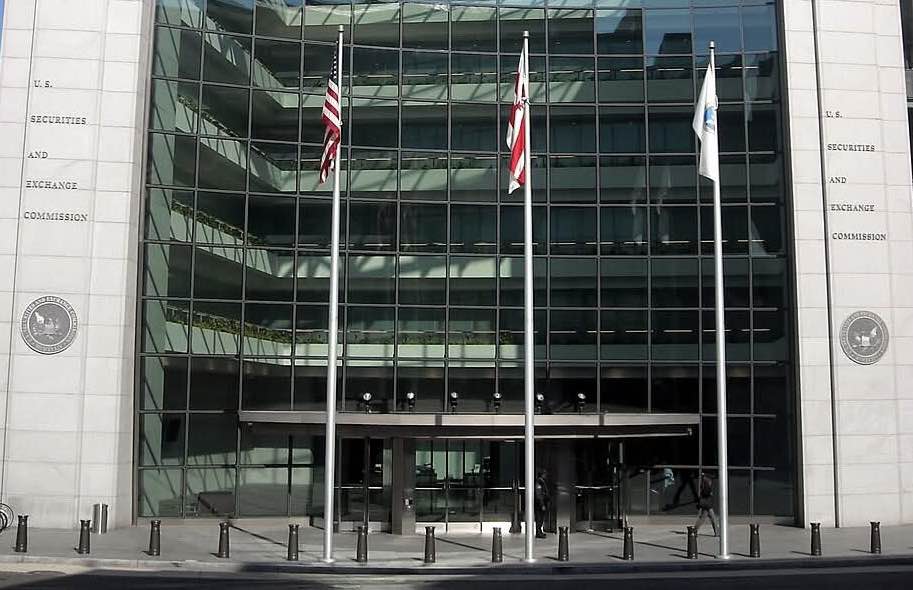
In parallel, Forbes reported that joint interpretive and regulatory guidance from the U.S. Securities and Exchange Commission (SEC) and the CFTC was submitted to the Federal Register, with publication scheduled for March 23, 2026 and set to take effect immediately upon release. Market participants will be watching closely for how the document delineates oversight boundaries and compliance expectations, particularly for platforms and products that sit at the intersection of securities and commodities regulation.
Internationally, Indian media reported that local police arrested CoinDCX co-founders Sumit Gupta and Neeraj Khandelwal in connection with an alleged fraud case involving a phishing website impersonating CoinDCX. The situation underscores persistent security and brand-spoofing risks facing exchanges and their users, and it may renew scrutiny around consumer protection and enforcement across major emerging markets.
On-chain monitoring also flagged suspicious flows. Analyst Eugene said the attacker behind the Venus Protocol exploit appears to have swapped stolen assets into Ethereum (ETH) and moved the funds, a pattern often associated with attempts to increase liquidity and obfuscate tracing. Such post-exploit movements can become near-term overhangs for affected tokens, depending on market depth and the attacker’s ability to exit positions.
Macro signals remain mixed. PANews cited Bank of America maintaining a medium-term view of a weaker U.S. dollar, noting that while the dollar strengthened against G10 currencies after the Iran conflict escalated, the move was not particularly large. For crypto markets, a softer dollar backdrop can be supportive over longer horizons, but near-term trading continues to be dominated by volatility shocks and geopolitical risk premiums.
Those risks intensified after Iran’s armed forces joint operations command reportedly warned that if its fuel and energy infrastructure is attacked, U.S. energy infrastructure could be designated as a target—raising the specter of broader disruptions to global energy markets. At the same time, Axios reported that the Trump administration has begun initial discussions around potential peace negotiations related to the war with Iran, suggesting diplomatic pathways are being explored even as tensions remain elevated.
For now, Bitcoin’s trajectory is being pulled by competing forces: rising operational stress for miners, defensive derivatives positioning, and a fast-moving geopolitical narrative that directly influences energy prices and system-wide risk appetite. The next phase may hinge on whether volatility cools through diplomacy—or intensifies through further escalation—while regulatory updates in Washington continue to reshape market structure in the background.
🔎 Market Interpretation
- Risk-off pivot: Bitcoin sentiment weakened as energy prices rose and Middle East tensions escalated, pushing investors toward capital preservation and short-dated hedges.
- Mining margin squeeze: Higher power costs compress miner profitability, increasing the probability of BTC treasury sales to cover fiat-denominated operating expenses—potentially adding spot sell pressure.
- Geopolitical-to-macro transmission: Strait of Hormuz headlines amplify oil disruption risk, which can feed inflation expectations and pressure risk assets (including crypto) through higher discount rates and volatility premiums.
- Options market turns defensive: Record-high put premiums signal strong demand for downside protection; this can raise implied volatility and contribute to sharper spot moves due to dealer hedging (gamma effects).
- Regulatory structure firms up: CFTC guidance on accepting crypto collateral via an FCM pilot program suggests incremental normalization for regulated intermediaries—paired with stronger capital, compliance, and reporting constraints.
- Security and exploit overhangs: India exchange-related arrests and alleged Venus exploit fund movements into ETH highlight persistent operational/security risks that can weigh on affected assets and sector narrative.
- Dollar backdrop vs. shock trading: Bank of America’s medium-term weaker-USD view could be constructive for crypto over time, but near-term price action is dominated by geopolitics-driven volatility spikes.
💡 Strategic Points
- Monitor miner stress indicators: Track hashprice, mining difficulty, energy benchmarks, and miner reserve/flow data; rising exchange inflows from miner-linked wallets can foreshadow spot pressure.
- Read options skew as sentiment: Elevated put premiums and skew imply market participants are paying up for crash protection—useful as a stress gauge even if spot remains range-bound.
- Expect volatility around oil/war headlines: Crypto may react as a high-beta risk asset when oil shocks lift inflation fears; position sizing and stop/hedge planning matter more than directional conviction.
- Hedging toolkit considerations: Protective puts, put spreads, or collars may be preferred when put IV is expensive; alternatively, reduce leverage and keep dry powder for dislocations.
- Regulatory change as a market-structure catalyst: The CFTC collateral pilot could expand institutional workflows, but stricter risk controls may concentrate activity among well-capitalized intermediaries.
- Compliance watch: Upcoming SEC/CFTC interpretive guidance (effective upon publication) may alter classification and oversight expectations for hybrid products—review exposure to venues and instruments at the securities/commodities boundary.
- Security risk management: Phishing/brand spoofing cases reinforce the need for verified domains, withdrawal allowlists, hardware keys, and cautious link hygiene—especially during high-volatility news cycles.
- Exploit-flow vigilance: Large swaps into ETH and subsequent transfers can signal laundering/exit attempts; affected tokens may face episodic sell pressure when liquidity windows open.
📘 Glossary
- Risk-off: A market regime where investors reduce exposure to volatile assets and prefer cash, government bonds, or defensive positioning.
- Miner profitability / margin: The spread between mining revenue (block subsidy + fees) and costs (primarily electricity, hardware, hosting).
- Sell-side pressure: Downward price force created when large holders (e.g., miners) sell assets into the market to raise cash.
- Options put premium: The price paid for a put option, which grants the right to sell an asset at a set price; rising premiums often reflect higher fear/volatility.
- Downside hedge: A strategy intended to limit losses if the underlying asset declines (e.g., buying puts, constructing put spreads).
- Implied volatility (IV): The market’s expectation of future price variability embedded in option prices.
- Dealer hedging / gamma effects: Market-makers adjusting spot exposure as price moves to stay hedged; can amplify intraday swings when options positioning is large.
- FCM (Futures Commission Merchant): A regulated intermediary that accepts orders and funds to trade futures/derivatives on behalf of clients.
- Collateral: Assets posted to secure obligations in trading (e.g., margin for derivatives positions).
- Federal Register: The U.S. government’s official journal for publishing agency rules and guidance.
- Phishing / brand spoofing: Fraud that impersonates a trusted entity to steal credentials or funds (often via lookalike websites).
- On-chain flows: Observable blockchain transactions used to infer wallet behavior, exchange inflows/outflows, and potential risk events.




















Comment 0