

 News
News  Coin Information
  About us
  Customer Service



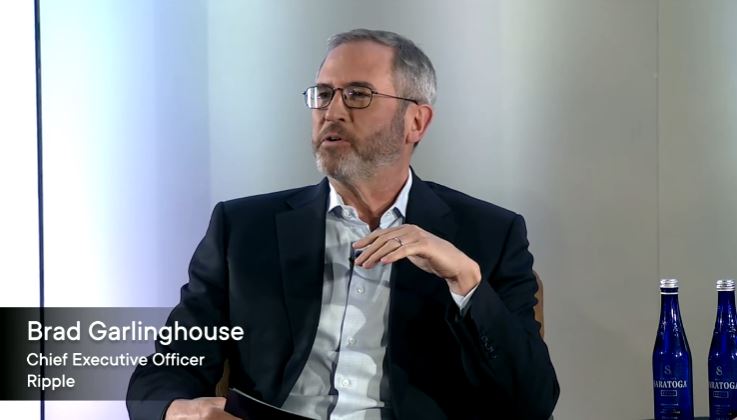
Standard Chartered has cut its near-term price outlook for Ripple (XRP), citing the token’s sharp downturn earlier this year, while simultaneously raising longer-dated targets that imply a far more ambitious trajectory if macro conditions improve and regulatory clarity arrives.
In a recent research note, the global investment bank lowered its 2026 target for XRP to $2.80 from $8.00—an approximate 65% reduction—after XRP slid to around $1.16 in February. XRP was changing hands near $1.33–$1.35 at the time of the report, with bearish sentiment lingering across the broader altcoin market.
Despite the downgrade to the 2026 view, Standard Chartered lifted its long-term expectations, projecting XRP could reach $12.60 by 2028 and reiterating a $28 target for 2030. If XRP were to trade at $28, the bank estimates its market capitalization would climb to roughly $1.71 trillion, a figure that would place it among the largest assets globally and would require a dramatic expansion in real-world usage and sustained liquidity inflows.
Market performance has remained soft in recent sessions. XRP was down roughly 1.6% over the prior 24 hours and more than 5% on the week, according to figures cited in the report, after failing to reclaim the $1.60 level—an area traders have treated as a key near-term resistance zone.
Standard Chartered outlined three potential catalysts it believes could reshape XRP’s path. The first is a broad macro rebound, with lower oil prices and clearer signals from the U.S. Federal Reserve toward rate cuts framed as supportive conditions for risk assets. Under that scenario, the bank argues the revised $2.80 target could be attainable even without major structural shifts in the ecosystem.
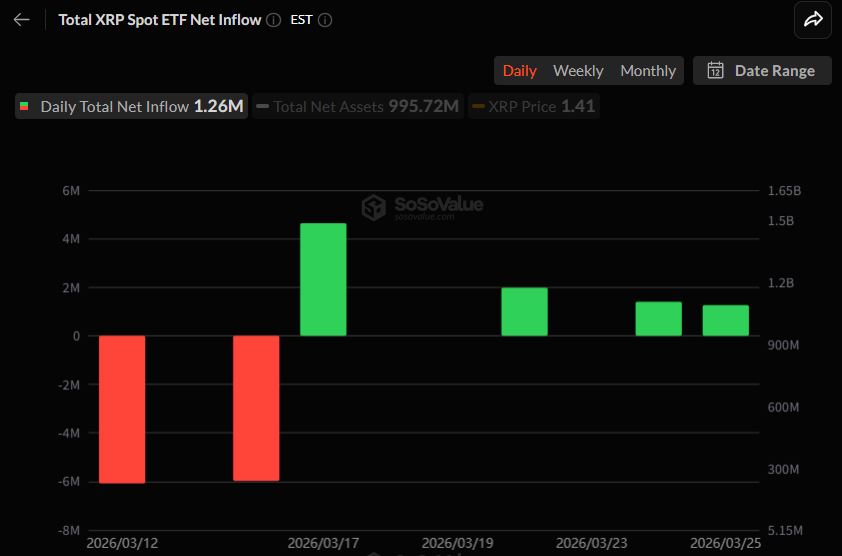
The second catalyst is U.S. regulation and institutional access. Standard Chartered pointed to the potential passage of the ‘CLARITY Act’ and the possibility of more than $4 billion in ETF inflows, a combination it says could push XRP into a higher valuation range—roughly $7 to $12.60—by improving market structure and expanding participation among professional investors.
The third, and most ambitious, driver is network-level adoption: improvements to the scalability and throughput of the XRP Ledger (XRPL). The bank’s long-term thesis rests on the idea that XRPL could capture a meaningful share of cross-border payments volume currently dominated by SWIFT, which the report cited as handling roughly $150 trillion in annual transaction value. In that framework, XRP’s $28 target becomes plausible only if XRPL’s footprint expands substantially within bank-to-bank settlement flows—an assumption that would require sustained integration, compliance-ready rails, and a compelling cost-and-speed advantage at scale.
Ripple has continued positioning XRP as a ‘bridge asset’ designed to facilitate cross-border settlement and improve payment liquidity, pursuing always-on, 24/7 transfers that contrast with the time constraints of traditional correspondent banking. The report also noted that greater emphasis on ‘regulation-compliant finance’ has been encouraging more institutions to explore crypto-enabled payment infrastructure, though the pace of real adoption remains uneven across jurisdictions.
Standard Chartered’s analysis also comes as the market digests developments tied to Ripple’s legal overhang in the U.S. With the company’s dispute with the U.S. Securities and Exchange Commission (SEC) described as resolved in the source material, the expectation is that reduced litigation uncertainty could help accelerate infrastructure initiatives and partnership execution—though regulatory clarity at the federal level remains a key variable for the entire sector.
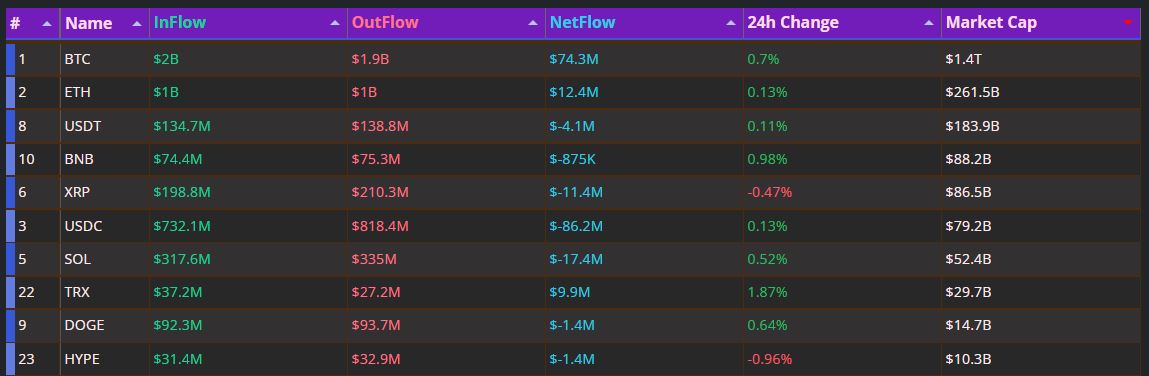
As of Saturday, March 28, 2026 ET (March 29 KST), XRP’s 24-hour trading volume was about $932.9 million, down nearly 39% from the previous day, indicating cooling activity amid the selloff. Centralized exchanges accounted for the vast majority of volume at roughly $932 million, while decentralized exchange volume was reported at approximately $0.87 million. XRP’s market capitalization stood near $81.34 billion, representing about 3.54% of the total crypto market and ranking fifth among digital assets.
Supply metrics highlighted in the report included an estimated circulating supply of about 61.34 billion XRP, with total supply near 99.99 billion and a maximum cap set at 100 billion—an architecture that limits inflation risk relative to uncapped networks. Fully diluted valuation was estimated at roughly $132.6 billion based on prevailing prices.
On a longer horizon, XRP’s price action remains under pressure, with the report citing declines of roughly 2.8% over 30 days, 30.9% over 60 days, and 28.8% over 90 days, underscoring the gap between short-term market structure and the bank’s long-term adoption thesis.
For now, Standard Chartered’s split view—lower conviction in the near-term path but higher long-range expectations—captures the broader debate around XRP: whether it can translate payment-network ambitions and improved regulatory conditions into sustained, measurable demand. The next major inflection points are likely to hinge not only on macro conditions and policy outcomes, but also on whether Ripple and the XRPL ecosystem can demonstrate scalable throughput and institutional-grade integrations that move beyond narratives into durable transaction volume.
🔎 Market Interpretation
- Near-term reset, long-term optionality: Standard Chartered cut its 2026 XRP target to $2.80 (from $8.00) after a sharp early-year downturn, but raised longer-dated expectations to $12.60 (2028) and reiterated $28 (2030), reflecting a “weak now / strong later” framework tied to catalysts rather than current price structure.
- Price/flow tone remains risk-off: XRP struggled below $1.60 resistance, with weekly declines and a notable ~39% drop in 24h volume to ~$932.9M, signaling cooling participation during the selloff.
- Valuation gap highlights execution risk: The bank estimates $28 XRP would imply roughly $1.71T market cap—a scale that would likely require sustained real-world payment usage, deep liquidity, and broad institutional access rather than sentiment-driven rallies.
- Macro + policy as primary swing factors: The report frames XRP as particularly sensitive to a risk-asset rebound (Fed rate-cut signaling, lower oil) and to U.S. regulatory clarity, both of which could re-rate altcoins broadly.
💡 Strategic Points
- Catalyst ladder (base → bull):
- Macro rebound scenario: If risk conditions improve, the bank suggests $2.80 by 2026 could be achievable without major ecosystem changes.
- Regulation + access scenario: Potential passage of the CLARITY Act plus hypothesized $4B+ ETF inflows could justify a higher range of roughly $7 to $12.60 (by 2028) via improved market structure and institutional participation.
- Adoption-led scenario (most demanding): The $28 (2030) thesis hinges on XRPL scalability/throughput improvements and meaningful penetration into cross-border settlement flows (competing with legacy rails like SWIFT).
- Key technical/market levels to watch: The repeated failure to reclaim $1.60 is treated as a near-term resistance signal; reclaiming it would be an early indicator of risk appetite returning.
- Institutional adoption prerequisites: For bank-to-bank settlement, requirements implied by the report include compliance-ready rails, proven integration pathways, and durable cost/speed advantages at scale—otherwise the long-dated targets remain “narrative-heavy.”
- Supply and valuation framing: XRP’s 100B max supply cap limits inflation risk versus uncapped networks; however, the report’s long-term price targets would still require a substantial demand shock (usage + liquidity + access) to absorb supply at higher valuations.
- Legal-overhang sensitivity: With the Ripple-SEC dispute described as resolved in the source material, the market focus shifts from litigation uncertainty to federal-level regulatory clarity and measurable network utilization.
📘 Glossary
- XRP: The native token associated with Ripple’s payments ecosystem, often positioned as a bridge asset for transferring value across currencies and networks.
- XRPL (XRP Ledger): The blockchain/network infrastructure that processes XRP transactions; throughput and scalability upgrades are cited as critical to long-term adoption.
- Bridge asset: An intermediary asset used to facilitate exchange/settlement between two other assets or currencies, aiming to reduce friction and improve liquidity.
- SWIFT: A dominant global financial messaging network for cross-border payments; the report cites it as handling roughly $150T in annual transaction value.
- Resistance (technical analysis): A price zone where selling pressure tends to emerge; the article highlights $1.60 as a key near-term resistance for XRP.
- ETF inflows: Net new capital entering exchange-traded funds; the report references a potential $4B+ as a valuation catalyst via broader investor access.
- CLARITY Act: A proposed U.S. regulatory initiative mentioned as a potential source of clearer crypto market rules and improved institutional participation.
- Market capitalization: Token price multiplied by circulating supply; used to compare asset scale (e.g., the report’s ~$1.71T estimate at $28 XRP).
- Fully Diluted Valuation (FDV): Valuation assuming total supply is in circulation; cited to contextualize upside/downside versus circulating market cap.










Comment 0