

 News
News  Coin Information
  About us
  Customer Service


 Add as a preferred source on Google

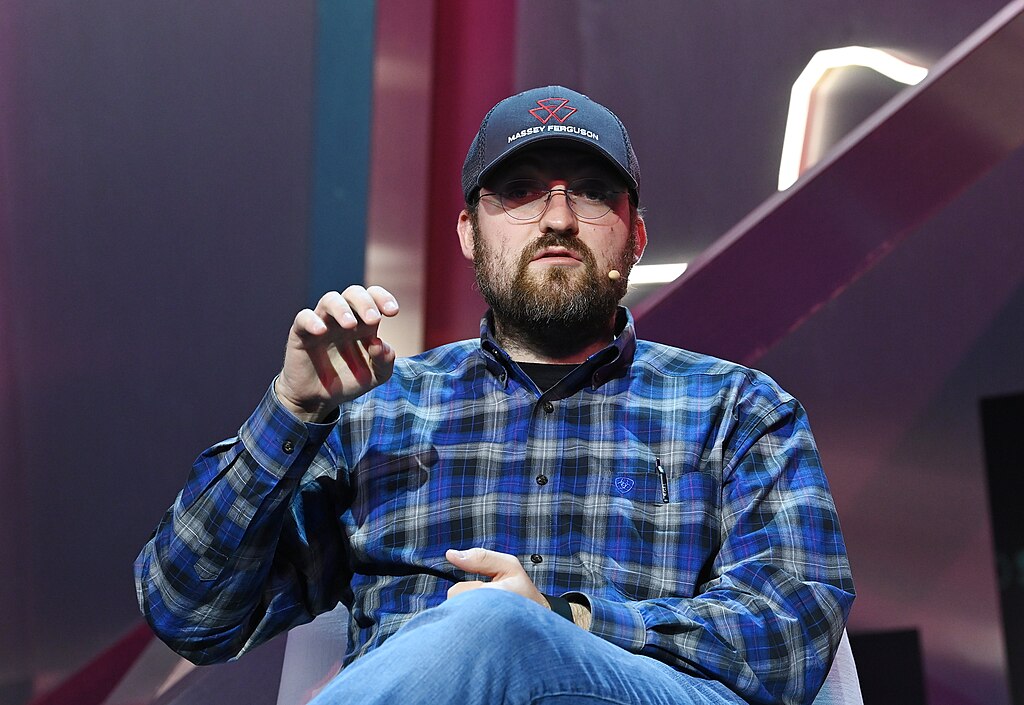
At Consensus in Hong Kong, Cardano founder Charles Hoskinson defended blockchain's growing reliance on hyperscalers like Google Cloud and Microsoft Azure, arguing that advanced cryptography, multi-party computation, and confidential computing eliminate centralization risks. While these technologies are genuinely powerful, the argument deserves closer scrutiny.
Multi-party computation distributes cryptographic key material across multiple nodes, reducing single-point failure risks. However, this shifts the security burden onto coordination layers, communication channels, and node governance — effectively replacing one concentrated risk with a distributed trust surface. Similarly, confidential computing through trusted execution environments encrypts data during processing, but these systems still depend on hardware assumptions, firmware integrity, and microarchitectural isolation. Researchers have consistently uncovered vulnerabilities across enclave technologies, meaning the security boundary remains real, even if narrower.
Crucially, both technologies typically operate on top of hyperscaler infrastructure. Cloud providers still control physical hardware, virtualization layers, bandwidth, and geographic access. Cryptography can prevent data inspection, but it cannot stop throughput restrictions, policy interventions, or regional shutdowns.
Hoskinson's claim that no Layer 1 network can handle global compute demands is accurate but somewhat beside the point. Modern blockchain infrastructure increasingly moves heavy computation off-chain, relying on zero-knowledge proofs and verifiable compute networks to confirm results on-chain. The real question is who controls the off-chain execution environment, not whether Layer 1 can scale infinitely.
A cryptographically neutral protocol running on concentrated infrastructure remains neutral in theory but constrained in practice. True resilience requires infrastructure diversity alongside cryptographic fairness.
The most sustainable approach treats hyperscalers as optional accelerators rather than foundational infrastructure. Cloud providers can deliver burst capacity and geographic reach, but core verification, settlement, and proof storage should live on decentralized, protocol-aligned infrastructure that no single vendor can restrict or remove.
Dependence is the vulnerability. Decentralization must extend beyond the protocol layer to the physical infrastructure beneath it.


















Comment 0