

 News
News  Coin Information
  About us
  Customer Service


 Add as a preferred source on Google

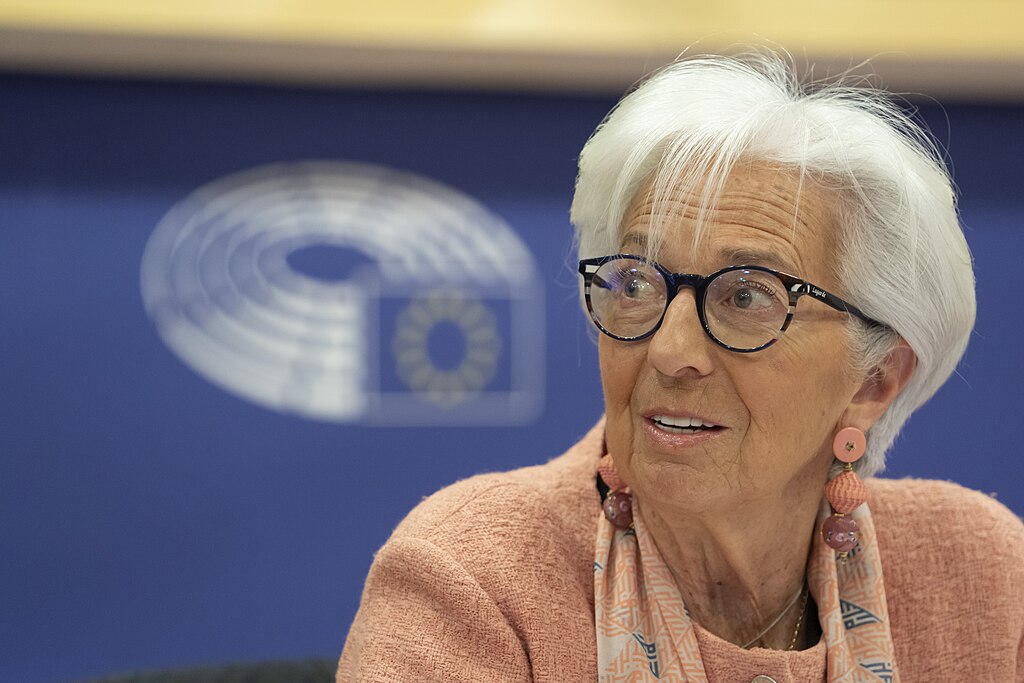
European Central Bank President Christine Lagarde said Thursday that the ECB has completed all technical and preparatory work required for the digital euro, placing responsibility squarely on European political institutions to move the project forward. Speaking at the ECB’s final press conference of the year, Lagarde emphasized that the proposed digital euro is now under review by the European Council and the European Parliament, which must decide on the regulatory framework needed for its launch.
The digital euro project aims to introduce a public, central bank–issued digital currency that would serve as a secure and widely accepted means of payment across the eurozone. Lagarde described the initiative as a strategic priority designed to ensure that Europe maintains monetary sovereignty and financial stability in an increasingly digital economy. She urged EU lawmakers to act swiftly, noting that delays could weaken Europe’s position as digital payments continue to expand globally.
Alongside updates on the digital euro, the ECB announced it would leave key eurozone interest rates unchanged. Lagarde reiterated that the central bank remains firmly committed to a data-dependent, meeting-by-meeting approach to monetary policy. Future rate decisions, she said, will be guided by incoming economic and financial data, the inflation outlook, and an assessment of how effectively current policy measures are working.
Lagarde stressed that the ECB is not pre-committing to any specific interest rate path. According to revised ECB projections, headline inflation is expected to average 2.1% in 2025, fall below the 2% target in 2026 and 2027, and return to target by 2028, reinforcing confidence that price stability remains achievable.
While monetary policy remains steady, ECB officials continue to highlight the broader importance of the digital euro. Lagarde said the goal is to ensure that, in the digital age, Europe has a currency that acts as a reliable anchor for the financial system. ECB board member Piero Cipollone has also argued that a digital euro could strengthen payment resilience, ensuring continuity during cyberattacks, technical failures, or power outages that disrupt traditional banking infrastructure.
The digital euro is currently expected to launch in the second half of 2026, aligning with Europe’s broader crypto and payments framework under the Markets in Crypto-Assets (MiCA) regulation, which also governs euro-backed stablecoins.



















Comment 0