

 News
News  Coin Information
  About us
  Customer Service


 Add as a preferred source on Google

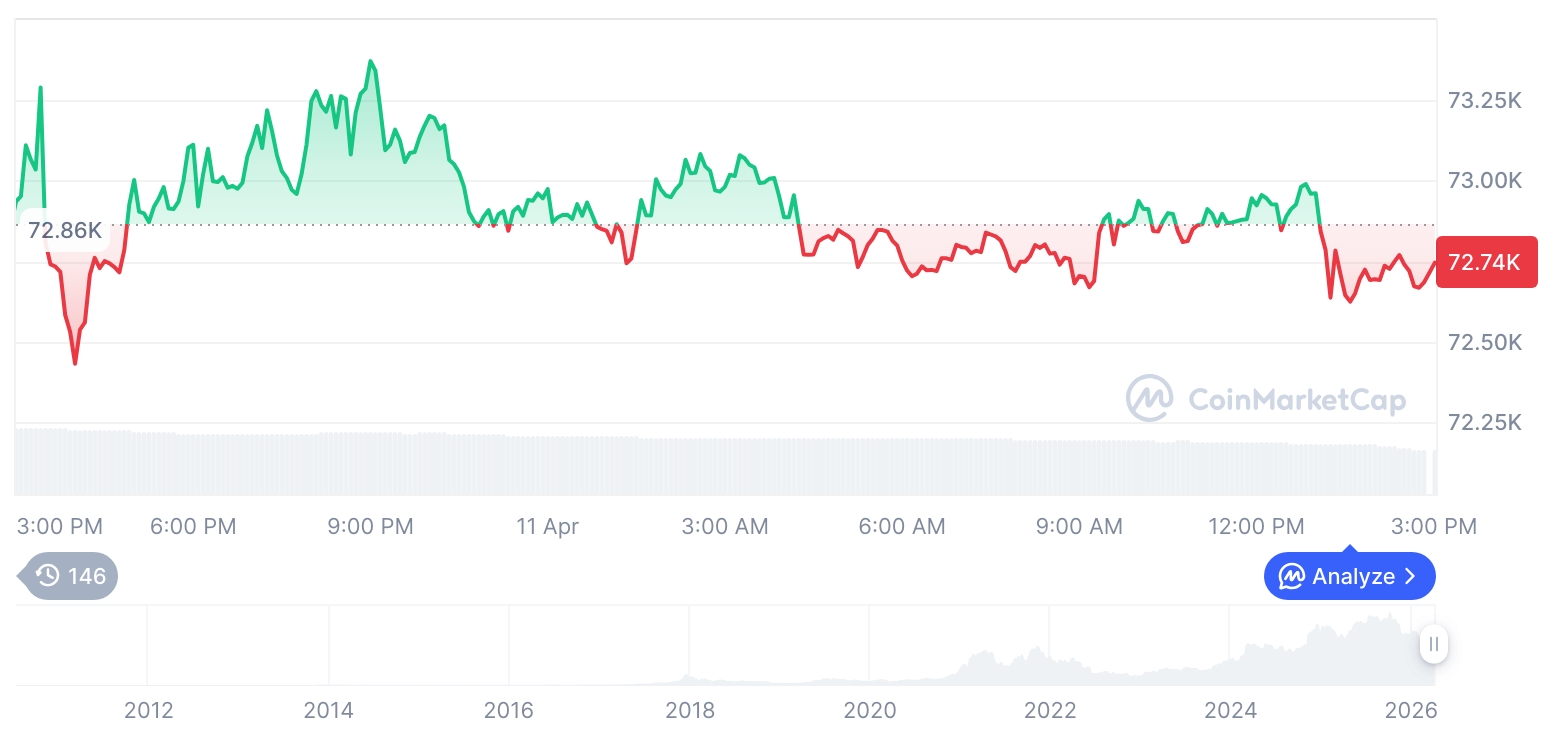
Crypto markets saw a sharp burst of risk-off positioning on Saturday U.S. Eastern Time, with roughly $115 million in leveraged positions liquidated in the past hour—an abrupt clearing event that often amplifies near-term volatility in major assets such as Bitcoin (BTC) and Ethereum (ETH).
Watcher.Guru reported the liquidations as traders were whipsawed by fast price moves across large-cap tokens. While liquidation totals of this size are not unusual during macro-driven sessions, they typically signal crowded leverage and thinning order books, conditions that can accelerate both rallies and pullbacks over short time windows.
In Europe, the European Central Bank (ECB) backed a plan to centralize key supervisory powers as the European Union (EU) pushes for deeper capital markets integration. According to PANews, the proposal would shift oversight of major exchanges and crypto-asset service providers from national regulators to the European Securities and Markets Authority (ESMA). The move would mark another step toward more uniform enforcement across the bloc—an issue market participants have long flagged as a friction point for cross-border liquidity and compliance under the EU’s evolving digital-asset rule set.
On-chain data also highlighted notable whale activity in Ethereum (ETH). Odaily reported that the address nemorino.eth (0x8Ae...0E0D) sold 2,950 ETH, realizing an estimated profit of about $267,000. Large spot sales do not necessarily imply a broader trend, but such transactions are closely watched as potential signals of portfolio rebalancing during volatile periods.
Elsewhere, PANews cited on-chain analyst Eugene as saying a whale or institutional holder controlling 59% of NOM’s circulating supply transferred the last remaining 278 million NOM to Binance. Concentrated token ownership and large exchange inflows are commonly interpreted as a potential precursor to liquidity events—either distribution or positioning for market-making—though intent cannot be confirmed from on-chain flows alone.
Traditional finance interest in digital assets remained in focus after PANews reported that Morgan Stanley ($MS) is weighing ways to expand its cryptocurrency business. In an interview referenced by PANews, Amy Oldenburg, the bank’s head of digital asset strategy, discussed the firm’s crypto roadmap, including tokenized money market funds and Bitcoin-linked financial services—areas where major banks have been exploring product-market fit amid institutional demand for 'tokenization' and regulated crypto exposure.
Corporate Bitcoin holdings also drew attention after PANews, citing CoinDesk, reported that SpaceX holds 8,285 BTC in custody with Coinbase Prime. The report added that SpaceX expects revenue growth but does not plan to sell its Bitcoin, underscoring a broader trend of select corporates treating BTC as a long-duration treasury asset rather than a trading position.
In decentralized finance, Whale Alert flagged a transfer of 128,866,857 USDC to Aave (AAVE), a move widely interpreted as 'stablecoin liquidity inflow' into DeFi lending markets. Large stablecoin deposits can reflect demand for yield, leverage, or liquidity provisioning, depending on how funds are deployed after arrival.
Public commentary around crypto’s role as a hedge against traditional finance also resurfaced. Robert Kiyosaki reiterated that his support for cryptocurrencies stems from distrust in legacy financial systems, adding that profits made without understanding how money works ultimately come down to luck.
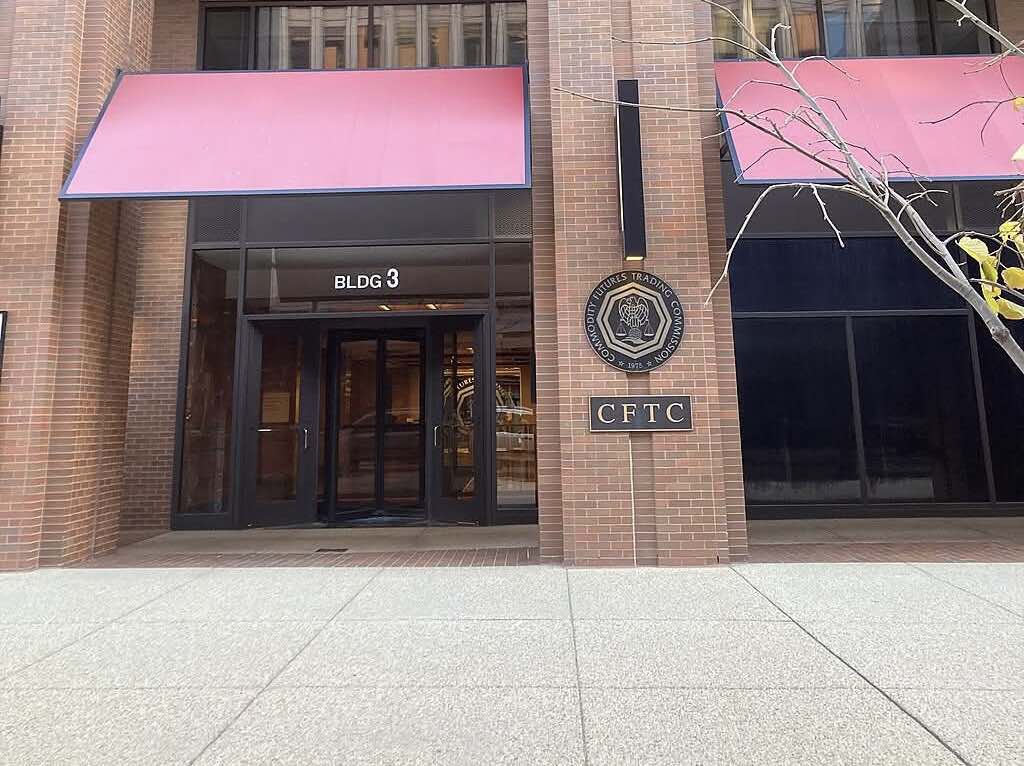
On the policy front in Washington, President Trump’s White House said it is confident a Bitcoin market-structure bill will be addressed this month, a development traders are tracking for potential implications around exchange oversight, custody standards, and market integrity rules. Separately, U.S. Commodity Futures Trading Commission (CFTC) Commissioner Michael Selig voiced support for prediction markets and called for clearer regulatory guidelines, arguing—per Wu Blockchain—that such markets can serve as a tool to counter misinformation.
Taken together, the day’s liquidation spike, whale movements, and stablecoin flows point to an environment where 'liquidity' and leverage remain central drivers of short-term price action, while regulatory and institutional signals continue to shape longer-term positioning across the crypto ecosystem.




















Comment 0