

 News
News  Coin Information
  About us
  Customer Service


 Add as a preferred source on Google
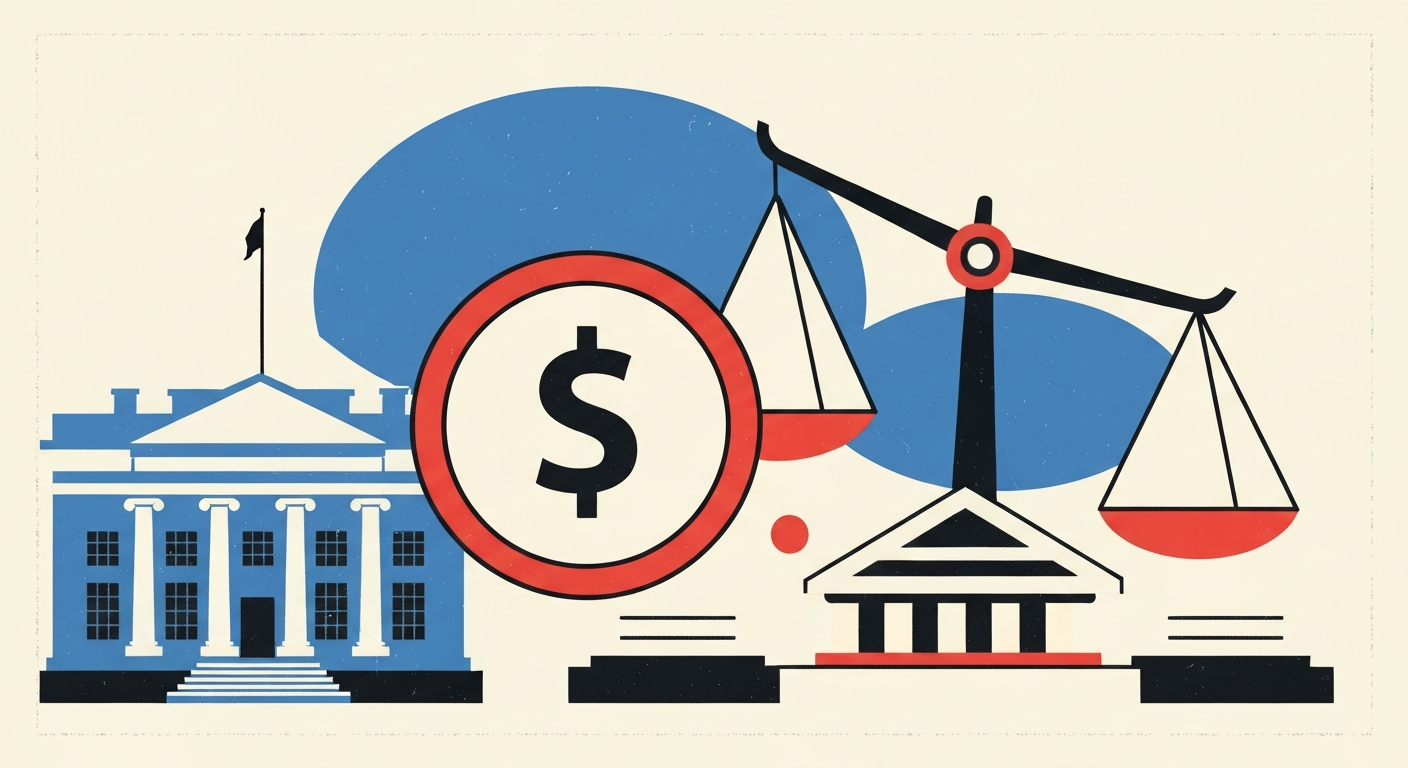
America’s banking lobby is pushing back hard against a White House analysis on ‘yield’ in stablecoins, arguing the administration is asking the wrong question—one that downplays the potential for deposit flight from community banks and reshapes the direction of U.S. stablecoin law.
The dispute escalated after the White House Council of Economic Advisers (CEA) published a 21-page report on April 8, 2026, assessing whether banning yield-like returns on stablecoins would materially expand bank lending. The CEA concluded the impact would be marginal: a yield ban would increase bank lending by roughly $2.1 billion, or about 0.02% of the approximately $12 trillion in total bank loans. It estimated community banks—generally defined as institutions with under $10 billion in assets—would capture only about $500 million of that increase.
At the same time, the CEA argued the consumer cost of restricting yield would be meaningful, estimating foregone returns of roughly $800 million. In its framing, that creates a cost-benefit ratio of about 6.6, meaning the costs to consumers would outweigh the lending-related benefits by a wide margin.
Central to the CEA’s logic is ‘reshuffling’: even if consumers move funds from bank deposits into stablecoins, stablecoin issuers typically invest reserves in U.S. Treasuries, repos, and money market funds—channels that keep the funds circulating within the broader dollar financial system. With U.S. banks holding more than $1.1 trillion in excess liquidity, the CEA argued that, at the system level, stablecoin growth should not meaningfully constrain credit creation.
The American Bankers Association (ABA) quickly challenged that conclusion. In a rebuttal led by ABA chief economist Sayee Srinivasan and deputy head of bank and economic research Ikai Wang, the group said the report delivers “a precise answer to an incorrect question.” In the ABA’s view, the policy issue is not whether a yield ban mechanically boosts lending, but whether allowing yield accelerates ‘deposit outflows’—especially from smaller banks that rely more heavily on stable, low-cost local deposits to fund lending.
The banking lobby argues that the “money comes back” claim misses where it comes back to. Even if stablecoin reserves are invested in safe assets that connect to the banking system, the ABA says the offsetting inflows may concentrate in the largest institutions or in money market products, not in the community banks losing deposits. That matters because a community bank facing deposit leakage may need to replace funding with more expensive wholesale sources, lifting funding costs and pressuring local credit conditions for small businesses, farms, and households.
To illustrate the distributional risk, the ABA cited state-level analysis suggesting that if the stablecoin market expands from roughly $300 billion today to $1–$2 trillion, Iowa alone could see lending decline by an estimated $4.4 billion to $8.7 billion. The numbers are designed to reframe the debate from national aggregates to local financial plumbing—where the same system-wide liquidity can still yield very uneven outcomes.
The dispute is also entangled with the legal architecture now governing stablecoins. The GENIUS Act, which took effect in July 2025, bans payment stablecoin issuers from paying interest directly. However, critics argue it left a meaningful opening: it does not explicitly prohibit third-party arrangements that pass through reserve-generated returns to end users. Rewards programs tied to USD Coin (USDC), including those offered via crypto platforms, have become a recurring example in Washington’s debate over what constitutes de facto yield.
The ABA is urging lawmakers to close that channel in any update to the CLARITY Act, contending that allowing third-party yield distribution undermines the purpose of the GENIUS framework and amplifies deposit competition pressures on smaller banks. Regulators are also moving on adjacent questions. The Federal Deposit Insurance Corporation (FDIC) has proposed implementation rules for GENIUS that would reinforce that payment stablecoins are not covered by deposit insurance, including potential revisions to deposit insurance regulations aimed at preventing consumer confusion over insurance status.
Beyond statutory loopholes, the argument is increasingly about the kind of banking system the U.S. wants. Bankers warn that yield-bearing stablecoins could evolve into a quasi ‘narrow bank’ model—one that holds only ultra-safe liquid assets but siphons funding from traditional credit intermediation. The CEA’s view is more tolerant: if reserves remain in Treasuries and similar instruments, a narrow-bank-like structure may improve payments safety and reduce certain risks. The ABA counters that Congress has historically been reluctant to endorse similar logic in the context of a central bank digital currency (CBDC), and that accepting a private-sector equivalent without protecting community banking functions creates a policy inconsistency.
Adding another layer, policymakers and industry participants increasingly note that more than 80% of stablecoin transaction activity already occurs offshore, while some issuers’ Treasury holdings rival those of sovereigns. That makes the yield question about more than consumer returns and local credit—it also intersects with U.S. Treasury demand and the broader geopolitical footprint of dollar-denominated crypto rails.
While the clash is a domestic U.S. policy fight, it is being watched closely abroad as jurisdictions consider their own frameworks for fiat-backed stablecoins and tokenized finance. The debate highlights a pivotal choice: whether stablecoins should stay narrowly scoped as a payments instrument or be permitted to evolve into yield-linked financial products—and how that choice could reshape banking competition and credit availability.


















Comment 0