

 News
News  Coin Information
  About us
  Customer Service



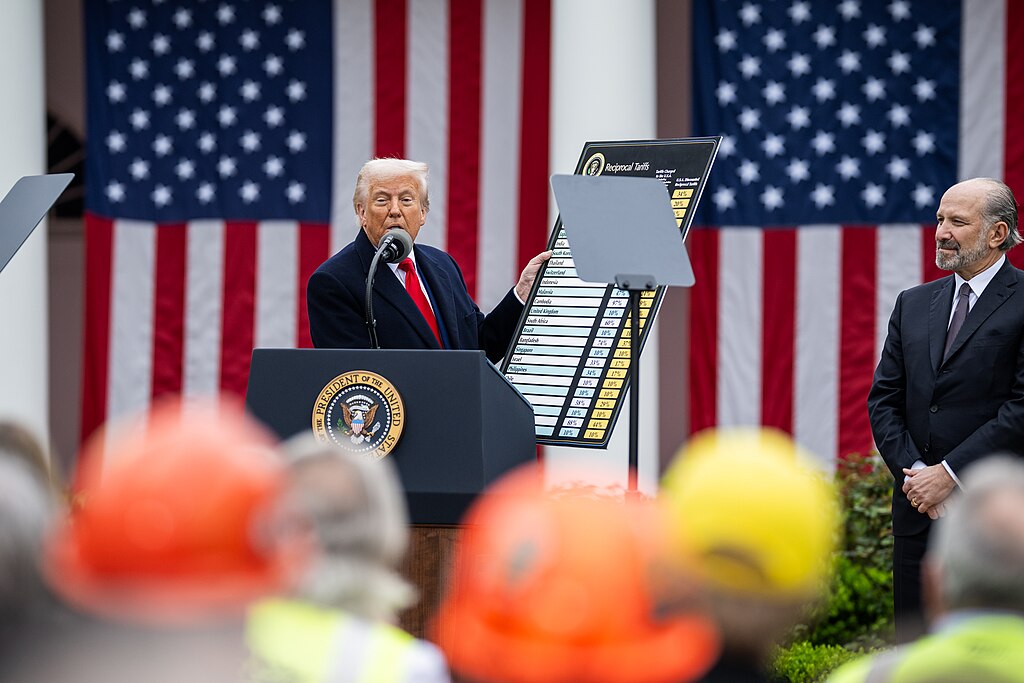
Bitcoin is heading into 2026 under a familiar but potent macro threat: President Donald Trump’s tariff agenda. Throughout 2025, crypto markets repeatedly reacted to tariff headlines as sharply as they did to ETF inflows, reinforcing Bitcoin’s sensitivity to global trade policy and risk sentiment. As several tariff mechanisms move closer to potential activation in 2026, traders are bracing for renewed volatility that could quickly flip markets from risk-on to risk-off.
In 2025, tariff escalations consistently triggered sell-offs across digital assets. Early in the year, announcements of new tariffs on Mexico, Canada, and China sent Bitcoin sliding to multi-week lows near $91,400, while Ethereum plunged roughly 25% in just three days. Many major altcoins lost over 20% in a single session as leveraged traders rushed to de-risk. Similar patterns emerged again in April during the so-called “Liberation Day” tariff shock and the renewed US–China trade clash, when Bitcoin briefly dipped below $82,000 alongside declines in crypto-linked equities.
Relief rallies followed when the White House hinted at tariff pauses or negotiations. By May, a temporary US–China tariff truce helped Bitcoin reclaim the $100,000 level, with ETH and digital asset funds also seeing strong rebounds and fresh inflows. However, the most severe stress arrived in October after Trump floated a potential 100% tariff on Chinese imports linked to rare-earth disputes. Bitcoin dropped more than 16% in hours, liquidations surged, and an estimated $19 billion in forced positions were wiped out in a single day. By December 2025, the crypto market had yet to fully recover from that shock.
Looking ahead, several tariff risks loom over 2026. A deferred 100% China tariff could resurface, raising fears of weaker growth and stickier inflation. There is also the possibility of a higher global baseline tariff beyond the current 10%, which would act as ongoing pressure on risk assets, including Bitcoin. Retaliatory tariffs tied to digital services taxes in Europe, steep pharmaceutical import duties that could approach 200%, and expanded secondary tariffs linked to sanctioned trade all add layers of uncertainty. Historically, such uncertainty has translated into higher crypto volatility, faster liquidations, and slower recoveries unless global liquidity conditions improve.















Comment 0