
 Add as a preferred source on Google
Early Bitcoin Boom Spurs Launch of Korea’s Xcoin Exchange
Entrepreneur Kim Dae-sik launched Xcoin in 2014 after acquiring BTC Korea, reflecting South Korea’s early push to build a competitive local crypto exchange ecosystem amid Bitcoin’s global rise.

As global interest in Bitcoin (BTC) accelerated in the early 2010s, one Korean entrepreneur set out to build a domestically rooted exchange that could compete on the world stage—an effort that would help lay the groundwork for what later became one of South Korea’s best-known trading platforms.
The latest episode of Tokenpost’s archival series on Korea’s early crypto industry traces the moment Kim Dae-sik began turning a clear ambition into action: creating a Korean exchange with the kind of scale and credibility already emerging abroad. At the time, the market’s center of gravity was shifting rapidly, with China and Japan hosting the most influential venues for Bitcoin trading.
By 2013, China’s BTC China had become a symbol of the sector’s breakneck growth. Riding a surge in retail participation, the exchange at one point overtook Japan’s then-dominant Mt. Gox in trading volume—a milestone that signaled how quickly crypto liquidity could migrate and how important local on-ramps were becoming. For builders watching from Seoul, the message was straightforward: exchanges were turning into critical infrastructure.
Kim, convinced South Korea needed its own competitive platform, began surveying the nascent local market for a foundation he could build on. That search led him to an underutilized but evocatively named entity: ‘BTC Korea’. While it was not operating as a major exchange, the branding carried strategic resonance—mirroring the way ‘BTC China’ had become shorthand for a national gateway into the Bitcoin economy.
According to the report, Kim approached Choi Yoon-ho, the head of BTC Korea, and negotiated an agreement to acquire the corporate entity and its domain name. The move highlights a recurring pattern in early crypto markets: rather than starting entirely from scratch, founders often sought to secure regulatory footing, operational continuity, and recognizable naming assets that could accelerate a launch in a fast-moving environment.
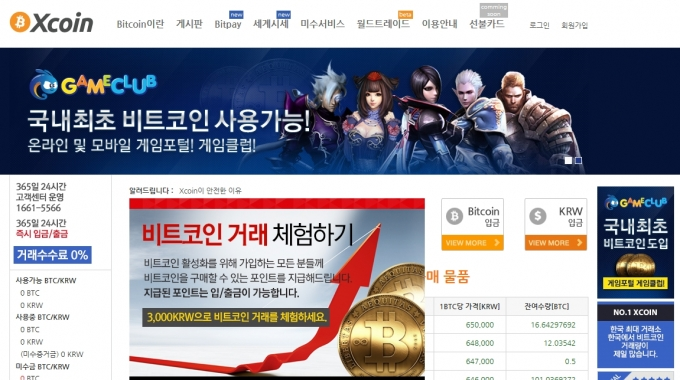
Still, Kim ultimately chose not to keep the BTC Korea name. Instead, in January 2014, he established a new exchange under the brand ‘Xcoin’. The decision reflected an intent to build something distinct—less an extension of an existing label and more a purpose-built platform designed for the market that was taking shape in real time.
While the episode offers only a partial glimpse into the subsequent evolution, the account underscores how South Korea’s exchange sector emerged not through a single breakthrough but through a series of calculated steps—timed to global market momentum and driven by a belief that crypto trading would require trusted, locally anchored venues. That early push helped set the direction for an industry that would later become a major pillar of Korea’s digital asset economy.
Article Summary by TokenPost.ai
🔎 Market Interpretation
{
"market_context": [
{
"point": "Early-2010s Bitcoin adoption pushed exchanges from hobbyist sites into essential market infrastructure.",
"insight": "Liquidity and price discovery began concentrating where reliable fiat on-ramps existed, making domestic exchanges strategically important."
},
{
"point": "Asia became the center of gravity for BTC trading, with China and Japan hosting leading venues.",
"insight": "The competitive benchmark for new exchanges was increasingly set by regional giants rather than Western platforms."
},
{
"point": "BTC China temporarily surpassing Mt. Gox in volume signaled rapid migration of liquidity.",
"insight": "Exchange leadership could flip quickly based on local retail participation, trust, and access—creating urgency for Korean entrants."
},
{
"point": "Branding and national-gateway narratives mattered (e.g., 'BTC China').",
"insight": "A name implying a country's primary Bitcoin portal could accelerate user trust and recognition in a nascent market."
}
],
"what_it_signals_for_korea": [
{
"point": "South Korea’s exchange industry formed through iterative, tactical moves rather than one defining innovation.",
"insight": "Founders optimized for speed-to-market and credibility while aligning with global momentum."
}
]
}
💡 Strategic Points
{
"founder_strategy": [
{
"action": "Surveyed the local market to find an existing base rather than building purely from scratch.",
"why_it_matters": "In early crypto, time-to-launch and perceived legitimacy were key competitive advantages."
},
{
"action": "Negotiated to acquire the 'BTC Korea' corporate entity and domain.",
"why_it_matters": "Acquiring an entity/domain can provide continuity, faster operational setup, and a recognizable identity—useful in fast-moving markets."
},
{
"action": "Chose not to keep the BTC Korea brand; launched a new exchange as 'Xcoin' in Jan 2014.",
"why_it_matters": "Rebranding suggests a deliberate attempt to build a distinct, purpose-built platform identity rather than inheriting legacy constraints."
}
],
"execution_lessons": [
{
"lesson": "Exchanges compete on trust, localization, and access—not only technology.",
"application": "Local fiat rails, customer support, and compliance readiness often decide which venue becomes the default gateway."
},
{
"lesson": "Naming assets (domains/brands) can be strategic accelerators.",
"application": "Early-stage markets reward recognizable, credible signaling—especially when users are first learning how to buy and custody BTC."
},
{
"lesson": "Market timing follows global cues.",
"application": "Korean builders responded directly to volume shifts abroad, treating foreign exchange growth as a leading indicator for domestic demand."
}
],
"key_takeaway": {
"summary": "Kim Dae-sik’s path—acquire foundational assets, then relaunch with a clear new brand—illustrates how Korea’s major exchanges emerged via pragmatic steps designed to gain speed, credibility, and market fit."
}
}
📘 Glossary
{
"terms": [
{
"term": "Bitcoin (BTC)",
"definition": "A decentralized digital asset and payment network; often the first and most liquid cryptocurrency."
},
{
"term": "Exchange",
"definition": "A platform where users can buy/sell crypto; typically provides order books, custody services, and fiat-to-crypto conversion."
},
{
"term": "Trading volume",
"definition": "The total amount of an asset traded over a period; used as a proxy for liquidity and market activity."
},
{
"term": "Liquidity migration",
"definition": "When trading activity shifts from one venue/region to another due to access, trust, regulation, or user demand."
},
{
"term": "Fiat on-ramp",
"definition": "A service that allows conversion from government-issued money (e.g., KRW, JPY, CNY) into cryptocurrency."
},
{
"term": "Mt. Gox",
"definition": "A once-dominant Japan-based Bitcoin exchange in the early 2010s, later associated with a major collapse."
},
{
"term": "BTC China",
"definition": "A major Chinese Bitcoin exchange during the early 2010s that at times led global volume."
},
{
"term": "Domain name asset",
"definition": "A web address with branding value; in early markets it can confer trust, memorability, and faster user acquisition."
},
{
"term": "Xcoin",
"definition": "The new exchange brand launched by Kim Dae-sik in January 2014, positioned as a distinct Korean trading platform."
}
]
}