

 News
News  Coin Information
  About us
  Customer Service


 Add as a preferred source on Google
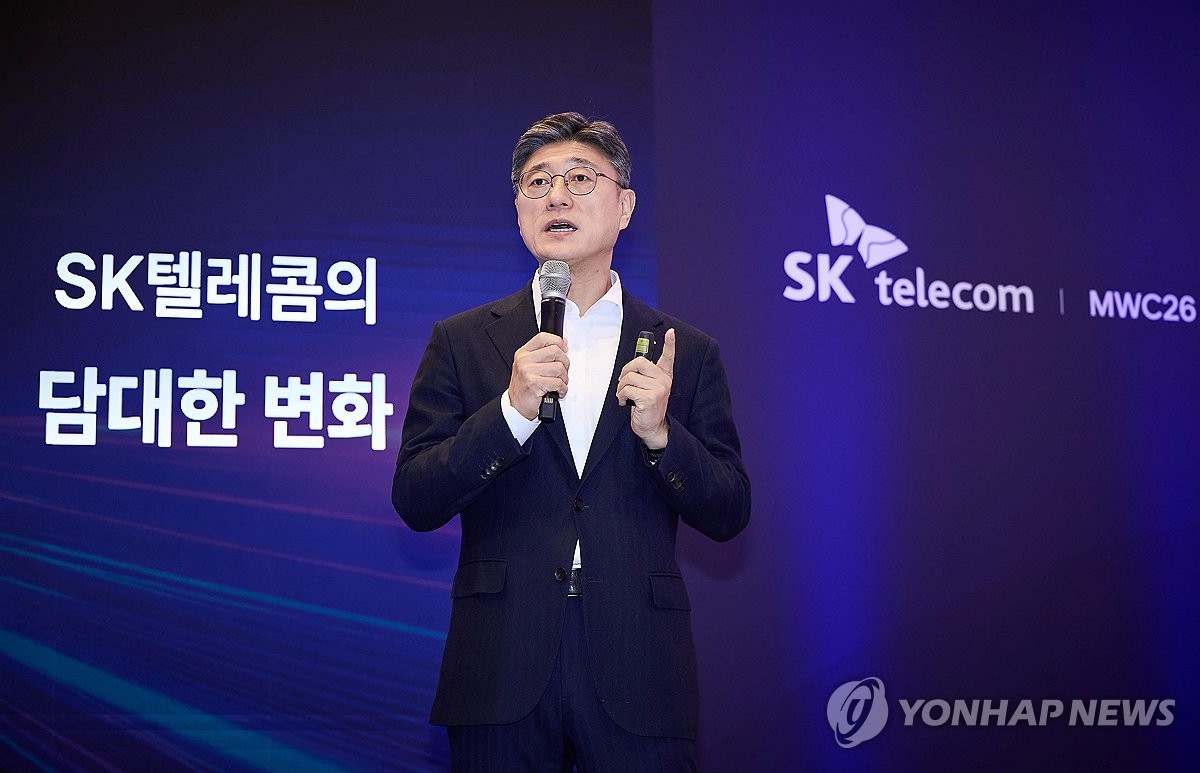
SK Telecom ($SKM) is accelerating its push into Southeast Asia by moving to establish an AI-focused data center in Vietnam, aiming to replicate—and export—the operational know-how it has built in South Korea. The company is positioning the project as more than a conventional colocation build, betting that a bundled model combining telecom infrastructure, power generation, and AI services can create a defensible foothold in a region where energy reliability is increasingly the deciding factor for data center economics.
According to industry sources, SK Telecom said it signed a memorandum of understanding on April 23 local time (April 23 UTC) in Hanoi during a Korea–Vietnam business forum. The agreement was signed alongside SK Innovation, with Vietnam’s Nghe An provincial government and the National Innovation Center, to cooperate on building an AI data center and fostering a related local ecosystem.
The initiative is expected to be linked to SK Innovation’s Quynh Lap liquefied natural gas (LNG) power generation project. Under the concept outlined by participants, a 1.5-gigawatt gas combined-cycle power plant and associated generation assets would provide stable electricity supply, which would then underpin the construction and operation of the data center. In fast-growing markets such as Vietnam, power availability and price stability are often cited as the single most important determinants of data center uptime, expansion planning, and long-term profitability—making ‘power-plus-data-center’ integration a potential differentiator against pure-play facility developers.
SK Telecom framed the collaboration as a broader effort to help seed Vietnam’s AI industry, not just construct buildings and racks. The company is expanding cooperation with the National Innovation Center to include support for policy development, partner discovery, and the creation of an industrial ecosystem—steps that could help reduce execution risk by aligning the project with government priorities and local talent pipelines.
Jeong Jae-heon, CEO of SK Telecom, described AI data centers as core infrastructure for industrial growth and said the company intends to tailor a cooperation model to local conditions based on its accumulated build-and-operate capabilities.
The Vietnam plan follows SK Telecom’s rapid build-out of domestic AI infrastructure. In South Korea, the company has commercialized GPU-as-a-Service—allowing customers to rent GPU compute on demand—at its Gasan data center. It has also deployed a ‘sovereign’ GPU cluster known as “Haein” equipped with NVIDIA’s B200 chips, part of a wider effort among Korean firms to secure domestic AI compute capacity amid global supply constraints and growing sensitivity around data sovereignty.
SK Telecom is also constructing a 100-megawatt, large-scale AI-dedicated data center in Ulsan. The company has said it plans to work with Amazon Web Services to leverage group-level power generation assets for electricity procurement and to apply high-efficiency cooling systems—an increasingly important design priority as AI workloads drive higher rack densities and thermal loads. Separately, it is pursuing another AI data center project in Korea’s southwestern region in cooperation with OpenAI, part of an effort to form a nationwide “data center belt” spanning the Seoul metropolitan area as well as the Yeongnam and Honam regions.
Even with that domestic momentum, the Vietnam venture remains at an early stage. The agreement is currently an MOU, and neither investment size nor the project’s revenue structure has been disclosed. Market analysts note that data centers integrated with power infrastructure typically require heavy upfront capital, and execution hinges on several variables: whether sufficient local and regional demand materializes, how smoothly approvals progress across power, telecom, and land-use regulations, and whether the project can maintain cost competitiveness as energy markets fluctuate.
Competition is another constraint. Global hyperscalers and major platform companies have been expanding aggressively across Southeast Asia, drawn by rapid digitization, cloud adoption, and the region’s role in supply chains. That investment wave has raised the bar in terms of speed, scale, and customer acquisition for new entrants.
SK Telecom is emphasizing strengths it sees as distinct to a telecom operator, including nationwide network capabilities that can support ‘edge AI’ deployment and AI-enabled intelligent networking. How quickly the Vietnam plan moves from concept to committed capital and construction will be closely watched as a gauge for potential expansion into neighboring markets such as Malaysia and Singapore, where demand growth is strong but competition and regulatory scrutiny are also intensifying.


















Comment 0