

 News
News  Coin Information
  About us
  Customer Service


 Add as a preferred source on Google
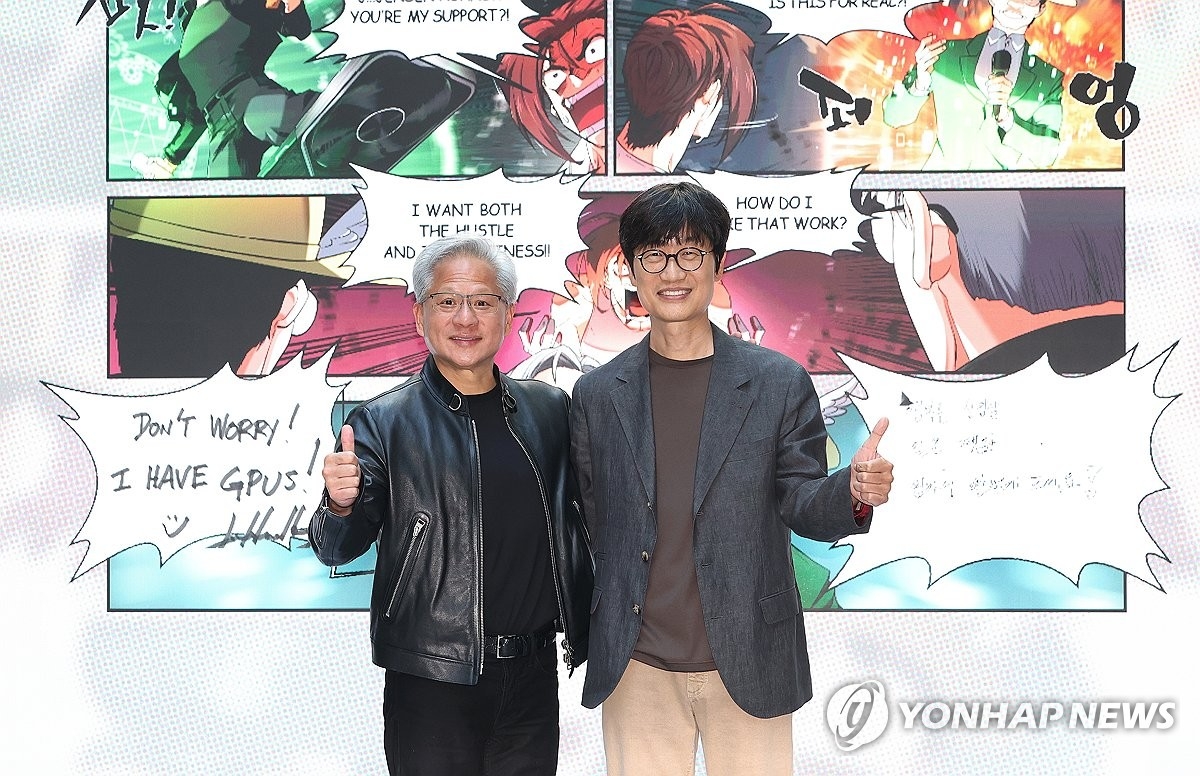
Naver ($035420.KS) is drawing renewed attention from investors after DS Investment & Securities on Tuesday ET raised its target price on the South Korean internet giant to 450,000 won from 300,000 won, arguing that the market may begin to re-rate the company not just as a search-and-platform operator but as an emerging 'AI infrastructure' player.
The brokerage reiterated its buy rating. Naver’s shares closed at 279,000 won in the prior session in Seoul trading.
The upgrade centers on what Naver and Nvidia ($NVDA) are positioning as a global 'AI factory' initiative—large-scale data center infrastructure designed to deliver AI training and inference services using dense clusters of GPUs, high-performance servers, and specialized power and cooling systems. With generative AI demand accelerating across industries, analysts increasingly view compute capacity as a strategic bottleneck—and a potential profit pool for companies able to build and operate at scale.
Naver said in a regulatory filing that it is working with Nvidia on a data center build-out that could ultimately scale to a maximum of 1 gigawatt. The two companies agreed to jointly pursue the project on Monday ET, and plan to begin operations with a 55-megawatt facility in 2027 before expanding in stages.
DS Investment analyst Choi Seung-ho estimated the project’s current value at roughly 19 trillion won even under conservative assumptions. If the full 1-gigawatt footprint is eventually realized, Choi projected annual recurring revenue could reach about 18 trillion won, with operating margins rising from around 18% in the early phase to above 30% in later stages as utilization improves and fixed costs are absorbed.
Under the brokerage’s base case, revenue from Naver’s AI data center business would ramp rapidly: about 800 billion won in 2027, 2.4 trillion won in 2028, and 3.9 trillion won in 2029. The key, the report argued, is that the plan now extends beyond capital spending headlines to a clearer operational model—how capacity will be run, monetized, and scaled—giving investors more concrete inputs to price future cash flows.
The note also highlighted why Naver’s stock has struggled to reflect AI optimism despite the company’s long-running investment narrative. Choi pointed to cross-currents that diluted attention across the broader software sector as 'agentic AI' themes pulled capital toward other names, alongside weakened risk appetite tied to sharp drops in Bitcoin (BTC) and a rotation in local markets toward strengthening memory-semiconductor stocks.
In addition, when Naver previously signed an MOU with Nvidia late last year, the market had some visibility into prospective GPU procurement but limited detail on how those chips would translate into revenue—prompting a cautious valuation approach.
This time, DS Investment argued, the strengthening of guidance around operations and monetization improves 'demand visibility' and increases the odds of a valuation reset. For public markets, the report suggested, the differentiator is less the novelty of AI technology and more the credibility of unit economics, utilization rates, and contracted or repeatable revenue streams.
Whether Naver ultimately earns a durable re-rating will likely depend on its pace of deployment, the early performance of the 2027 facility, and evidence that it can lock in steady enterprise demand in a competitive global race for compute. If those milestones are met, investors may increasingly view Naver as a hybrid platform-and-infrastructure business—potentially widening the lens through which the market values Korea’s largest internet group.
🔎 Market Interpretation
- Target-price reset on “business model” re-framing: DS Investment raised Naver’s target price to 450,000 won (from 300,000) on the view that investors may re-rate Naver from a search/platform company into an AI infrastructure provider.
- Compute as the new bottleneck: The report treats GPU-rich data center capacity as a scarce strategic asset as generative AI demand scales, implying valuation upside for operators that can build and monetize “AI factories.”
- From MOU hype to monetization clarity: Unlike the prior Nvidia MOU (which emphasized GPU procurement), this iteration is interpreted as improving operational and revenue visibility—a key trigger for multiple expansion.
- Market context held back the stock: Naver’s AI narrative was muted by capital shifting to “agentic AI” names, weaker risk appetite following Bitcoin declines, and local rotation toward memory-semiconductor stocks.
💡 Strategic Points
- Project scope and timeline: Naver and Nvidia plan an “AI factory” data center build-out that could scale to 1 gigawatt. Initial operations are planned with a 55-megawatt facility in 2027, followed by staged expansions.
- Economic potential (broker estimate): DS Investment estimates the project’s current value at ~19 trillion won (conservative). At full 1GW scale, it projects ~18 trillion won in annual recurring revenue.
- Margin trajectory: Operating margins are modeled to rise from roughly ~18% early to >30% later as utilization increases and fixed costs are leveraged.
- Base-case revenue ramp: AI data center revenue is forecast to grow from ~800B won (2027) to ~2.4T (2028) and ~3.9T (2029).
- What investors will watch next:
- Execution speed: build-out pace and capex-to-capacity conversion.
- Early facility performance: utilization, reliability, and unit economics once the 2027 site goes live.
- Demand lock-in: evidence of repeatable enterprise workloads, long-term contracts, or other durable revenue mechanisms.
- Competitive positioning: ability to win in a global race for compute against hyperscalers and specialized AI cloud operators.
- Re-rating mechanism: The report argues the key driver is less “AI novelty” and more credible monetization—contracted/recurring revenue, utilization rates, and proven margins—supporting a valuation reset to a platform + infrastructure hybrid.
📘 Glossary
- AI factory: A large-scale, purpose-built data center designed for AI training/inference using dense GPU clusters plus specialized power and cooling.
- Inference: Running a trained AI model to generate outputs (often latency-sensitive and recurring with user demand).
- Training: Computing process to build/upgrade AI models; typically extremely GPU-intensive and batch-oriented.
- GPU cluster: A networked group of graphics processors used in parallel to accelerate AI workloads.
- Megawatt (MW) / Gigawatt (GW): Power capacity units for data centers; 1 GW = 1,000 MW. Higher power capacity generally enables more servers/GPUs.
- Utilization rate: The percentage of compute capacity that is actively used; a major driver of profitability in infrastructure businesses.
- Unit economics: Profitability per unit of capacity/service (e.g., revenue per GPU-hour vs. cost per GPU-hour).
- Annual recurring revenue (ARR): Repeatable revenue expected to recur annually from subscriptions or contracted services.
- Re-rating: A market reassessment that changes valuation multiples (e.g., higher P/S or P/E) due to improved growth/visibility/quality.
- MOU (Memorandum of Understanding): A non-binding agreement outlining intent to cooperate, often preceding definitive contracts.





















Comment 0