
 Add as a preferred source on Google
European Heatwave Cuts Crop Forecasts and Threatens 2027 Food Inflation
Heat and rainfall deficits lowered European crop forecasts, reduced productivity and could add more than 1 percentage point to food-price inflation in 2027.

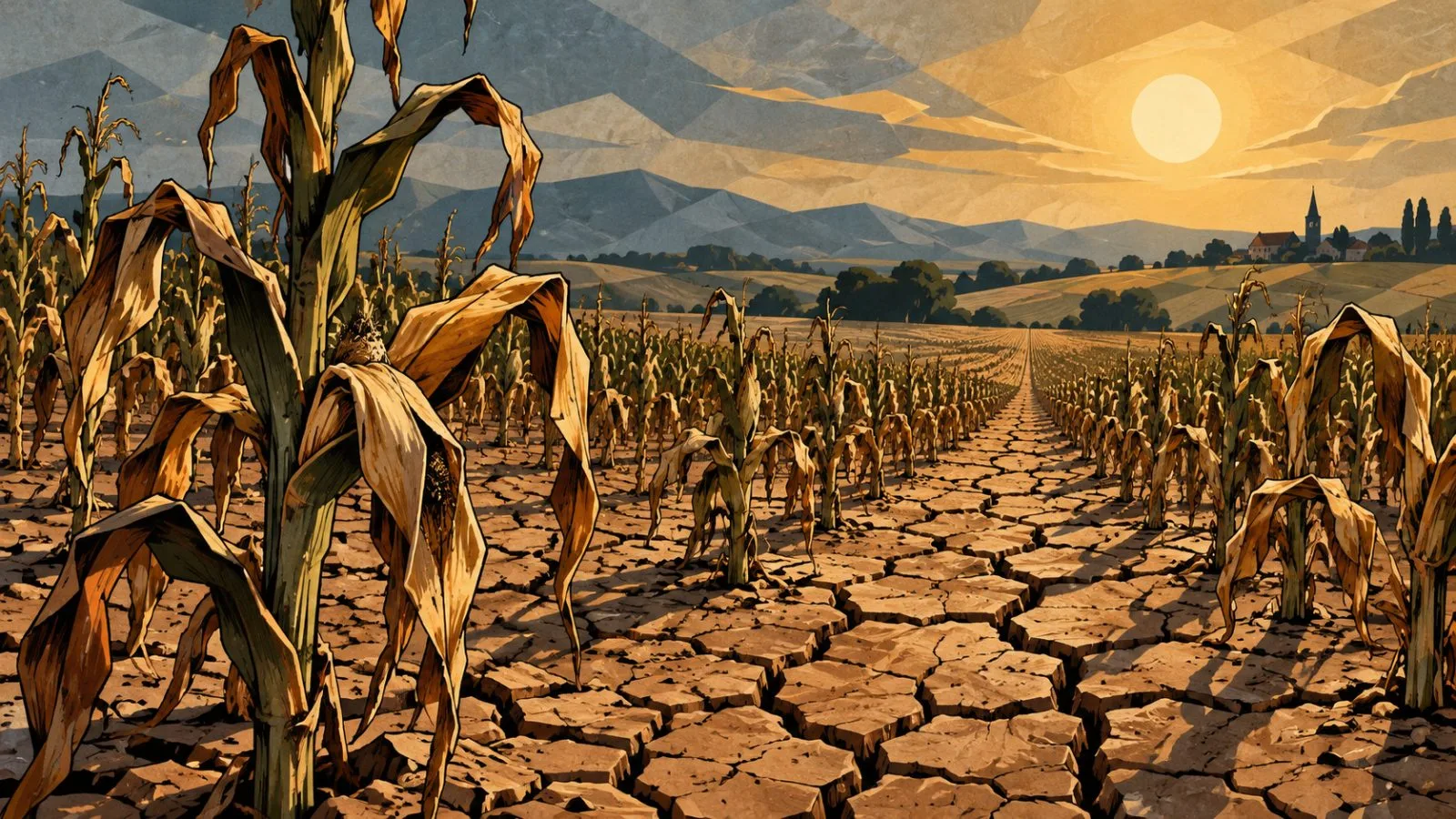
Europe’s 2026 heat and rainfall deficits cut crop forecasts, reduced worker productivity and added pressure to food prices, showing how weather shocks can affect the economy within a single growing season.
The EU-27 and U.K. grain harvest forecast fell to 286.6 million tonnes in September from 295.5 million tonnes in June. The estimate was also below the 310 million tonnes recorded the previous year.
September forecasts were below the five-year average for several crops. Soybean yields were projected to fall 15%, fresh maize 14%, grain maize 8%, potatoes 7% and sugar beet 11%.
Maize matured up to three weeks earlier than usual in some areas. In severely damaged fields, harvesting became economically unviable.
Olaf Sleijpen, president of De Nederlandsche Bank and chair of the Network for Greening the Financial System, said Europe lost almost 9 million tonnes of grain during the summer. He put the financial losses at about €2 billion.
“It is no longer possible to deny the economic impact of climate change. We can see it, we can feel it, we can measure it,” Sleijpen said.
Productivity also declined in high temperatures. Between 30°C and 35°C, output per hour falls by about 3% for each additional degree Celsius.
Adverse weather could add more than 1 percentage point to food-price inflation in 2027. The impact could build further because of a particularly strong El Niño in 2026.
Sleijpen also cited an early, nonofficial estimate that the combined effects of the European heatwave could reduce European Union GDP by about 1%, or approximately €180 billion, in 2026. He emphasized that the figure was not a final economic measurement.
“That has nothing to do with ideology, that is reality,” Sleijpen said.
The risks include weaker yields, food-price shocks, lower productivity, transport disruptions and higher insurance and financing risks. For U.S. readers, the European experience illustrates how weather disruptions can affect prices, output and supply chains within a single growing season.
El Niño became established by mid-August, with nearly 100% probability of persistence through February 2027. A powerful El Niño could shift global rainfall and temperatures, increasing the risk of extreme weather.
The study reviewed 31 examples from 28 countries and assessed economic and financial effects over the 2015-25 period.
John Kim
John Kim reports on the digital-asset business for TokenPost. Send corrections or tips to info@tokenpost.com.