
 Add as a preferred source on Google
Ukraine’s Grain Cash Squeeze Threatens 2027 Planting Plans
A large 2026 harvest is colliding with disrupted Black Sea logistics, leaving some farmers short of cash and weighing shifts toward oilseeds and lower-input crops.

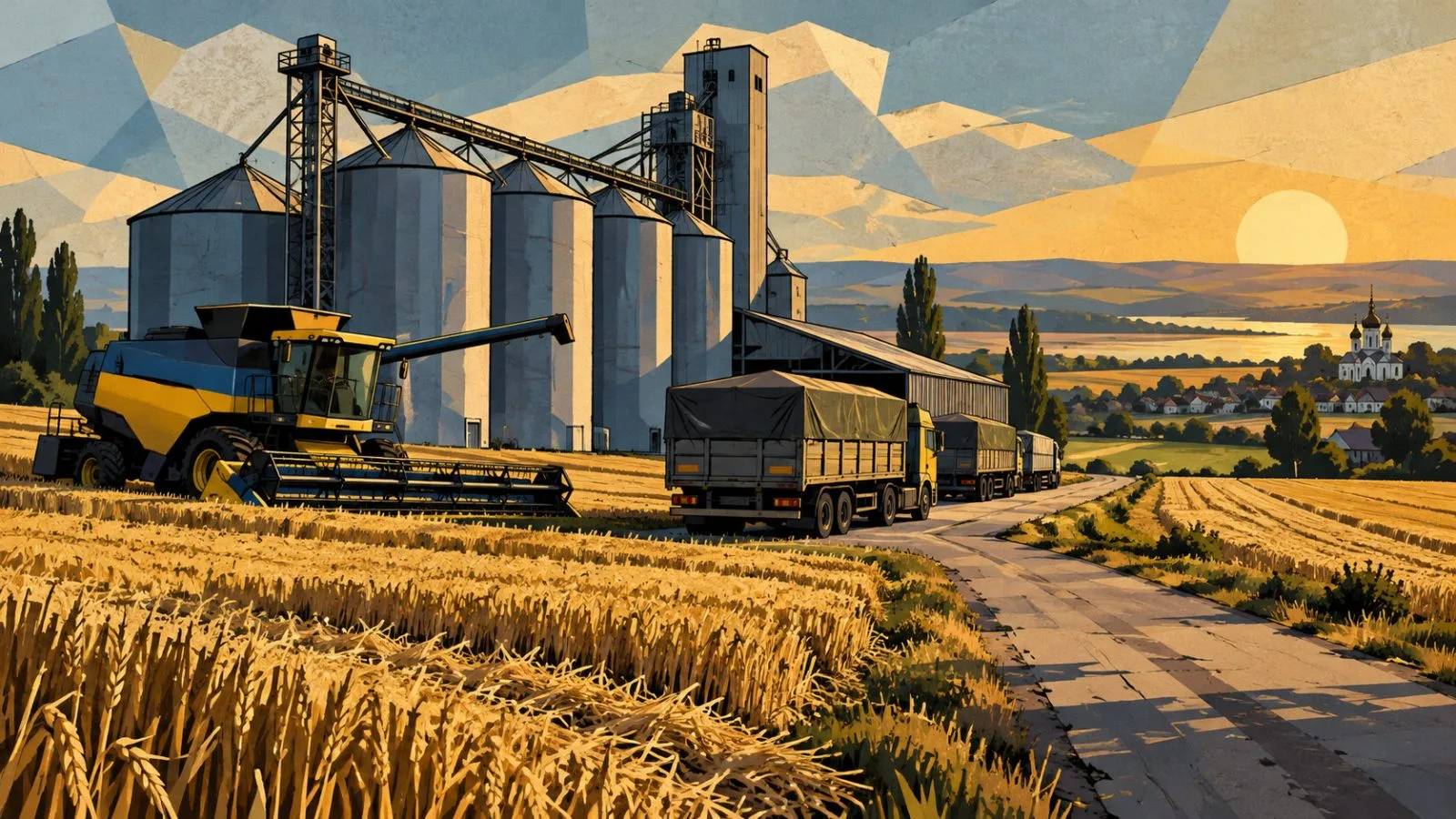
Ukraine’s farmers face a cash squeeze ahead of the 2027 planting season as attacks and disrupted Black Sea shipping make it harder to move and sell a substantial 2026 harvest at profitable prices.
Ukraine’s Ministry of Economy, Environment and Agriculture forecasts 81 million to 83 million tonnes of grain and oilseed production this year. Grain output is expected to reach 60 million to 61 million tonnes, including 22 million to 23 million tonnes of wheat, more than 32 million tonnes of corn and about 5 million tonnes of barley.
The Ukrainian Grain Association has forecast 83.6 million tonnes of grain and oilseed production, up from 80 million tonnes in 2025. It expects exports to reach 50.8 million tonnes in the 2026-27 season only if logistics do not deteriorate.
The financing pressure is changing planting decisions. Some producers are shifting away from corn and barley toward oilseeds or crops requiring fewer inputs, while others are questioning whether they can afford spring operations if current stocks remain unsold.
“For the farmers, it's very difficult because we need to pay taxes, we need to pay rent for land, and now we are not able to do this because we are not able to sell anything,” said Andrii Dykun, chairman of the Ukrainian Agri Council.
Dykun said rapeseeds and sunflower seeds were the only crops farmers could currently sell, but available volumes were insufficient. “So why should we plant if today we have no profits at all?” he said.
PrivatBank provided 1.53 billion hryvnia, or $34.2 million, in working-capital financing to agricultural businesses from June through August, more than double the 718 million hryvnia provided during the same period in 2025. Small and medium-sized producers represented 70% of the bank’s agricultural loan book.
“If our stocks will be full, it makes no sense to do any farm operations in the spring because then it's just a waste of time and money,” Dykun said.
The pressure could extend beyond Ukraine. In 2022, Ukraine and Russia together produced almost one-third of the world’s wheat and barley and half of its sunflower oil. The 2022 Black Sea Initiative was designed to support commercial food shipments from Ukrainian ports, including Odesa, Chornomorsk and Yuzhny.
A prolonged disruption could tighten supplies. Conversely, reopening Black Sea routes could release accumulated stocks and pressure global markets lower, an outcome Benoit Fayaud, senior manager for grains and oilseeds analysis at Expana, described as bearish if Ukraine’s large inventories reach the market.
The association’s 2026 estimates include 22.8 million tonnes of wheat, 5.2 million tonnes of barley, 32.1 million tonnes of corn, 13.3 million tonnes of sunflower seed, 3.4 million tonnes of rapeseed and 4.9 million tonnes of soybeans.
For farmers, the immediate challenge is turning that harvest into cash. “We are living and working in a place where any time you or your circle can be hit by [a] rocket or drone,” said Ukrainian farmer Oleksandr Chumak.
John Kim
John Kim reports on the digital-asset business for TokenPost. Send corrections or tips to info@tokenpost.com.