
 Add as a preferred source on Google
Boston Dynamics Puts Spot Base Platform Cost at About $100,000
Hyundai Motor Group plans production parts-sequencing work for Atlas at Hyundai Motor Group Metaplant America in Georgia beginning in 2028, with component assembly targeted for 2030 after validation.

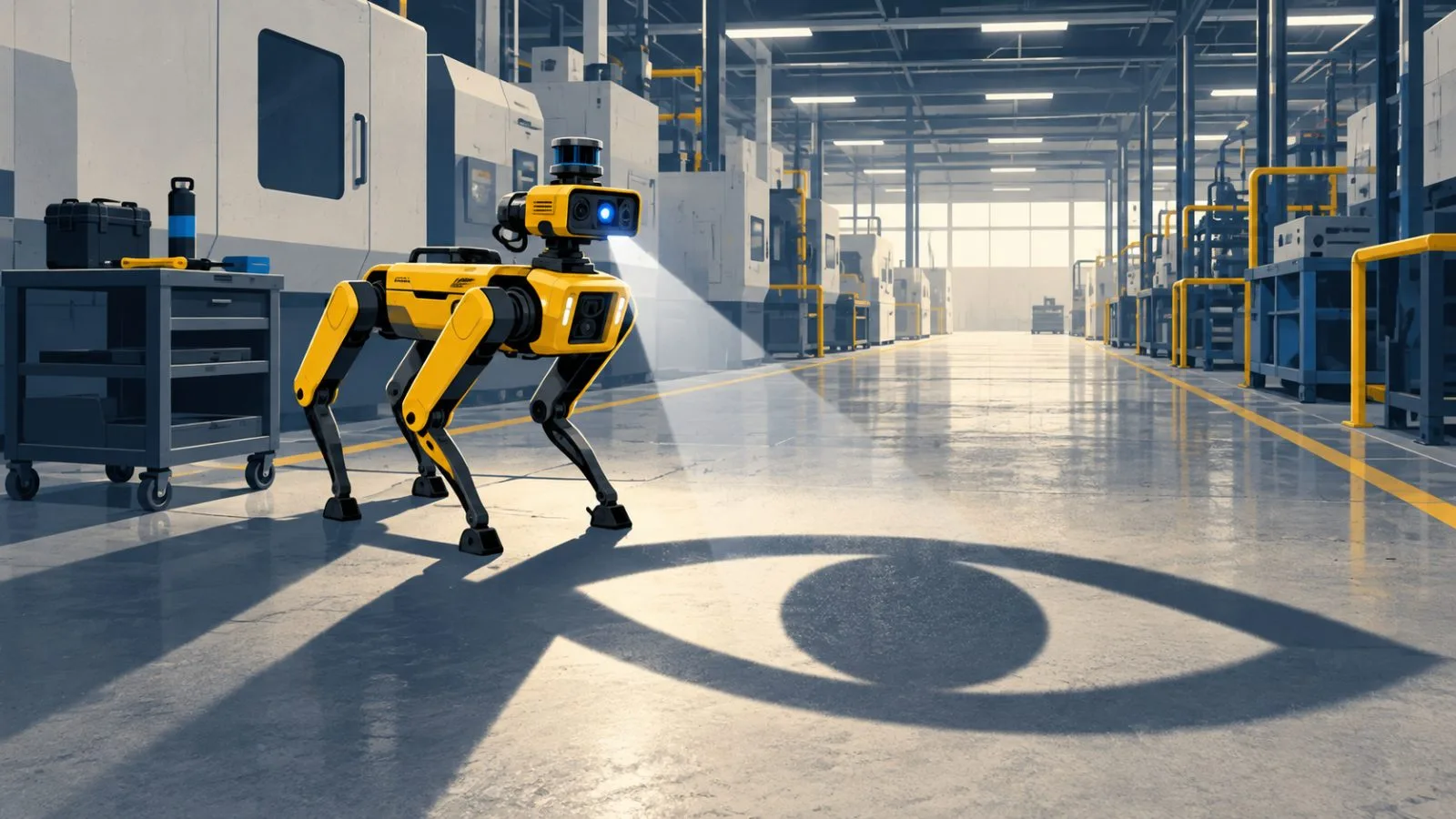
Hyundai Motor Group plans production parts-sequencing work for Boston Dynamics’ Atlas in Georgia beginning in 2028, extending the robotics company’s commercial push beyond existing Spot inspection deployments.
Amanda McMaster, Boston Dynamics’ chief financial officer, put Spot’s base platform at about $100,000 and said added payloads can raise the cost to as much as $300,000. The higher amount applies when payloads are added to Spot.
Boston Dynamics is building a commercial business around its robots for industrial customers. McMaster said reaching customers beyond those who approach the company on their own requires what she called “a proactive sales motion.”
More than 2,000 Spot and Stretch robots combined entered customer operations worldwide during the five years through January 2026. The total includes both models and does not specify a separate number for Spot. Cargill began a Spot pilot at its Amsterdam plant in mid-2024, where the robot was used for maintenance inspections and visual safety checks.
Together, the deployments and factory roadmap show separate roles for Spot and Atlas: inspection use in customer operations and planned production work for the humanoid.
Atlas robots were already training at Hyundai Motor Group Metaplant America in September 2026. Hyundai plans to begin production parts-sequencing work there in 2028. Component assembly is targeted for 2030, subject to validation, giving the plan a staged path from training to factory tasks.
Hyundai Motor Group aims to reach annual production capacity of 30,000 robot units by 2028. The target measures potential production capacity; it does not confirm that 30,000 Atlas units have been ordered or deployed. That capacity goal differs from the more than 2,000 Spot and Stretch robots that entered customer operations over five years: one is a future annual output target, the other a multi-year deployment figure. Although both milestones point to 2028, they describe different things: planned factory use and production capacity.
Hyundai Motor Group acquired a controlling stake in Boston Dynamics in 2021. Hyundai Mobis is developing actuators for Atlas and plans to supply them, adding its work to the manufacturing program.
McMaster described Atlas’ manufacturing challenge this way: “Control your cost and then get to scale fast.” Parts sequencing is scheduled to begin in 2028, with component assembly remaining a later target for 2030 after validation.
John Kim
John Kim reports on the digital-asset business for TokenPost. Send corrections or tips to info@tokenpost.com.