
 Add as a preferred source on Google
Waste Connections Raises 2026 Outlook as Landfill Activity Narrows Decline
The company projects about $10.09 billion in revenue and $3.345 billion in adjusted EBITDA for 2026.

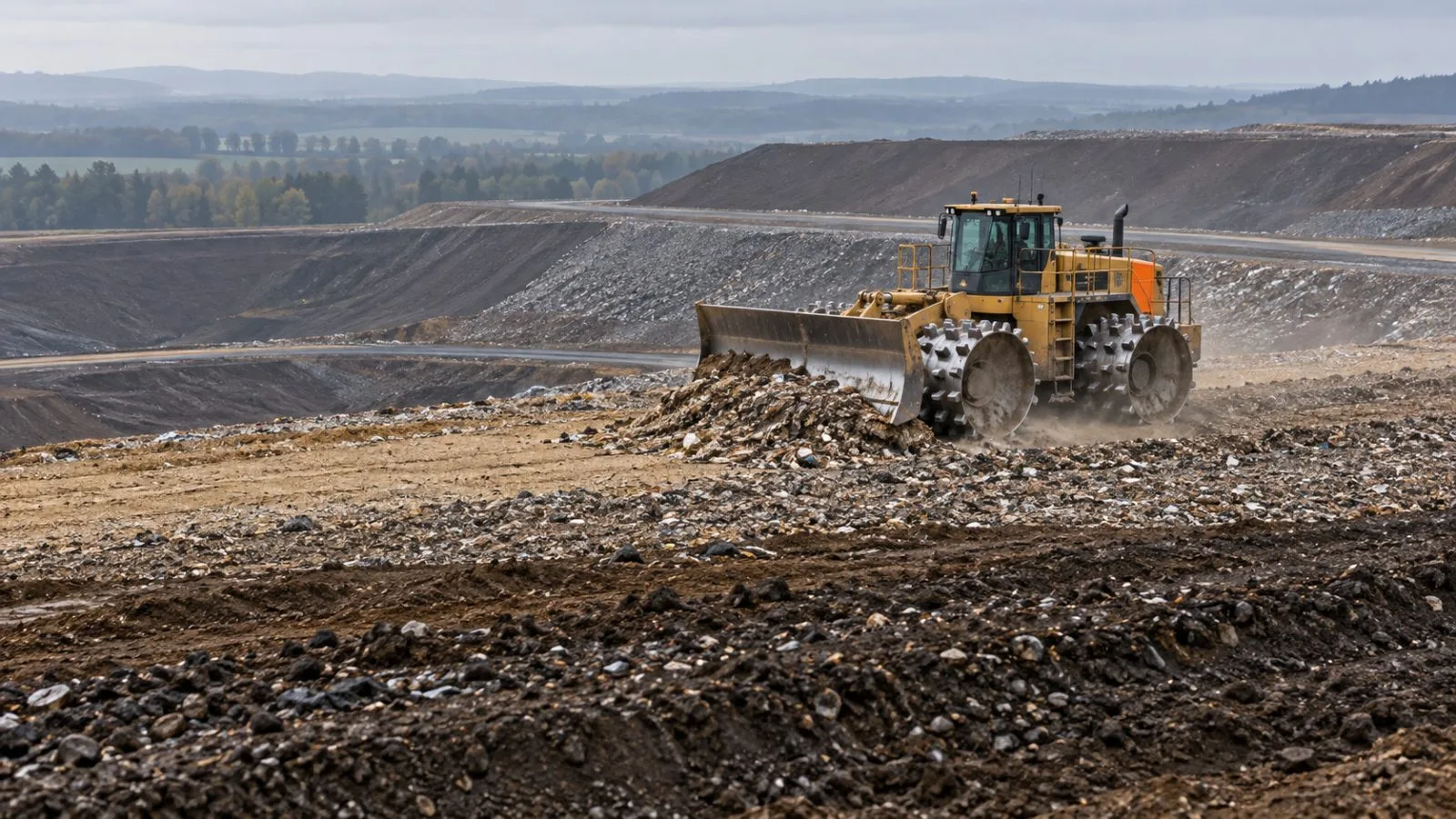
Waste Connections, Inc. raised its 2026 financial outlook Wednesday after landfill activity helped narrow the year-over-year decline in solid-waste unit volume to 1.2% in the third quarter.
Volume fell less sharply than in the second quarter, when it was down 1.9% from a year earlier. That amounted to a 70-basis-point sequential improvement. The company’s unit-volume measure estimates changes in units of activity and remained negative year over year.
“Sequential improvement of 70 basis points in solid waste unit volumes was led by an uptick in landfill volumes,” said Ronald J. Mittelstaedt, Waste Connections’ president and CEO.
Revenue for the quarter ended Sept. 30 was $2.638 billion, up from $2.458 billion in the year-earlier quarter. Net income totaled $359.2 million. Adjusted net income was $398.9 million, or $1.58 per diluted share, and adjusted EBITDA was $895.8 million, equal to 34% of revenue.
Total internal solid-waste revenue grew 4.5% in the quarter. Yield was 4.3%, surcharges contributed 1.3%, and core price was 5.5%. The company defines core price as revenue growth from price increases after rollbacks.
The updated full-year forecast calls for about $10.09 billion in revenue, $1.18 billion in net income and $3.345 billion in adjusted EBITDA. Waste Connections also projects $1.25 billion in capital expenditures, operating cash flow of $2.64 billion to $2.69 billion, and adjusted free cash flow of $1.40 billion to $1.45 billion.
This was the company’s second 2026 outlook increase. Its July forecast put revenue at $10.02 billion to $10.05 billion and adjusted EBITDA at $3.33 billion to $3.34 billion. The updated projections exclude potential acquisitions that may close later this year and related transaction expenses.
Waste Connections provides collection, transfer, disposal and recycling services to about nine million residential, commercial and industrial customers in 46 U.S. states and six Canadian provinces. It also handles nonhazardous oilfield waste.
John Kim
John Kim reports on the digital-asset business for TokenPost. Send corrections or tips to info@tokenpost.com.