
 Add as a preferred source on Google
Taiwan Manufacturing PMI Slips to 62.5 as Substrate Supply Tightens
The October readings, released Nov. 2, remained above the 50 mark. An institute official said AI server demand is strong despite component constraints.

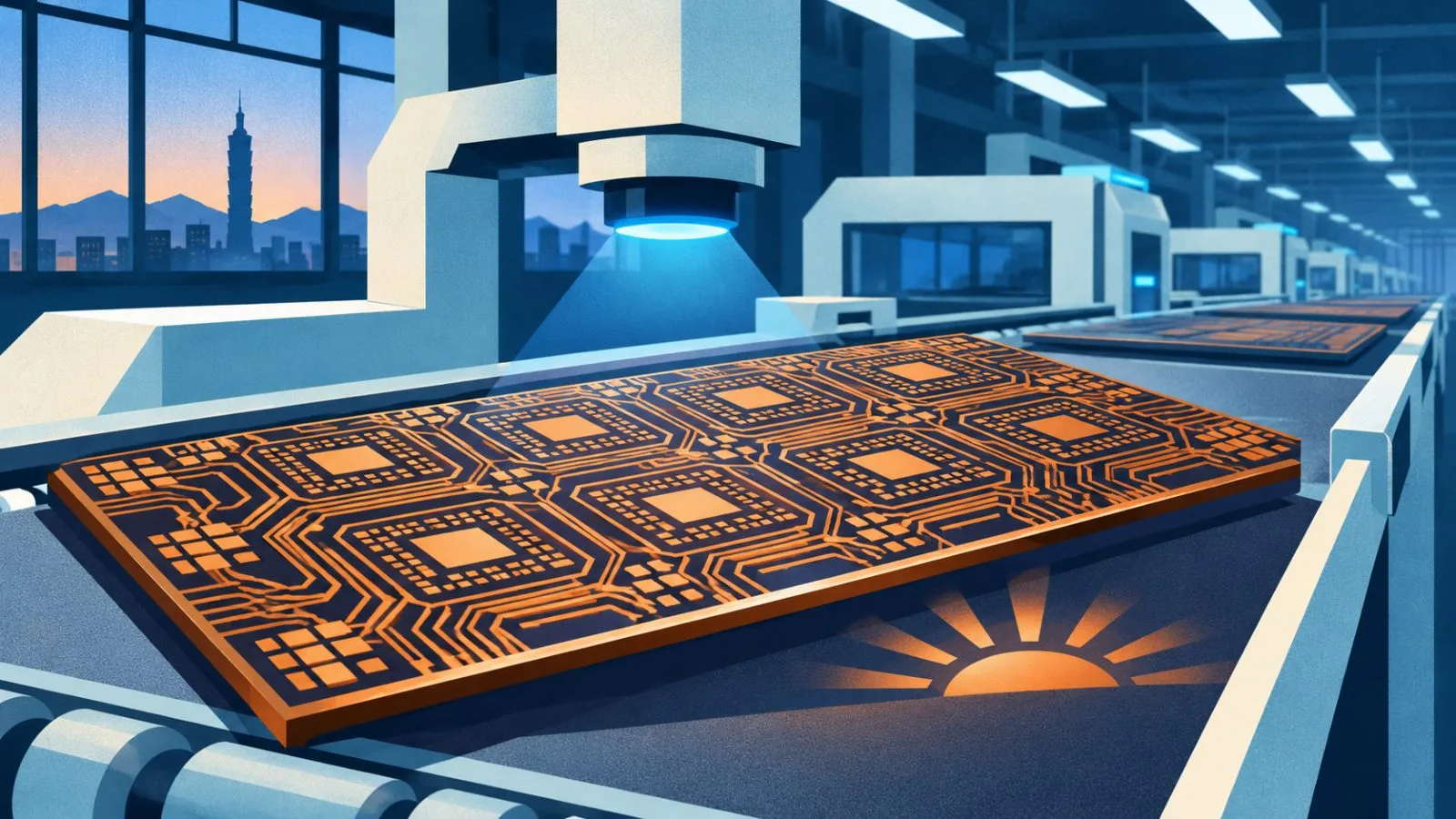
Taiwan’s October manufacturing PMI fell to 62.5 from 63.4 in September as IC substrate constraints slowed AI server production and shipments across the supply chain.
Taiwan’s 中經院 released the readings Nov. 2. The nonmanufacturing index was 55.4. Both measures stayed above 50, which indicates month-over-month expansion; the indexes track changes in activity rather than percentage growth rates.
中經院 President 連賢明 said difficulty obtaining key materials and components had limited some manufacturers’ production and shipments. He said demand for AI servers remained strong, while the most visible supply constraint had moved from memory to IC substrates. Because servers require many components, a delay in one item can slow assembly and delivery.
Taiwan handles final manufacturing and assembly for AI servers, while their supply chains depend on materials and suppliers in multiple countries. Substrate capacity is limited, and some upstream raw materials used for IC substrates come from Japanese suppliers. A shortage at any point in that chain can affect downstream production and shipments.
連賢明 said October’s declines in both indexes were not enough to conclude that Taiwan’s economic expansion had peaked. The PMI compares activity with the previous month, so a lower reading can mean growth is slowing while activity remains in expansion. He also cautioned that sustaining annual growth of 20% to 30% becomes harder as AI industry capacity expands from a low base.
Procurement consultant 白宗城 of 中華採購與供應管理協會 said businesses were favoring smaller, more frequent purchases to meet near-term needs amid international uncertainty. Earlier stockpiling has also left some downstream companies reluctant to accept suppliers’ price increases, keeping higher raw-material costs from showing clearly in the purchasing-price index.
中經院 Deputy Research Fellow 陳馨蕙 described differing outlooks across industries. Power and machinery businesses had order visibility through the end of 2027, supported by demand for electrical and voltage-conversion equipment tied to AI infrastructure. Consumer electronics companies were more cautious about 2027 because they worried consumers would resist higher component costs.
IC substrate availability and supplies of the raw materials used to make them are key indicators for AI server shipment momentum.
John Kim
John Kim reports on the digital-asset business for TokenPost. Send corrections or tips to info@tokenpost.com.