
 Add as a preferred source on Google
Bessent calls 2026 a ‘feast’ as tax cuts and deregulation target Main Street prosperity
Scott Bessent said trade, tax cuts, energy expansion and deregulation would spread prosperity to Main Street, describing 2026 as a “feast.” He also outlined children’s investment accounts and his optimism about AI.

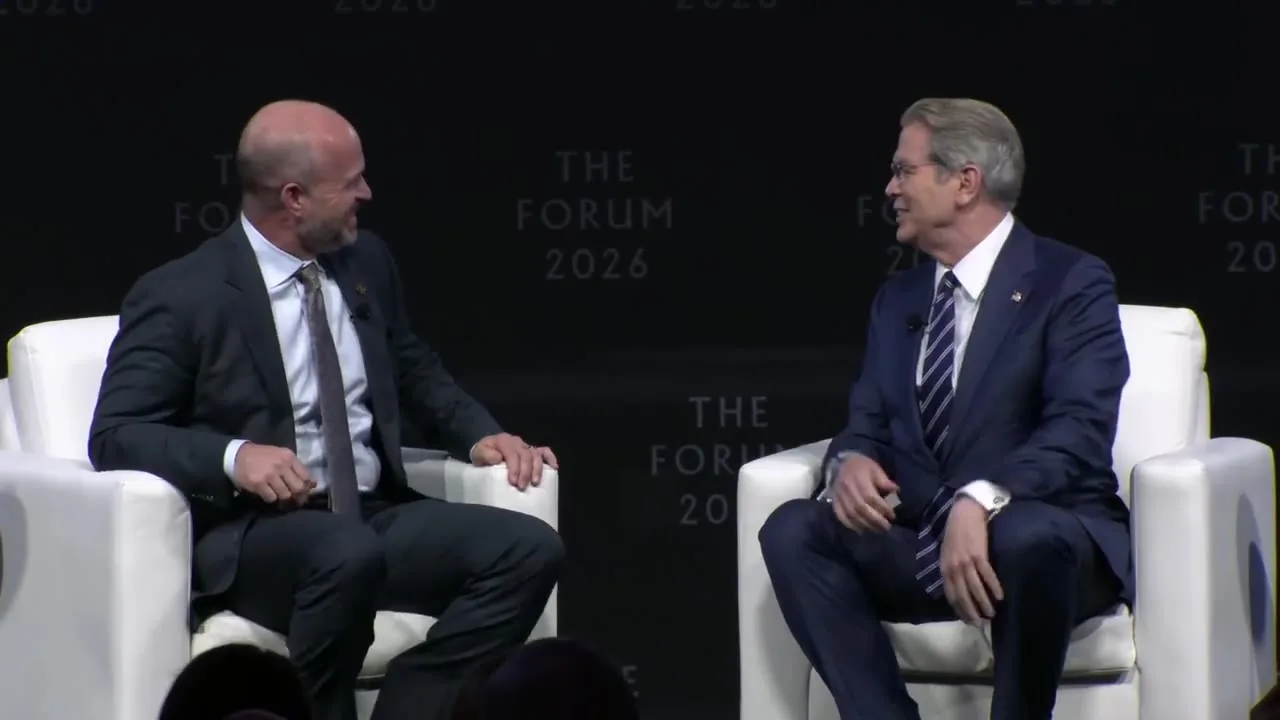
U.S. trade, tax, energy and deregulation policies will help extend economic prosperity to local businesses and households, Treasury Secretary Scott Bessent said, arguing that gains should reach beyond financial markets.
Speaking in a Daily Signal discussion on November 12, Bessent described 2025 as “setting the table” and 2026 as “the banquet or the feast.” He said the Trump administration’s four economic policy pillars—trade, taxes, energy and deregulation—were delivering results.
Bessent said trade agreements were bringing manufacturing back to the United States. He described the tax legislation as supporting both business investment and workers, citing permanent 100% immediate expensing for equipment, alongside immediate expensing for factories and structures.
For workers, he highlighted exemptions from taxes on tips and overtime, reduced taxes on Social Security benefits and interest deductions for loans on American-made vehicles. He said 85% of seniors now paid no tax on their Social Security benefits.
Bessent also cited increased energy production as a reason for optimism. He said the United States produced more energy than Russia and Saudi Arabia combined, and that a new refinery in Brownsville, Texas, was expected to be completed in 2030.
He presented deregulation and stronger local banking as ways to support Main Street. Bessent said the administration had removed 120 regulations for every new one, exceeding its target of 12. He also said more than 50% of community and small banks had disappeared since the global financial crisis, and that Treasury was working to revive those lenders.
Bessent called his approach “parallel prosperity,” saying financial markets and the broader economy could thrive together. Wall Street could continue to do well, he said, while local businesses and households received a greater share of the benefits.
He introduced Trump accounts, investment accounts for children, as a way to broaden household participation in equities. Bessent said 38% of Americans owned no stocks either directly or through a 401k, and described the initiative as an effort to build an ownership society.
Treasury had registered 70 million children for accounts, with about 8 million to 9 million claimed, he said. Children born during President Trump’s second term would receive a $1,000 seed investment from Treasury. Parents and families could contribute $5,000, and employers could add $2,500, with more than 120 companies offering contributions as an employee benefit.
Bessent cited $6.25 billion from Susan and Michael Dell as an example of private support, saying it had provided $250 each for 25 million accounts awaiting claims. He also said Elon Musk would give one SpaceX share to each of the 70 million accounts in January.
The money would be invested in low-cost index funds, he said. Bessent argued that checking account performance each day could help families learn about investing. Treasury had prepared 15 learning modules tailored to children’s ages, with parents who lacked equity-market experience also able to learn.
Bessent also expressed optimism about artificial intelligence. He said the Industrial Revolution, electricity and the internet had each generated anxiety, and that 25% of current U.S. jobs had not existed in 2000. He argued that technological change, while unsettling, had also created new employment.
Riza Dagoc
Riza Dagoc reports on regulation, investing and the digital-asset business for TokenPost. Send corrections or tips to info@tokenpost.com.