

 News
News  Coin Information
  About us
  Customer Service



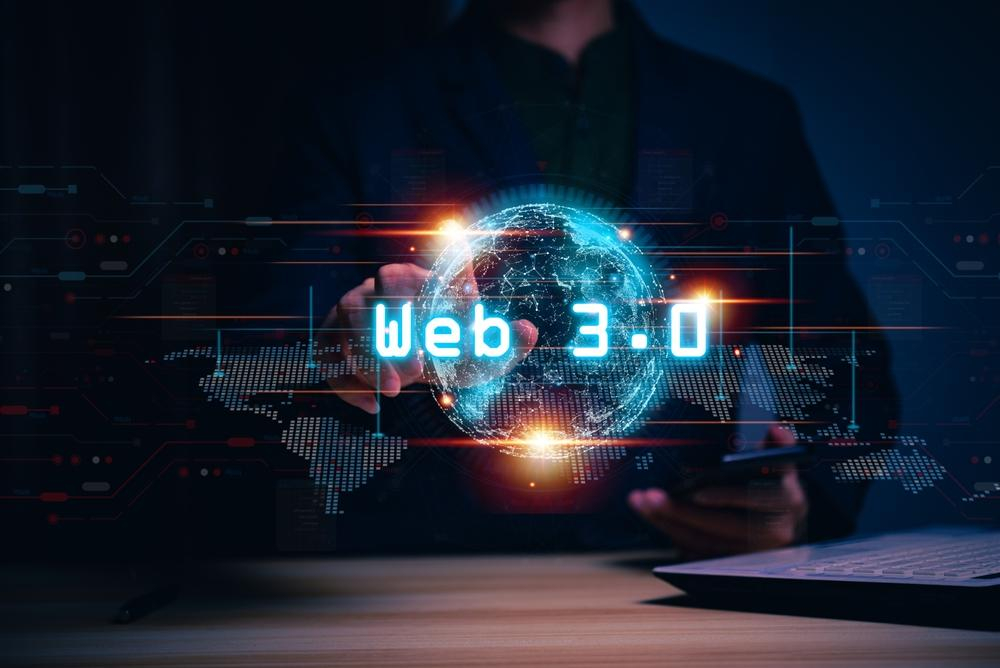
Quantum computing is advancing at a pace that few industries can afford to ignore, and Web3 is among the most exposed. With a global digital asset market valued at nearly $4 trillion, blockchain security depends heavily on cryptographic systems that quantum computers may one day break. In December, Google revealed that its quantum Willow chip completed a calculation in minutes that would take a classical supercomputer longer than the age of the universe. While this breakthrough promises major gains in drug discovery, materials science, and optimization, it also raises urgent concerns for blockchain encryption.
Most blockchains, including Bitcoin and Ethereum, rely on elliptic curve cryptography such as ECDSA, which is theoretically vulnerable to Shor’s algorithm. Once sufficiently powerful quantum computers arrive, they could derive private keys from public keys, putting billions of dollars in crypto assets at risk. This threat is not hypothetical. Adversaries are already harvesting encrypted blockchain data in a “harvest now, decrypt later” strategy, betting on future quantum capabilities. Studies suggest millions of BTC are currently held in quantum-vulnerable address types, making the timeline for action increasingly critical.
Zero-knowledge cryptography offers a promising path forward. Zero-knowledge proofs allow users to prove the validity of a transaction or computation without revealing sensitive information. When built on quantum-resistant foundations, such as hash-based zk-STARKs or lattice-based cryptography, ZK systems can avoid reliance on elliptic curves altogether. While these proofs are currently larger and more computationally intensive, they provide a flexible upgrade path. Blockchains can gradually integrate quantum-resistant ZK proofs alongside existing systems, reducing risk without forcing abrupt protocol overhauls.
Quantum technology may also benefit Web3 in unexpected ways. Recent advances in quantum-generated certified randomness could improve validator selection, decentralized lotteries, and other blockchain mechanisms that depend on fair randomness. Unlike classical pseudo-randomness, quantum randomness is truly unpredictable and resistant to manipulation.
Quantum computing is no longer a distant theory. It is an approaching reality, and Web3 must adapt. By embracing zero-knowledge proofs and quantum-resistant cryptography now, the blockchain industry can transform a looming threat into a long-term advantage.














Comment 0