
 Add as a preferred source on Google
Ethereum Tops Solana in Fees as RWA Settlement Drives $10.48M Daily Revenue
Ethereum outpaced Solana in on-chain fees with $10.48 million in daily revenue, driven by institutional real-world asset settlement activity across its layer-2 ecosystem.



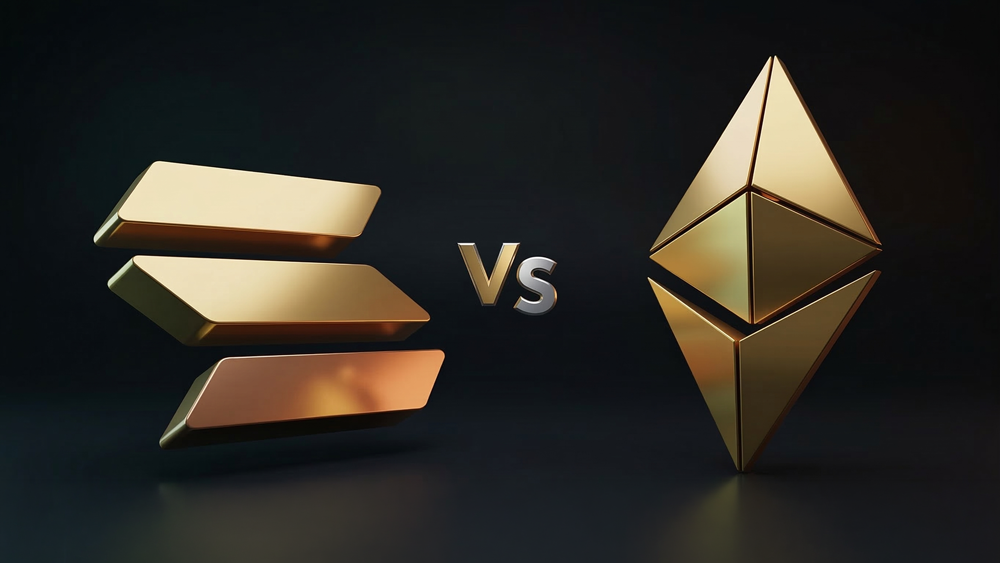
Ethereum (ETH) has widened its lead over Solana (SOL) in on-chain revenue after a sharp spike in fees linked to the settlement activity of 'real-world assets (RWA)', underscoring how the fee race is increasingly being shaped by the quality of capital rather than raw transaction count.
In a 24-hour window tracked during the April 15, 2026 session (UTC), Ethereum generated $10.48 million in fees, outpacing Solana’s $6.43 million. While the headline numbers suggest a simple bout of network outperformance, market participants point to a more structural shift: fee growth driven by 'cash-flowing assets'—not speculative churn—particularly tokenized U.S. Treasury bills (T-bills) and commodity tokenization activity routed through Ethereum’s layer-2 (L2) ecosystem and settled on the main chain.
The pattern matters because it indicates a different revenue engine at work. Instead of memecoin-driven bursts or short-lived liquidity events, Ethereum’s fee lift has been associated with large-scale minting, redemptions, and periodic yield recalibration tied to tokenized Treasury products. Traditional financial institutions—including BlackRock and JPMorgan—have been using Ethereum L2 networks for issuance and distribution, with final settlement executed on Ethereum mainnet. Each settlement-heavy cycle consumes block space and pushes up fees, effectively converting institutional RWA throughput into on-chain revenue.
Circle (CRCL) has also contributed to the trend through its expansion strategy for USD Coin (USDC). As USDC becomes a default settlement asset across L2 ecosystems, it lowers friction for institutional and DeFi participants alike. But it also creates recurring mainnet fee touchpoints through cross-rollup bridging, liquidity movement, and oracle upgrade processes. In other words, this is not merely payment activity—it is financial infrastructure usage translating into sustainable fee generation.
Recent aggregated fee data highlights the scale of Ethereum’s advantage beyond a single day. Over the last seven days, Ethereum posted $62.25 million in fees versus Solana’s $32.39 million. Over 30 days, Ethereum recorded $278.86 million compared with Solana’s $169.03 million—roughly a 65% gap in Ethereum’s favor.
Analysts say the more revealing metric is not volume but 'value per transaction'. Ethereum’s revenue profile is increasingly shaped by high-value settlement flows—transactions that are expensive precisely because they are finalizing economically meaningful activity. Solana, by contrast, has leaned into a high-throughput model built on low-cost execution and large transaction counts, a structure that tends to monetize 'volume' rather than 'margin'.
This padding-versus-volume distinction has direct implications for long-term profitability. The persistence of Ethereum’s lead across weekly and monthly windows suggests the fee surge is less a one-off anomaly and more a reflection of capital reallocating toward on-chain representations of yield-bearing instruments. Tokenized Treasuries behave like financial products that require continuous management—reinvestment, redemption, interest adjustments—creating repeat settlement demand over time rather than a single burst of activity.
Solana continues to demonstrate formidable user traction, particularly in memecoins and high-frequency DeFi, but it faces a different challenge: depth of institutional capital. Market observers note that roughly 80% of the tokenized Treasury market remains concentrated in the Ethereum ecosystem, a dominance that effectively anchors the most lucrative settlement flows to Ethereum’s rails.
Ethereum’s advantage is not without internal tensions. L2 adoption has improved scalability and user experience, but it can also divert revenue away from the main chain as execution shifts to rollups and app-specific environments. Networks such as Base have captured meaningful fee streams that might otherwise accrue directly to Ethereum mainnet. Even so, the latest surge suggests Ethereum’s role as the system’s 'core settlement layer' remains intact—particularly for institutional RWA activity that ultimately requires mainnet finality.
Ultimately, the fee jump reflects an evolution in how crypto networks generate revenue. As Solana expands its user base through speed and cost efficiency, Ethereum is increasingly monetizing a different frontier: the on-chain settlement of real-world, cash-flowing assets backed by institutional distribution. The battle for the fee crown is shifting from transaction counts to 'capital quality'—and in early 2026, Ethereum is positioning itself at the center of that transition.
Article Summary by TokenPost.ai
🔎 Market Interpretation
Ethereum’s fee lead reflects “capital quality,” not just activity: ETH surpassed SOL in a key 24-hour window ($10.48M vs $6.43M) as fee growth was driven by settlement-heavy flows tied to tokenized real-world assets (RWA), rather than speculative bursts.
Institutional RWA settlement is becoming a durable revenue engine: Tokenized U.S. Treasury products and commodity tokenization create recurring on-chain management cycles (mint/redemption/yield updates) that repeatedly consume block space and lift fees.
L2 usage still amplifies mainnet monetization via finality: Even when issuance and distribution occur on Ethereum L2s, final settlement on Ethereum mainnet concentrates economically meaningful “finalization” transactions on L1.
Multi-week trends support a structural shift: Ethereum’s fee advantage persists across longer windows (7D: $62.25M vs $32.39M; 30D: $278.86M vs $169.03M), suggesting this is more than a one-day anomaly.
Solana monetizes volume; Ethereum monetizes margin: SOL’s low-cost, high-throughput model tends to earn on transaction count, while ETH increasingly earns on “value per transaction” driven by high-stakes settlement.
💡 Strategic Points
Watch “value per transaction” as a leading indicator: Rising fees tied to settlement of yield-bearing RWAs imply deeper economic throughput, potentially more resilient than memecoin/liquidity-cycle-driven demand.
Tokenized Treasuries create repeating settlement demand: Unlike one-off trading frenzies, Treasury tokens require ongoing operational actions (rebalancing, reinvestment, redemptions), which can sustain fee pressure over time.
USDC expansion strengthens Ethereum’s settlement connectivity: As USDC becomes the default settlement asset across L2s, bridging, liquidity movements, and oracle/process updates can create recurring mainnet fee touchpoints.
Institutional concentration is a defensible advantage: With ~80% of the tokenized Treasury market reportedly on Ethereum, the most lucrative settlement flows remain anchored to Ethereum’s rails unless that distribution shifts.
Key risk: L2 fee capture vs L1 revenue: Rollups and app-specific environments (e.g., Base) can divert execution fees away from Ethereum mainnet; Ethereum’s upside depends on maintaining L1 as the preferred final settlement layer for RWAs.
Competitive framing: Solana’s path to closing the fee gap likely requires deeper institutional RWA penetration (not just more users), while Ethereum’s challenge is scaling without losing the settlement premium that drives margin.
📘 Glossary
On-chain fees: Payments users make to have transactions processed; in Ethereum, these reflect demand for block space and settlement finality.
On-chain revenue: Network income generated from transaction fees (and related costs), often used as a proxy for economic usage.
Real-world assets (RWA): Tokenized representations of off-chain financial assets (e.g., U.S. Treasuries, commodities) managed and transferred on-chain.
Tokenized U.S. Treasury bills (T-bills): Blockchain-based tokens that represent claims on short-term U.S. government debt, typically yield-bearing and requiring periodic operational updates.
Layer 2 (L2): Networks built atop Ethereum that execute transactions more cheaply/faster, then post proofs/data to Ethereum for security and final settlement.
Mainnet (L1): The base Ethereum blockchain where final settlement and security guarantees are anchored.
Settlement: The final recording of transactions as irreversible state changes—especially important for institutional-grade transfers and redemptions.
Value per transaction: A framing that emphasizes economic importance and willingness to pay for settlement, rather than raw transaction count.
Margin vs volume (in fee models): “Margin” networks earn more per transaction due to high-value settlement; “volume” networks earn via many low-cost transactions.
Bridging (cross-rollup): Moving assets between chains/L2s, often creating mainnet interactions for verification, liquidity routing, or state updates.
Oracle updates: Changes to price feeds/data services used by DeFi and RWA protocols; upgrades and synchronization can generate on-chain transactions.