

 News
News  Coin Information
  About us
  Customer Service


 Add as a preferred source on Google

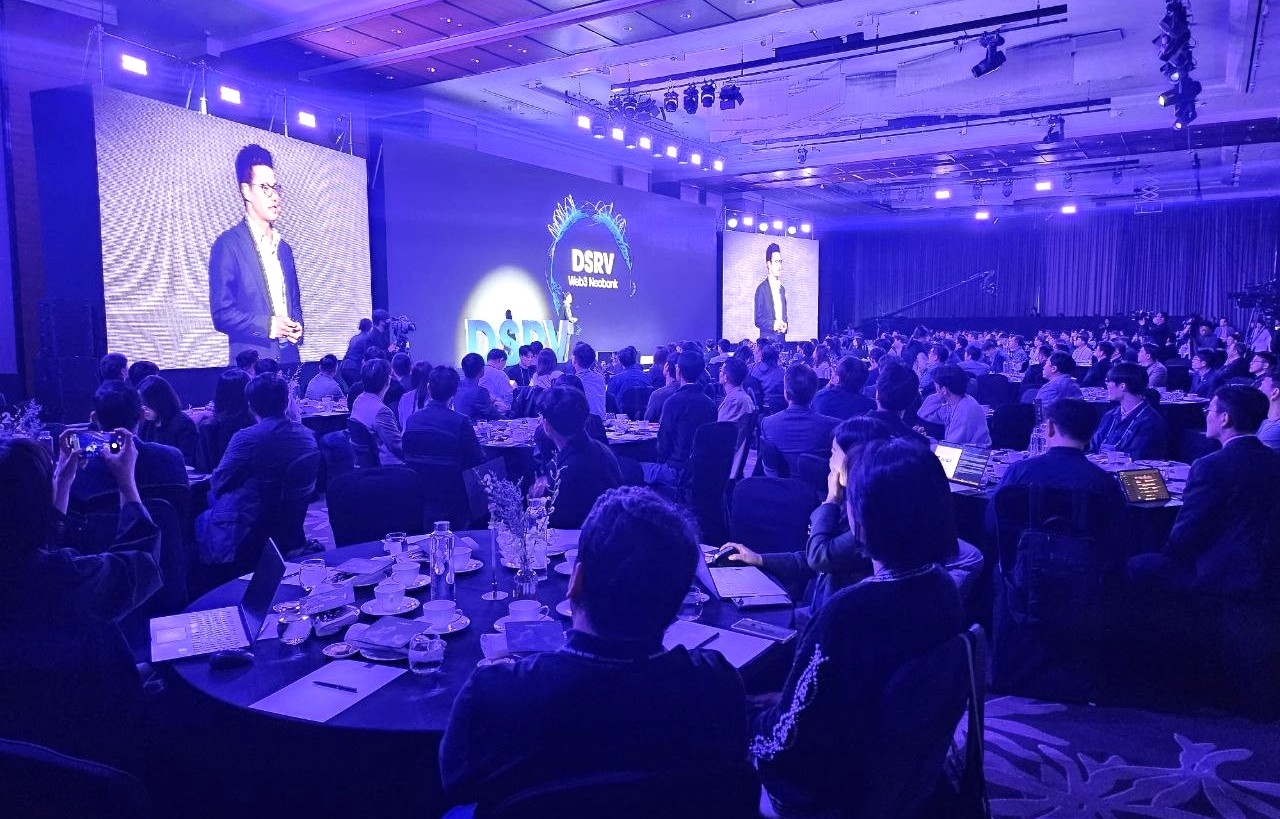
A Web3 operator that once rode the wave of leveraged DeFi has laid out a blueprint for how crypto projects might survive the post-hype era—by shifting from what it describes as a 'token casino' model toward revenue-generating financial infrastructure tied to real-world economic activity.
The account centers on the acquisition of Kleva, a Klaytn-based leveraged yield farming protocol that previously managed hundreds of millions of dollars in total value locked (TVL) at its peak and generated meaningful on-chain fees. On the surface, the protocol looked like a quintessential DeFi success story. But when liquidity incentives declined and token prices corrected, TVL and user activity unwound with a speed that traditional businesses rarely face. Community engagement faded, on-chain transactions slowed, and the narrative premium evaporated—leaving behind a single, stark challenge: building an infrastructure business with 'self-sustaining revenue'.
That was the moment the operator says it chose to buy Kleva. The decision, it argues, was less about chasing residual DeFi momentum and more about acquiring a proven on-chain stack—audited smart contract code, operational tooling, and what it calls honest data revealing why the model stalled. In its telling, the acquisition provided a detailed map of structural constraints and a platform from which to rebuild in a different direction.
Why leveraged yield farming broke down
The post-acquisition diagnosis targets not only Kleva, but a broader generation of Web3 projects built on three assumptions: token prices trend upward over time; high APRs keep users loyal; and a major centralized exchange (CEX) listing is proof of success. Once all three assumptions weakened simultaneously, the foundational economics unraveled.
According to the analysis, much of the capital flowing into high-yield DeFi was short-term and highly rate-sensitive—moving quickly to wherever returns appeared highest. That behavior made durable product loyalty difficult to cultivate. More importantly, these protocols had limited touchpoints with routine financial actions in the real economy—commerce, payments, and subscriptions. Strip away token issuance and price appreciation, the author argues, and many models lacked a credible path to organic revenue.
That critique became the design prompt for a new product direction called Tikkly, framed as a PayFi (payment finance) platform meant to connect Web3 rails to everyday economic behavior.
Reducing CEX dependency without pretending CEX doesn’t matter
The essay takes a pragmatic stance on exchanges: CEXs are difficult to exclude entirely, but projects can avoid being structurally subordinated to them. The author warns that the more a team concentrates resources on token price defense, market-making, and exchange-driven milestones, the more it risks underinvesting in product development and real-user growth.
Instead, it argues, CEXs should be treated as downstream distribution channels that follow proven business traction—not as the strategic center of a project. It proposes three routes to get there:
- Delay the token generation event (TGE): Rather than launching a token and pursuing major listings immediately, projects should prioritize user adoption, revenue signals, and a minimally validated business model first—leaning on DEX-based distribution and product iteration in the interim.
- Make DEXs the primary venue and build protocol-owned liquidity (POL): By shifting price discovery and liquidity formation on-chain—and owning a base layer of liquidity directly—projects can reduce reliance on external market makers and gain operational stability.
- Connect on/off-ramps to regulated financial infrastructure: Integrating with licensed fiat gateways in more mature regulatory jurisdictions could let users move between fiat and on-chain assets without routing through a CEX, simplifying the user journey and reducing exchange gatekeeping.
From DeFi prompts to PayFi prompts
After Kleva, the operator says it kept returning to one question: can Web3 infrastructure really endure if it is not connected to real economic activity? Kleva’s infrastructure, it notes, was robust—but optimized for a single speculative use case: leveraged yield farming. When the market rotated away from that behavior, the protocol’s utility narrowed and demand followed.
The proposed solution was a pivot in first principles—from token-and-exchange-centric thinking to infrastructure aligned with transactions that already happen in everyday life. Where DeFi-era questions tended to be “What token should we issue?”, “How can we maximize APR?”, and “Which exchange listing can pull in liquidity?”, the PayFi framing asks: “Which real-world assets and behaviors can we connect to directly?”, “Can underused resources be converted into stable financial value?”, and “Can we build infrastructure around revenue, users, and cash flow?”
Tikkly’s pitch: monetizing 'invisible assets'
Tikkly is positioned as a platform that tokenizes and monetizes what it calls 'invisible assets'—such as reward points, airline miles, and reputation—turning them into yield-bearing assets that are also spendable for payments. The goal is to make Web3 run as a backend layer while preserving familiar consumer experiences on the front end, reducing the need for users to learn wallets or token mechanics.
The system is described as a three-step process: Aggregate non-cash balances already held by users (points, miles, membership credits); Convert them into a stable, immediately usable payment asset with limited volatility; and Allocate the converted asset into selectively chosen DeFi and real-world asset (RWA) products to generate ongoing yield. The intended end-user experience is simple: dormant points become both usable money and a revenue-producing asset.
The author argues that earlier attempts at points tokenization tended to fail for two reasons: they required users to adopt unfamiliar crypto-native concepts, or they positioned point-based tokens purely as investment products without connecting them to actual payment utility. Tikkly claims to avoid both pitfalls by keeping Web3 complexity behind the scenes and focusing on tangible value delivery—reflecting what it describes as a core lesson from Kleva: users respond to value, not infrastructure.
Early pilots: gaming points and media participation
To demonstrate PayFi beyond theory, the essay highlights two implementation tracks: one in gaming and one in digital media.
In gaming, it points to Dalcomsoft, known for its K-pop IP-based rhythm game franchise “SuperStar,” which has recorded more than 77 million downloads across 126 countries and collaborated with roughly 20 entertainment agencies and over 400 artists. That scale implies a large volume of accumulated in-game points and idle credits distributed across global user accounts. Against a backdrop where Korea’s points liabilities market is estimated at roughly 5 trillion won, the author frames the challenge as unlocking these balances as productive capital for both users and businesses.
In March 2026, the operator says SuhoIO, Dalcomsoft, and NOONE21 signed a three-party memorandum of understanding to build infrastructure that can convert game points into PayFi-enabled assets using the Tikkly solution. The initiative is currently in API integration and pilot validation, with the partners planning to jointly assess commercialization feasibility over the next two years.
In media, the essay cites TokenPost, a Korean blockchain and digital asset outlet with hundreds of thousands of daily visitors and a readership base totaling in the millions. It argues that media engagement data—article views, comments, shares, and community contributions—typically remains unrecognized as a form of value, even though it supports platform growth. Tikkly’s proposed structure would bring these 'media participation assets' onto a PayFi layer, automating internal settlement, management, and monetization of rewards while letting users interact with the site as usual.
Despite the differences between gaming and media, the author says both cases illustrate the same principle: reformatting underutilized, pre-existing 'invisible assets' into yield-bearing digital assets through a PayFi layer—covering the real-economy interface that leveraged DeFi models often missed.
Designing for protocol durability: tokenomics and messaging
The essay closes with two internal design rules it argues are critical for long-term sustainability.
First, it advocates tokenomics oriented around 'protocol durability'—structuring a flywheel in which protocol revenue feeds buybacks or staking yields, which in turn supports token value. The goal is to make valuation more reflective of underlying profit-and-loss dynamics than of a CEX order book and market-making activity.
Second, it calls for a reset in communication. Instead of centering narratives on exchange listings, projects should emphasize solvable problems, user growth, revenue, and measurable traction. That shift, it argues, can cultivate stronger communities and partnerships over time because it places business fundamentals ahead of speculative milestones.
Ultimately, the author distills its experience into three takeaways: infrastructure struggles without sustainable revenue; infrastructure without real users remains unproven; and products that people use regardless of market cycles are what endure. The case suggests that Web3’s next phase may be less about flashy apps and more about quiet, resilient rails—where exchanges become optional distribution rather than existential dependencies, and where value is anchored in cash flow and everyday utility instead of token narratives.
















Comment 0