

 News
News  Coin Information
  About us
  Customer Service


 Add as a preferred source on Google

A well-worn Wall Street maxim—“Accept what the market gives you; don’t demand what you want”—is resurfacing among crypto investors as a reminder that discipline often beats prediction in volatile markets.
The saying is frequently invoked to explain the logic behind 'dollar-cost averaging' (DCA), a method in which an investor allocates a fixed amount of capital at regular intervals—daily, weekly, or monthly—regardless of price. By investing consistently, participants naturally buy fewer units when prices are high and more when prices are low, gradually smoothing the average entry price over time.
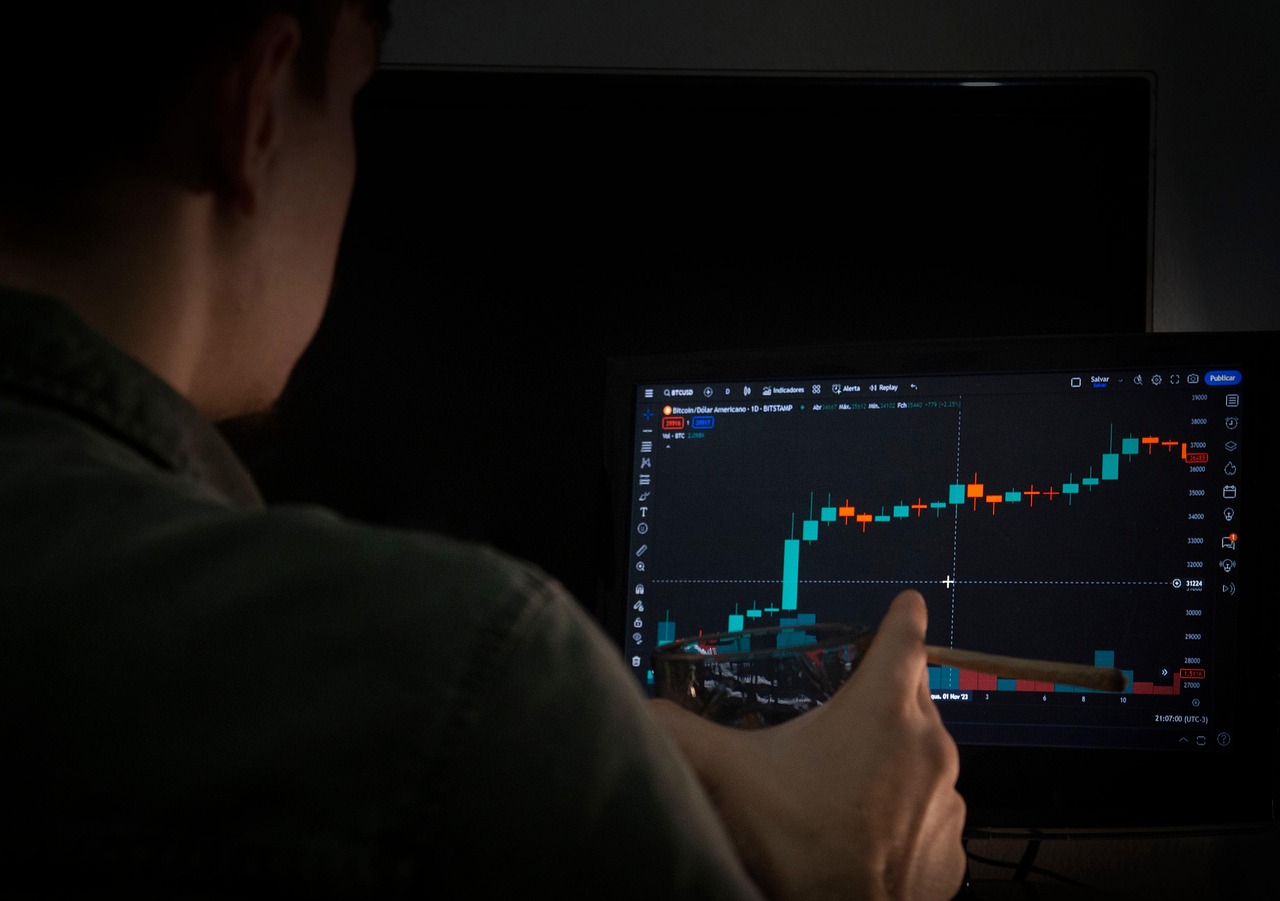
In practical terms, DCA is less about outsmarting the market than staying engaged with it. For crypto holders navigating sharp intraday swings, macro-driven narrative shifts, and sudden liquidity shocks, the approach offers a structured way to participate without the pressure of timing tops and bottoms—a task that even professional traders struggle to execute reliably.
The maxim also reflects a broader behavioral lesson. Investors often approach markets with a strong preference for outcomes—wanting a particular token to rally, insisting a correction “should” arrive, or expecting a recovery to happen on a personal schedule. Markets, however, do not negotiate; they clear at the price where supply and demand meet. The discipline implied by the proverb is to respond to what is happening, rather than anchor decisions to what one hopes will happen.
Wall Street—centered in Lower Manhattan and home to institutions such as the New York Stock Exchange and Nasdaq—has produced centuries of trading folklore distilled from collective experience. These aphorisms are not attributed to a single author so much as to the accumulated trial and error of brokers, investors, and hedge fund operators who learned that emotions tend to be expensive and humility tends to be protective.
In today’s digital-asset market, where sentiment can flip quickly and narratives travel faster than fundamentals, the old guidance remains relevant: sustainable participation often comes from process, not prophecy. The idea is not that DCA guarantees profit, but that it helps reduce decision volatility—the tendency to overreact—when price volatility is unavoidable.
🔎 Market Interpretation
- Discipline over prediction: The Wall Street maxim highlights that reacting to real-time supply/demand is more reliable than insisting the market meet personal expectations—especially in crypto’s high-volatility environment.
- DCA as a volatility response: Dollar-cost averaging is framed as a practical way to stay invested through sharp swings, shifting narratives, and liquidity shocks without needing perfect entries/exits.
- Process-driven participation: The article argues that sustainable participation in digital assets tends to come from consistent rules (process) rather than forecasting (prophecy).
- Behavioral edge: The “market doesn’t negotiate” idea emphasizes that emotional anchoring (hoping for a rally/correction on a personal timeline) can be costly; humility and adaptability are protective.
💡 Strategic Points
- Implement a fixed schedule: Allocate a constant amount at set intervals (daily/weekly/monthly) to reduce the urge to time tops and bottoms.
- Mechanically buy more on dips, less on pumps: DCA naturally adjusts unit purchases—fewer units at higher prices, more at lower prices—helping smooth average entry over time.
- Lower “decision volatility”: Use DCA to minimize overreaction to headlines, intraday swings, and sudden narrative shifts, keeping behavior steady when prices are not.
- Set expectations correctly: DCA is not a profit guarantee; it is a risk-management and behavioral tool designed to keep participation consistent under uncertainty.
- Avoid outcome fixation: Replace “should happen” thinking with rules-based actions (e.g., invest on schedule, rebalance by policy) to prevent emotion-driven trades.
📘 Glossary
- Dollar-Cost Averaging (DCA): Investing a fixed amount at regular intervals regardless of price to reduce timing risk and smooth the average entry price.
- Average Entry Price: The blended cost basis resulting from multiple buys at different prices over time.
- Timing the Market: Attempting to buy at bottoms and sell at tops; difficult to do consistently, even for professional traders.
- Liquidity Shock: A sudden change in market liquidity that can cause rapid, outsized price moves.
- Narrative Shift: A rapid change in market story/sentiment (often headline-driven) that can move prices faster than fundamentals.
- Supply and Demand Clearing Price: The price level where buyers and sellers agree to transact—markets “clear” here, not at an investor’s preferred level.
- Decision Volatility: The tendency to frequently change strategy or trade impulsively in response to price moves; distinct from price volatility.
















Comment 0