

 News
News  Coin Information
  About us
  Customer Service


 Add as a preferred source on Google
U.S. equities are again pressing toward record highs, but a growing gap between upbeat asset prices and weakening consumer buffers is raising fresh questions about how durable the broader risk rally really is. In a recent report, Alea Research argued that the market’s optimism is increasingly concentrated in one narrow engine—AI-driven capital expenditure—and that the same dynamic is reshaping crypto into a more selective market where capital favors 'liquidity', clear 'value accrual', and identifiable catalysts over blanket beta.
The framework is notable for treating stocks, Treasuries, AI infrastructure, and digital assets as one connected flow of risk appetite. On the surface, the tone has improved: the S&P 500 and Nasdaq have attempted new highs on easing oil pressure and renewed confidence in AI-linked earnings, while Asian equities have joined the rebound. Bitcoin (BTC) has held relatively steady around the $80,000–$82,000 range, supported by spot ETF inflows and a macro backdrop that has, for now, stopped deteriorating.
Alea’s central concern, however, is that the 'boom' priced into markets is unusually narrow—especially given signs of strain in the real economy. U.S. personal savings rates have fallen to 3.6%, their lowest since 2022, suggesting households’ financial cushions are thinning even as asset valuations remain elevated. At the same time, the 30-year U.S. Treasury yield has moved back toward the 5% threshold, a level that has repeatedly acted as a headwind for risk assets over the past two years.
Should long-term yields break above 5% and stay there, financing costs could rise across the economy—from mortgages and corporate borrowing to government funding—while bonds become more competitive relative to equities. Alea pointed to similar episodes in late 2023 and early 2025, when equity momentum softened as long-end yields approached comparable levels.
What makes the current cycle different, the report argues, is the extent to which the U.S. growth narrative has become tethered to AI spending. Citing Morgan Stanley estimates, Alea noted that 2026 capex among major Big Tech firms—Amazon ($AMZN), Alphabet ($GOOGL), Meta ($META), Microsoft ($MSFT), and Oracle ($ORCL)—could reach roughly $805 billion, rising to about $1.1 trillion in 2027. By Alea’s framing, 2026 spending alone would rival the aggregate capex of non-tech companies in the S&P 500, underscoring just how concentrated the incremental growth impulse has become.
This investment wave goes far beyond building a handful of data centers. It cascades through semiconductors, memory, servers, fiber optics, cooling systems, power supply and utilities, data-center REITs, and even private credit. In effect, one dollar of AI capex becomes someone else’s revenue dollar across the supply chain. The structural drawback, Alea argues, is that the broader market’s growth expectations become overly dependent on the balance sheets and cash flows of a small cluster of hyperscale firms—what the report described as a core vulnerability in the 'AI trade'.
The concentration is increasingly visible in how speculative energy is being expressed. In prior cycles, that capital often rotated first into crypto. More recently, Alea observed, the market has treated scarce computing, memory, and storage capacity as the primary vehicles for high-beta exposure, driving re-ratings in chip-related equities. While the report cited names such as SK hynix and U.S. semiconductor firms as beneficiaries of the AI demand narrative, the point was broader: investors are paying for infrastructure tied to measurable revenue, not just an abstract story.
Against that backdrop, Alea characterized crypto as a market that still tracks risk appetite, but in a much more discriminating way. Bitcoin (BTC) remains the benchmark for crypto risk sentiment, supported by structural demand and the steady influence of ETF flows. Altcoins, by contrast, are facing tougher scrutiny—an indication that the market is no longer assigning a generalized premium across the token universe.
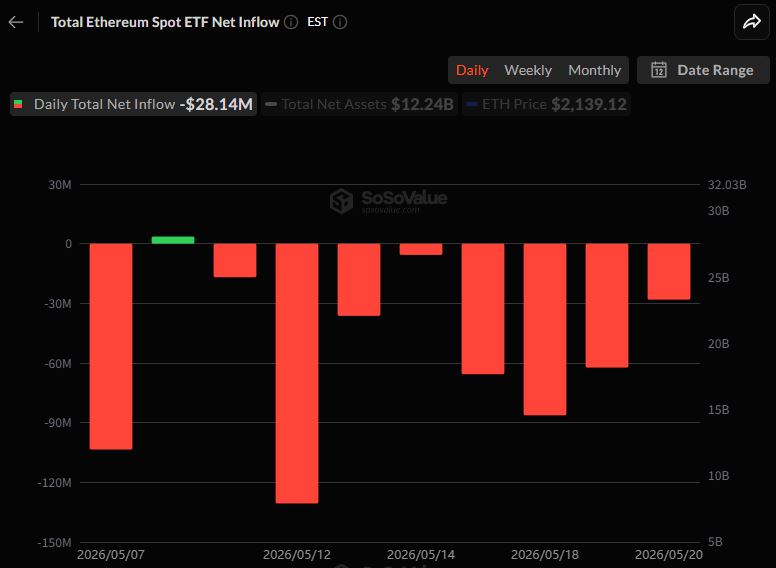
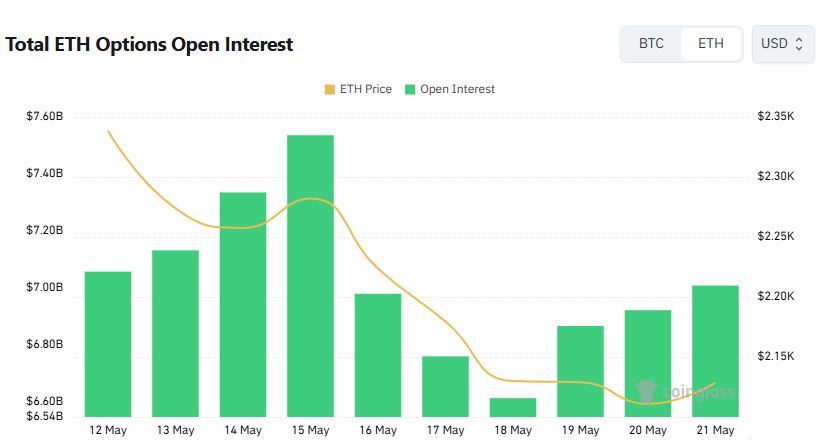
Ethereum (ETH) has shown signs of gradual recovery amid expectations of stronger ETF-related positioning and ongoing interoperability improvements. Solana (SOL) has attracted attention on payments-related headlines, as investors look for real-world distribution and latency advantages that could translate into adoption. Yet across the broader altcoin complex, Alea emphasized that upside has been increasingly concentrated in a limited set of what it described as isolated winners.
Among standout moves, the report pointed to Hyperliquid (HYPE), where ecosystem expansion and points-driven speculation contributed to heightened interest. Zcash (ZEC) also rallied on a renewed privacy narrative and changes to its incentive structure. Toncoin (TON) surged as its integration story with Telegram strengthened, offering a clearer distribution channel than many other networks can credibly claim.
Still, Alea’s broader message was that these are exceptions rather than evidence of a market-wide altcoin revival. Many tokens continue to struggle with thin 'liquidity', weak or nonexistent cash-flow links, dilution risk, and looming unlock schedules—structural issues that remain unresolved even during periods of improved macro sentiment.
The report was particularly skeptical of how quickly tokenization of real-world assets (RWA) can translate into value for token holders. While projects such as Ondo (ONDO), Centrifuge (CFG), and Monad (MON) have produced a steady stream of headline partnerships and distribution milestones, Alea argued that the pathway from institutional adoption to token-level cash flows is still limited. In its phrasing, RWA headlines may accrue to businesses first, while token holders continue to wait for clearer 'value accrual' mechanics.
A similar lens was applied to DePIN and storage tokens often framed as adjacent beneficiaries of the AI buildout. Filecoin (FIL), Arweave (AR), and Akash Network (AKT) have at times traded as 'AI beta' proxies, but Alea cautioned that sustained demand has yet to be conclusively demonstrated. Simply being associated with AI infrastructure, it argued, does not guarantee durable value.
In DeFi, Alea suggested the market has become less forgiving toward purely narrative-driven valuations. Aave (AAVE) was cited as facing challenges after the suspension of buybacks and lingering legal uncertainties reduced automatic bid support. Morpho was framed as having potential to expand toward more institutional credit use cases, but not yet as a straightforward cash-flow asset. Pendle (PENDLE) retained longer-term re-rating potential due to its buyback structure and positioning in yield trading, though Alea argued the market is not currently in a phase of paying immediate premiums without clearer catalysts.
Alea’s conclusion amounted to a pragmatic playbook for a late-cycle, AI-concentrated environment. First, it said the equity uptrend should be respected, but the 30-year yield approaching 5% should be treated as a real warning line rather than background noise. Second, it framed AI capex as the strongest tailwind in the macro narrative for now, while emphasizing that its extreme concentration increases fragility. Third, in crypto, it argued that investors should pay only for assets with ample 'liquidity', well-defined 'value accrual', and catalysts capable of moving price.
Ultimately, the report does not reject the risk rally—but it stresses that today’s strength is narrow. Stocks may be nearing new highs even as consumers’ buffers erode; AI may be powering growth, but that engine is concentrated in a small set of corporate balance sheets; and crypto remains a selective, winner-takes-most market rather than a synchronized altcoin surge. Alea’s bottom line was that the environment can remain superficially supportive until long-term yields decisively challenge optimism—but in digital assets, broad beta exposure is giving way to a more demanding market that rewards proven structure, revenue linkage, and credible catalysts.
🔎 Market Interpretation
- Risk rally looks healthy on the surface, but is increasingly narrow: U.S. equities are near record highs, yet the optimism is concentrated in AI-linked capex while household financial buffers (savings rate ~3.6%) are thinning.
- Rates are the key macro tripwire: The 30-year U.S. Treasury yield nearing 5% is framed as a repeat historical headwind—if it breaks and holds above 5%, financing costs rise and bonds become more compelling versus equities, potentially cooling risk assets.
- AI capex is the dominant growth engine—and a fragility point: Big Tech capex is projected to be extraordinary (Alea cites Morgan Stanley: ~$805B in 2026, ~$1.1T in 2027 across major hyperscalers). This drives broad supply-chain revenues (chips, memory, servers, power, REITs, credit) but concentrates the macro narrative on a small set of balance sheets.
- Crypto is tracking risk—but with much stronger selectivity: Bitcoin remains supported by structural demand and ETF flows, while altcoins are no longer receiving a generalized “beta” premium; capital is moving toward assets with liquidity, clear value capture, and specific catalysts.
- Winners exist, but don’t signal a full altcoin cycle: Isolated outperformers (e.g., HYPE ecosystem/points activity; ZEC privacy + incentive changes; TON Telegram distribution) stand out against a broader field burdened by dilution, unlocks, and weak cash-flow linkage.
💡 Strategic Points
- Treat the 30-year yield ~5% as a “risk line”: Maintain respect for equity momentum, but tighten risk controls if long-end yields break higher (historically associated with softer equity/crypto impulse).
- Position for AI capex spillovers—but recognize concentration risk: Beneficiaries include semiconductors, memory, networking/fiber, cooling, utilities/power infrastructure, data-center REITs, and private credit. The key risk is over-dependence on hyperscaler spending staying uninterrupted.
- Prefer “measurable-revenue” exposure over pure narrative: The report implies markets are paying up for infrastructure with observable demand (compute/memory/storage constraints), not just thematic storytelling.
- In crypto, prioritize quality filters:
- Liquidity: Depth to enter/exit without excessive slippage; avoids being trapped during drawdowns.
- Value accrual: Credible mechanisms linking usage/adoption to token economics (fees, buybacks, staking rewards tied to real revenue, etc.).
- Catalysts: Near- to mid-term events that can re-rate assets (ETF positioning, distribution integrations, protocol changes, incentive redesigns).
- Be cautious with RWA and “AI-adjacent tokens” without proven token capture: Partnerships and institutional headlines (e.g., ONDO/CFG/MON) may benefit businesses before tokens; DePIN/storage “AI beta” narratives (e.g., FIL/AR/AKT) still need sustained demand proof.
- DeFi is being repriced by cash-flow clarity and policy risk: AAVE faces reduced bid support after buyback suspension plus legal uncertainty; Morpho has institutional-credit optionality but is not yet a clean cash-flow story; PENDLE has buyback/yield-trading positioning but needs clearer catalysts for immediate premiums.
📘 Glossary
- 30-year Treasury yield: Interest rate on long-dated U.S. government debt; higher yields can tighten financial conditions and pressure valuations of risk assets.
- Capex (Capital Expenditure): Corporate spending on long-term assets (e.g., data centers, GPUs, networking) intended to drive future growth.
- Hyperscalers: Large cloud/AI infrastructure operators (e.g., Amazon, Alphabet, Microsoft, Meta, Oracle) able to deploy massive capex at scale.
- AI trade: Market positioning that benefits from AI infrastructure buildout and AI-driven earnings expectations (chips, data centers, power, cloud).
- Risk rally: Broad rise in higher-risk assets (equities, crypto, high beta) often supported by improving liquidity or growth expectations.
- Spot Bitcoin ETF inflows: Net new capital entering exchange-traded funds that hold Bitcoin directly; can provide persistent demand support.
- Liquidity (crypto): How easily an asset can be traded without moving price materially; influenced by order-book depth and market participation.
- Value accrual: The pathway for a token to capture economic value from usage (fees, burns, buybacks, revenue sharing, staking tied to real demand).
- Catalyst: A concrete event or development that can change expectations (product launch, integration, incentive redesign, ETF activity, regulation).
- Unlock schedule: Timeline for previously locked tokens to become tradable; can create sell pressure and dilute holders.
- RWA tokenization: On-chain representation of real-world assets (e.g., treasuries, credit); adoption may not automatically translate to token holder returns without explicit value capture.
- DePIN: Decentralized Physical Infrastructure Networks—crypto projects coordinating real-world infrastructure (compute, storage, wireless) via tokens.
- Beta (crypto beta): General market exposure—assets rising/falling mainly with overall crypto sentiment rather than project-specific fundamentals.

















Comment 0