

 News
News  Coin Information
  About us
  Customer Service


 Add as a preferred source on Google
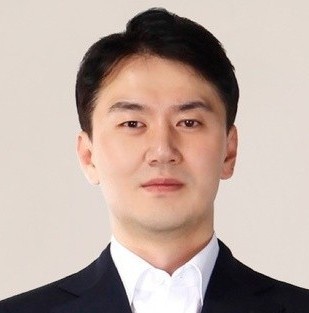
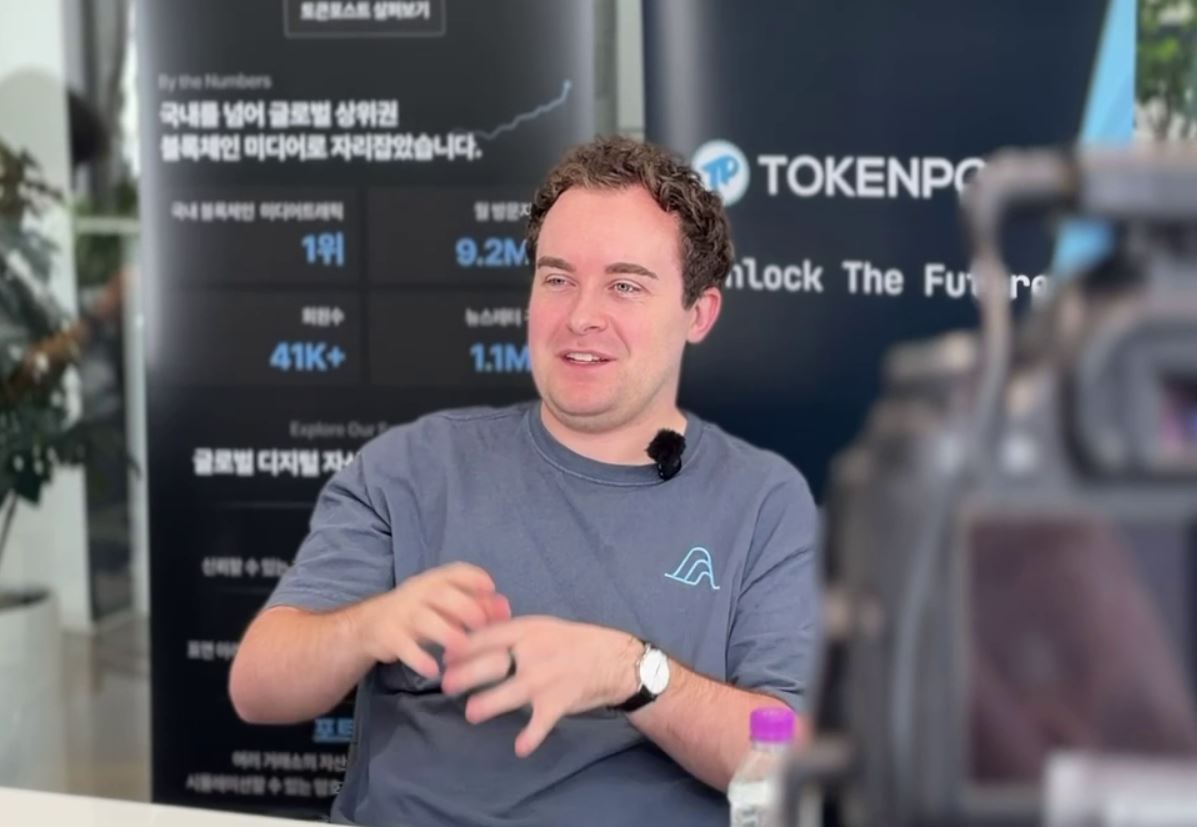
Fresh off a $50 million raise led by Dragonfly, the Goldman Sachs and Google alum explains why his platform is built like a brokerage instead of an exchange — and why the real demand for on-chain markets hasn't been discovered yet.
Lucas Schuermann has spent nearly a decade trading crypto without ever really owning any. He and Edward Yu — the first person he met in his dorm at Columbia, and his business partner ever since — launched a quantitative hedge fund straight out of college in 2016, running market-neutral strategies that profited from inefficiencies rather than price. "I wish I held some beta through that whole time," he says of the years when Ether traded in the tens of dollars. "But unfortunately, we were quant trading the whole time."
The fund, Qu, was acquired by Digital Currency Group, where Mr. Schuermann became vice president of engineering at Genesis — then one of the largest trading desks in crypto — while Mr. Yu ran quantitative trading through what he calls "the glory days" of 2019 to 2021. When their two-year vesting ended, they started over with Variational, a derivatives platform built on a contrarian premise: that crypto does not need another exchange.
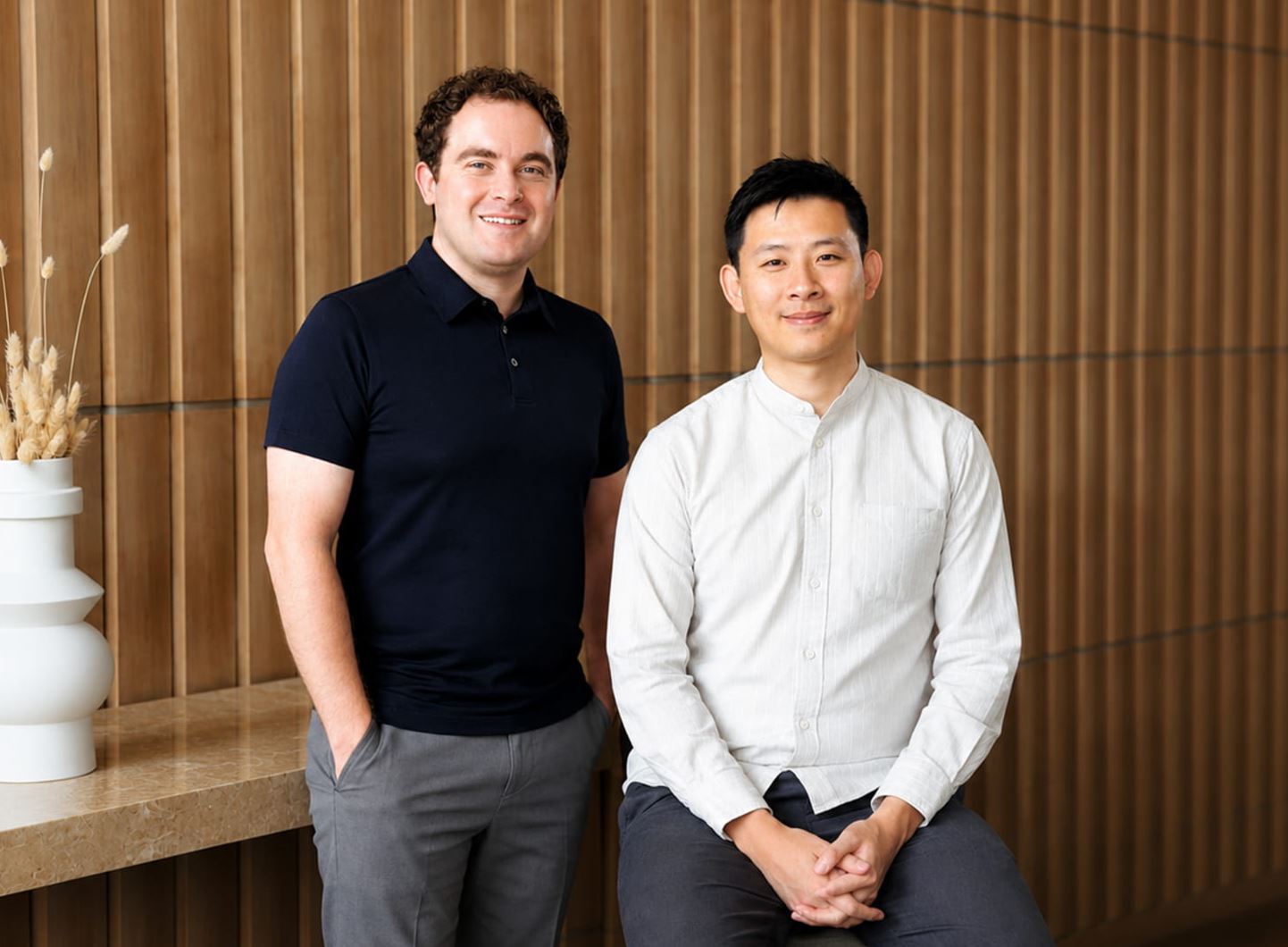
The thesis is paying off. Variational's consumer app, Omni, has become one of the largest on-chain venues for perpetual futures, with roughly 450 crypto markets, zero trading fees, more than 20,000 weekly active users, and daily volumes that reached $1 billion to $1.5 billion. Last month the company announced a $50 million Series A led by Dragonfly, with Bain Capital Crypto and Coinbase Ventures participating — capital aimed at an ambitious second act: listing more than 100 traditional markets, from U.S. stocks to commodities, with liquidity sourced directly from Wall Street's biggest trading firms.
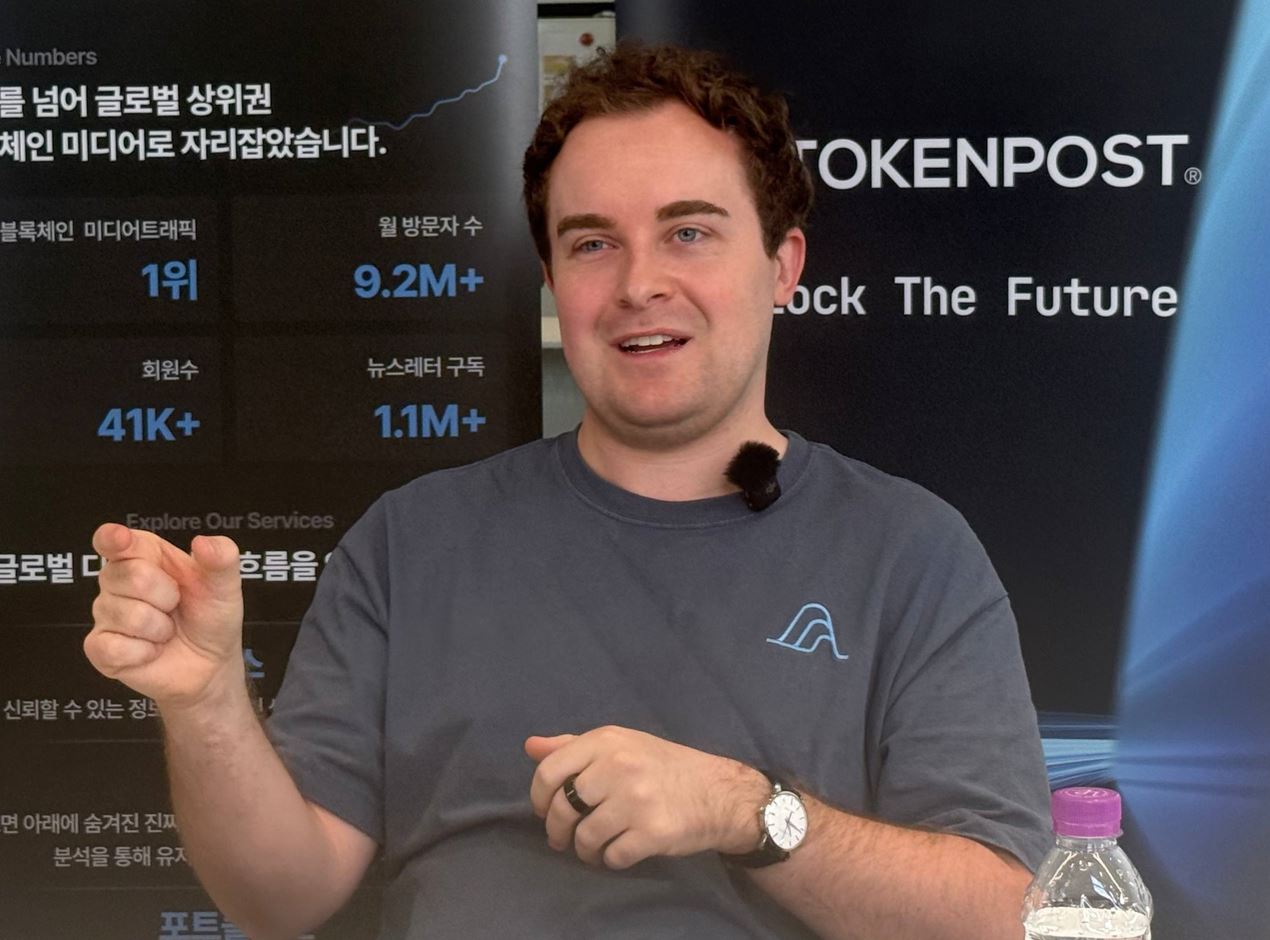
Mr. Schuermann sat down with TokenPost at our Seoul office during a recent visit to Korea, a market he is courting with unusual sincerity — partly for business reasons, and partly, as he readily admits, because he grew up on Korean StarCraft broadcasts. The conversation has been edited and condensed for clarity.
You came from Goldman Sachs and Google. What did crypto look like when you first encountered it?
It was more of a technology — a study group. I almost want to use the word cult. The early believers were very fervent. We pivoted our fund into crypto because colleagues at Columbia who were deep into the technology pitched us on it, and because we saw the vertical was going to grow. We were in that early crop of funds doing market-neutral strategies on crypto, and there was no infrastructure. To short, sometimes we had to go OTC — desks in the U.K., over CFDs — because perpetual futures exchanges were just getting started. And regulators were learning in real time. We were running a regulated fund out of New York, so we found ourselves doing some of the educating.
Why start Variational instead of competing where you already had an edge?
Once we finished our vest at Genesis, we wanted to be entrepreneurs again, and we asked: where's the niche that still needs competition? It wasn't going head-to-head with Wintermute or Jump on Binance. We saw many people building roughly the same business — exchanges, in various on-chain forms. Some did it really well, like Hyperliquid. But we asked: what if someone tried something different? What if someone tried a broker-like model instead of building yet another limit order book?
When you trade on Robinhood in the U.S., you're not trading on an exchange. It routes orders to liquidity that already exists — big dealers, exchanges, dark pools. The liquidity is already there on Nasdaq, on the Korea Exchange. We didn't see a way to do order books better. We saw a way to skip them entirely.
What does that mean in practice for a trader?
Three things. Because we aggregate liquidity instead of bootstrapping an order book for every listing, we can list almost anything — that's how you get to 450 crypto perps. Second, zero fees: like a traditional brokerage, we monetize on spreads and flow, so users aren't double-paying market makers and fees. And third, the aggregation isn't limited to crypto liquidity. We can face the traditional finance players in New York, Chicago and Amsterdam directly, and bring their liquidity on-chain.
Here's how I'd reframe all the jargon about order books and liquidity: lack of liquidity is a cost. Fees are a cost. And when costs get low enough, trading explodes. We trade more gold on a daily basis now than Hyperliquid — one of my favorite stats — and I think it's driven by the fact that gold is one of the markets where they still have heavy fees turned on. That shows you how powerful the fee difference really is.
You were profitable before the raise. Why take $50 million in dilution?
I get that question a lot. The answer is the TradFi connectivity. In the first quarter we partnered with some of the largest dealers and market makers — tier-one, household-name financial institutions — for wholesaling and liquidity provision on real-world assets. Getting companies of that size to take you seriously requires a certain level of connection, and frankly, capital. We had to be of a certain size to face them comfortably. There are backers we haven't been able to announce yet; some of that may come in the coming weeks.
The RWA push is happening in a brutal market. Bitcoin is around $60,000 and underperforming nearly everything. How is that changing trader behavior?
The biggest shift I've seen is that even within crypto, people want to trade traditional assets. Traders aren't thinking, "I myopically trade crypto as an asset class." They're thinking: where's the opportunity? Right now that's semiconductors, memory stocks, the KOSPI index on leverage — and a little bit less the 50th coin by market cap.
It's a flight to quality, and it's because people are evaluating crypto through the same lens as equity investing. What am I underwriting? Is there revenue? Is there a long-term business? That wasn't the case in 2016 or 2017. Hyperliquid is the great example — real product, real users, real revenue linked to the token. I hope Variational will add to that list. But it's a smaller set than people would like, so we might not be through the worst of it yet.
You keep using the phrase "discovered demand." What do you mean?
Compare dYdX with Hyperliquid. There was clearly a market for on-chain perps trading in 2022 and 2023, but the technology had limitations — usable, but not seamless, not with liquidity that could compete with a centralized exchange. Once the technology crossed a certain level, the real demand was discovered. That was Hyperliquid's growth.
I think the same is true for RWA perps, even though they're already getting national coverage in the Wall Street Journal. Once there's no real gap between trading a stock on a U.S. broker and executing it on-chain — same execution quality, no worrying about thin order books or weekend wicks — we'll see an explosion much bigger than what we have now. Hundreds of global markets, one balance, one app, all with leverage and great execution. That doesn't exist anywhere today, on-chain or off.
You've said crypto's best applications hide the crypto. Isn't that a strange thing for a crypto founder to argue?
It's a bit contrarian, but I think it's being popularized. The best crypto apps use it as an enablement layer underneath. Look at stablecoins, or prediction markets — the average user doesn't think of those as crypto apps. The wallets and bridging are abstracted away.
And there have been so many silent victories. In 2016, it was a win for Goldman Sachs to even mention the word Bitcoin on a client call. Now Mastercard is partnering with Arbitrum, and the CEO of a major exchange is name-checking Hyperliquid on an earnings call. Meanwhile, a lot of crypto options trading still happens over Telegram and Bloomberg chats, with an ops team somewhere settling trades by email — in 2026. That's true in traditional banking too. These are multi-trillion-dollar markets running on antiquated plumbing, and that's where our institutional platform, Pro, is headed.
Where does this end up? Does everything trade on-chain?
I have a few strong opinions. Number one: everyone should be trading perps. For a trader, they're close to a perfect instrument — you can go long and short, the liquidity is high quality, and in an efficient market the funding rates give you quite cheap leverage. Number two: the line between on-chain and traditional rails is going to get blurry. As we add things like email sign-in and more traditional deposit rails — because arbitraging USDC isn't realistic for the average retail user — our ambition isn't to be a better trading platform within crypto. It's to eventually compete with the larger traditional brokerages.
Over the summer we'll list at least 100 more traditional markets. Retail demands access to global markets, and we're going to give them that.
What's your plan for Korea?
To treat it as a major market. I'm here frequently. Sungjae joined our team, and we have more hires we'll announce soon. Koreans love crypto and Koreans love trading — those are two things Variational loves as well. We're also exploring Korean equities, doing the regulatory analysis now, and as part of our phase three, working directly with Korean institutions, or institutions that can help cover East Asian markets, is very much a priority. We're a professional team running a cautious business, and we'll always operate in line with regulation. But we think there's a lot of room to run here.
Any final message for our readers?
I need recommendations for a good PC bang. I want to get back into StarCraft — I'm from the old-school generation, late StarCraft 1, early StarCraft 2, back when Twitch was still called Justin.tv.








Comment 0