
 Add as a preferred source on Google
Bitcoin’s mainstream shift meets political polarization and cultural barriers
Bitcoin is becoming part of mainstream finance but may face deeper political polarization. Troy Cross says brand confusion and insider culture are limiting broader adoption.




Bitcoin may become more politically polarized even as it settles into the everyday fabric of financial markets. Confusion with the wider cryptocurrency sector and an insular culture among existing users remain barriers to broader adoption.
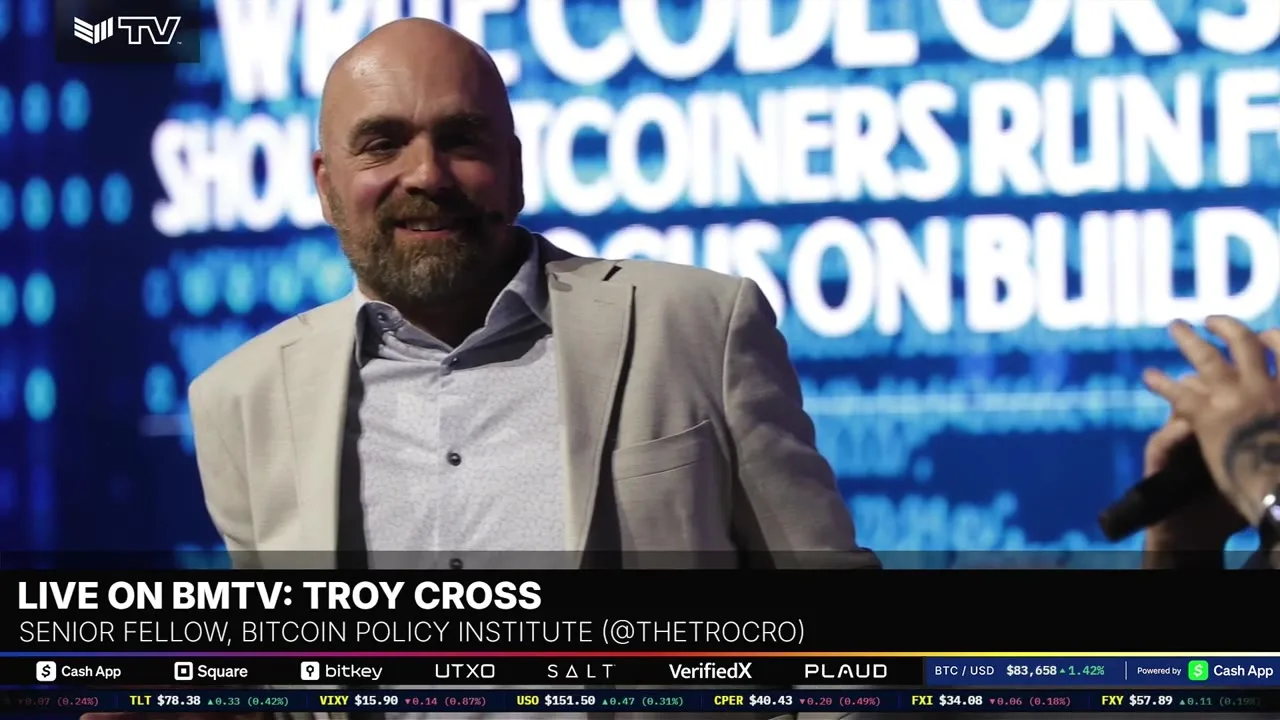
In an Oct. 14 interview with Bitcoin Magazine, Troy Cross, a philosophy professor at Reed College, chief editor of the Nakamoto Project and senior fellow at the Bitcoin Policy Institute, said he expects Bitcoin to become more normalized while political divisions around it deepen.
Cross said the failure of cryptocurrency legislation may represent a setback for the United States, but not necessarily for Bitcoin. Regardless of political decisions, the network continues producing blocks and operating, he said.
To improve public understanding, the Nakamoto Project placed educational advertisements and essays in The Wall Street Journal. Cross said readers spent about three times longer on the essays than on regular content, while some advertisements generated click-through rates four to six times the norm. The campaign's purpose is education rather than selling Bitcoin, he added.
Two Nakamoto Project surveys covering 3,500 Americans initially found no statistically significant relationship between political ideology and Bitcoin ownership. Ownership tilted slightly more conservative after Donald Trump’s election, but the correlation remained weak, while overall sentiment toward Bitcoin stayed roughly neutral.
Cross expects the 2026 survey now underway to show greater political polarization alongside wider social acceptance. Institutional participation has helped turn Bitcoin from a novelty into part of the financial backdrop, he said. Other political issues may also displace Bitcoin as a flashpoint, much as AI has overtaken Bitcoin mining in debates about data centers.
Bitcoin’s powerful brand may itself pose a risk. Cross cited 95% brand recognition, but said some respondents claimed to own Bitcoin before identifying their holdings as Solana or XRP, illustrating persistent confusion between Bitcoin and cryptocurrency more broadly. He said changing those perceptions could take years and would depend on both price action and education.
Bitcoin owners account for about 18% of the U.S. population, compared with 82% who do not own it, Cross said. Messaging built around insider terminology and tribal signals can alienate people outside the existing community, making familiar media, trusted voices and language accessible to a broader audience essential.
Price gains alone may not persuade people to use Bitcoin widely in payments or business. Moving beyond a private purchase through Robinhood and integrating Bitcoin into daily or commercial life will require deeper understanding and broader cultural acceptance, Cross said.
Riza Dagoc
Riza Dagoc reports on regulation, investing and the digital-asset business for TokenPost. Send corrections or tips to info@tokenpost.com.