
 Add as a preferred source on Google
Blockchain’s AI-era value lies in security over computing, with quantum money a longer-term prospect
Tarun Chitra argues that blockchain’s AI-era role centers on securing identities, assets and verifiable records. He also discusses on-demand rollups and quantum money as a distant possibility.

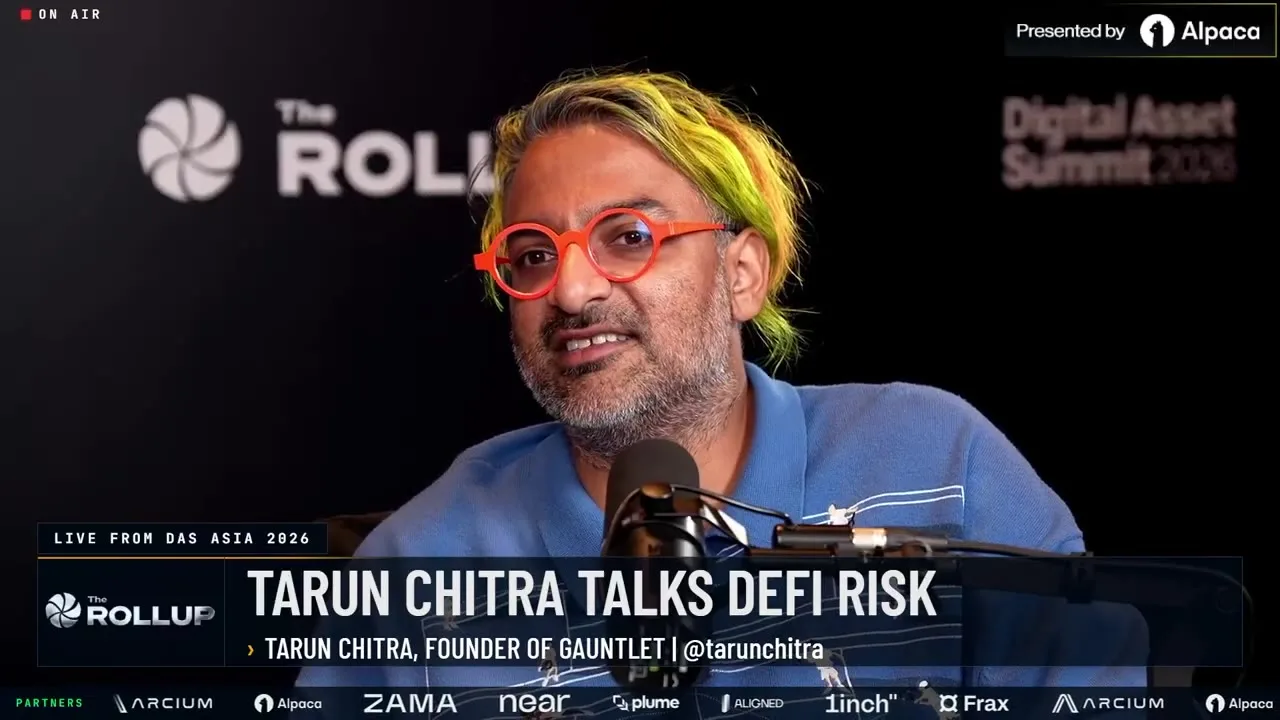
Blockchain’s strongest role in an AI-driven world may be securing identities and assets rather than processing more computation. Its value would come from protecting critical records and verifying work performed elsewhere.
In an interview with The Rollup on October 26, Tarun Chitra argued that blockchain could serve as a cryptographic safety net: a public record of identities and assets that is difficult to forge. Computation could take place off-chain, he said, provided its results could be verified.
Chitra said computing resources had become a commodity, making the security of records more important than smart-contract computation itself. After the push for greater throughput, faster transactions and better bandwidth use, blockchain’s computational limits had become clearer. He argued that shared resources should be reserved for tasks such as identity verification and asset transfers, where security matters more than computational capacity.
He compared the “world computer” concept to everyone sharing a single ChatGPT window and competing to enter prompts. In a world where AI agents constantly attempt to compromise systems, he said, blockchain’s value would rest on being the hardest infrastructure to break.
Rollups could also become temporary infrastructure if AI-generated code became sufficiently reliable and secure, Chitra suggested. Agents could create a rollup when needed and dismantle it afterward. He said rollups that had shut down faced substantial operating costs without sufficient demand; creating them on demand could reduce the expense of maintaining persistent state.
Looking beyond blockchain, Chitra pointed to quantum money, a concept studied since the 1970s. He described designs that use quantum states to support single-use private keys and greater privacy. Such systems would require quantum computers and the ability to measure and access the relevant quantum states.
His argument centered on the no-cloning theorem, under which an unknown quantum state cannot be copied exactly. While blockchains use cryptographic mechanisms to prevent double spending, quantum money could draw on that physical constraint. Chitra suggested this could eventually offer stronger security guarantees than existing blockchain systems.
Chitra framed quantum money as a distant possibility whose prerequisites remain unavailable. Classical cryptography depends on assumptions that certain computational problems are difficult to solve, he said, while advances in AI could challenge some of those assumptions. His longer-term question was what form of money could remain secure if those foundations failed.
Riza Dagoc
Riza Dagoc reports on regulation, investing and the digital-asset business for TokenPost. Send corrections or tips to info@tokenpost.com.