
 Add as a preferred source on Google
Privacy is a requirement for finance, Aztec co-founder says in case for private smart contracts
Aztec co-founder Zach Williamson says private smart contracts could enable compliant real-world assets to work across DeFi, making privacy a financial requirement rather than an optional feature.

Financial products that cannot operate on public ledgers could drive blockchain privacy adoption more than demand for data protection alone. Private smart contracts could allow services to verify identities and meet compliance requirements for real-world assets while keeping those assets usable across financial applications.
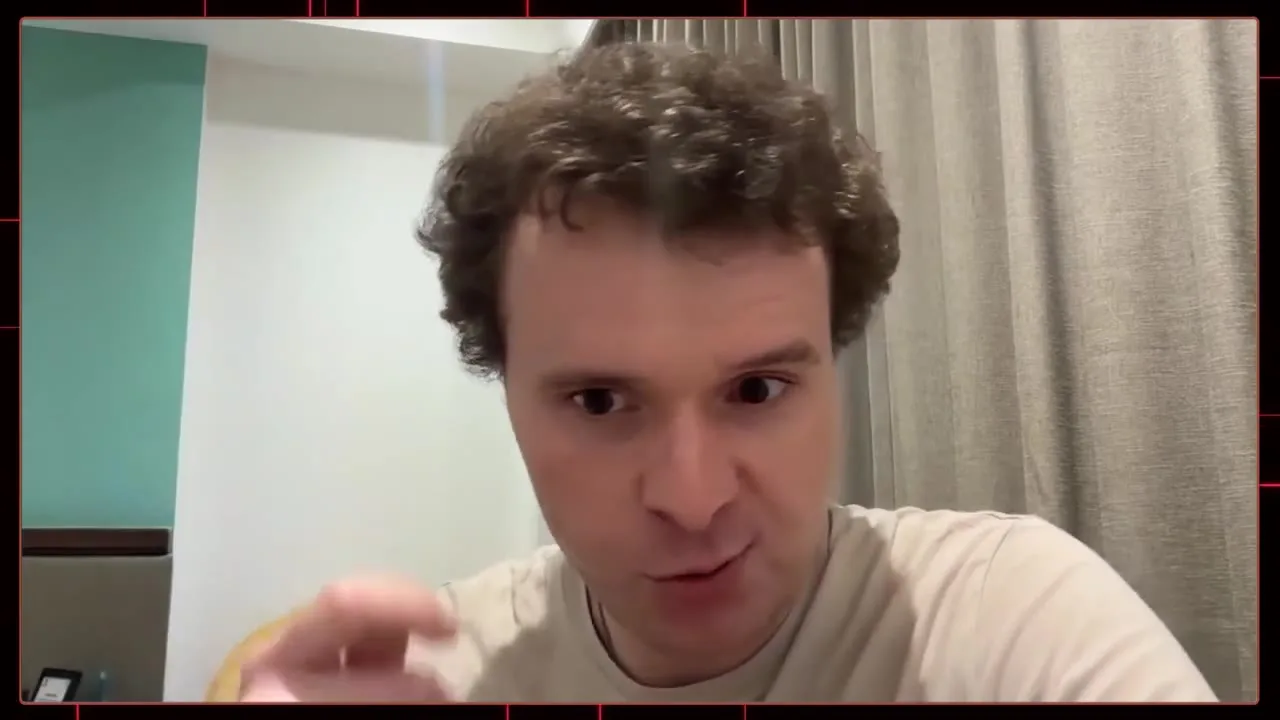
In a Bankless interview on November 3, Aztec co-founder Zach Williamson argued that privacy is a requirement for financial products and assets that public blockchains cannot currently support.
Williamson said users generally would not pay for privacy alone. Faced with comparable products, they tend to choose lower costs and a better user experience, even when that means allowing their data to be collected. He argued that adoption would instead come from applications that could not exist without privacy.
He cited mortgages and bonds as examples. Trading assets governed by real-world legal systems requires identifying holders and satisfying compliance requirements, he said. Current tokenization arrangements typically depend on a custodian of identity, account and transaction data, making it harder to integrate those assets into decentralized finance applications.
Williamson said institutional adoption was exposing the same limitation. Activity was moving into proprietary networks and some layer-2 systems to accommodate the necessary checks, weakening the ability to combine assets and protocols. Keeping users within vertically integrated applications could constrain crypto's growth, the range of assets it supports and the liquidity available onchain, he argued.
His proposed alternative is smart contracts that can verify sensitive information privately and make those checks available to other services. Identity credentials, credit scores and passport signatures could become inputs for financial applications without exposing the underlying information. Requiring developers to establish separate relationships with every application's data custodian does not scale, he said.
Williamson described Aztec's distinction as a network without protocol-level viewing keys or centralized parties empowered to inspect transactions. He claimed that, apart from Zcash, Aztec was the only privacy-preserving blockchain without such backdoors, and said he was willing to debate projects that disputed that claim.
Banks and other institutions could nevertheless build viewing keys into their own applications on Aztec, he said. He distinguished application-level access controls from a network granting access to transaction data. As a neutral network, Aztec leaves those application design decisions to developers, he explained.
Williamson cited complex zero-knowledge proofs and surveillance requirements in existing financial infrastructure as obstacles to this approach. Third parties can reduce the burden of processing private transactions but introduce monitoring responsibilities, while integrations with established providers may require viewing access, he said. He argued that the harder task of combining privacy with decentralization was necessary to preserve an open financial ecosystem in which assets and applications can share liquidity.
Riza Dagoc
Riza Dagoc reports on regulation, investing and the digital-asset business for TokenPost. Send corrections or tips to info@tokenpost.com.