
 Add as a preferred source on Google
Cathie Wood Urges Fed to Account for AI-Driven Price Declines
She argues CPI and PPI miss some falling AI software and inference costs; any policy effect would depend on whether the Fed adopts her view.

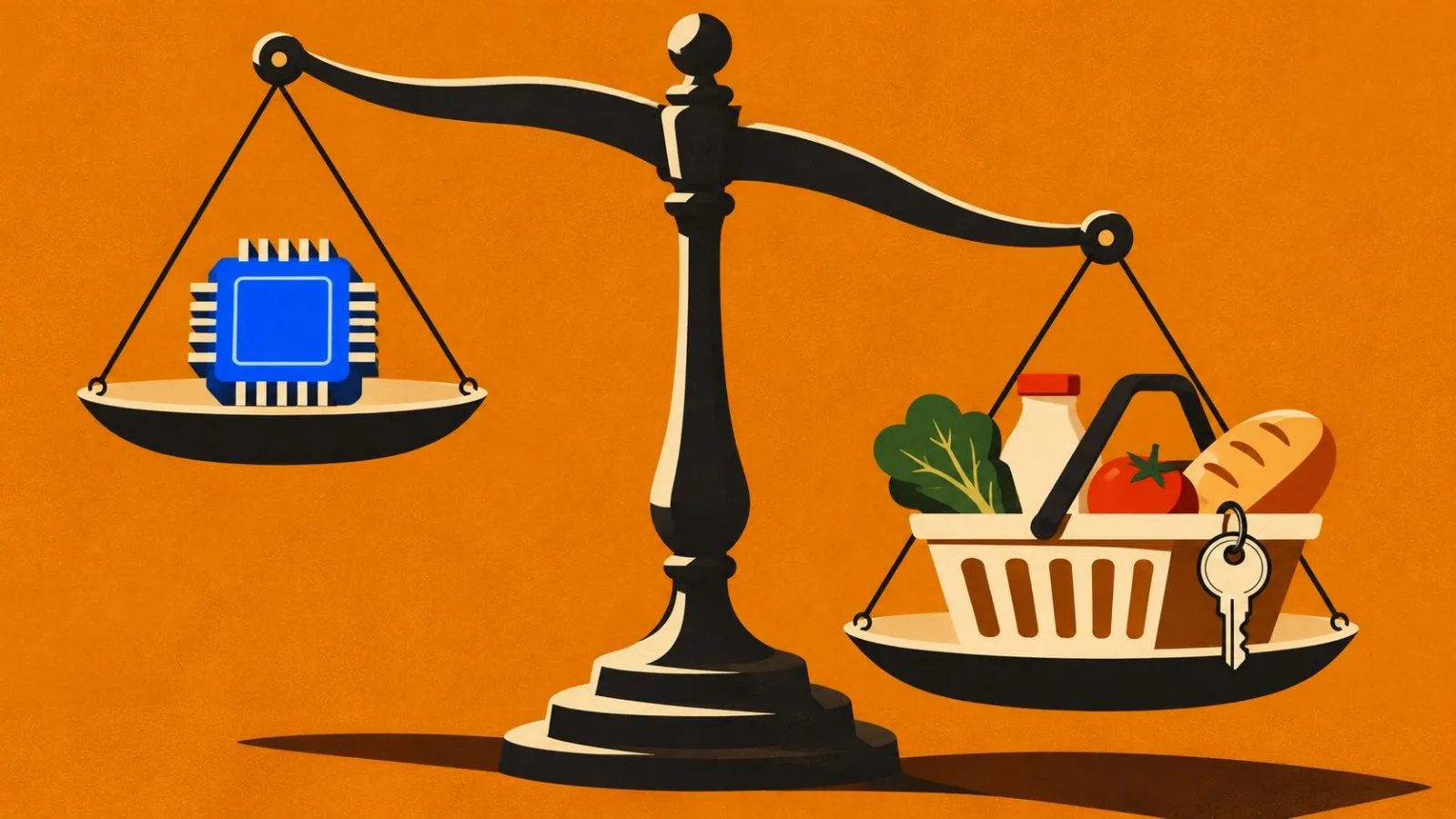
ARK Invest CEO Cathie Wood is urging the Federal Reserve to account for AI-related price declines in its inflation analysis, arguing that standard measures miss part of the change as AI demand grows.
Wood says the Consumer Price Index (CPI), which tracks prices paid by consumers, and the Producer Price Index (PPI), which measures prices producers receive, do not fully reflect falling costs for AI software and model inference. Inference is the processing an AI model performs to produce an answer or other output. The indexes are among the signals the Fed uses to assess inflation.
Wood has cited a 99.99% annual drop in inference costs when performance is held constant. She calls the trend “good deflation,” arguing that it reflects productivity gains rather than weak demand. Her claim builds on her earlier case about falling AI inference costs.
As evidence that lower costs are accompanying demand, Wood pointed to OpenAI’s annual revenue run rate rising from $20 billion to a projected $70 billion. A run rate annualizes a company’s current revenue pace; it does not represent revenue recorded over a completed year.
ARK Invest’s broader outlook also projects that real GDP growth could exceed 7% while inflation falls below the Fed’s 2% target. The view links productivity gains from AI with faster growth and subdued inflation.
The possible policy effect is conditional: If the Fed gives more weight to falling AI costs, Wood’s argument could support a more accommodative stance. Lower AI costs do not necessarily reduce prices for housing, insurance or services, which have separate cost drivers.
The questions to watch include whether the gap between real-time inflation readings and CPI widens, whether Fed officials begin citing AI productivity, and whether OpenAI’s projected revenue run rate keeps pace with falling costs.