
 Add as a preferred source on Google
Top 30 pharma companies reach $5 trillion in market value, rivaling big software
The top 30 pharmaceutical companies have roughly $5 trillion in market value. Andreessen Horowitz compares their scale and leading drug revenues with major software businesses.

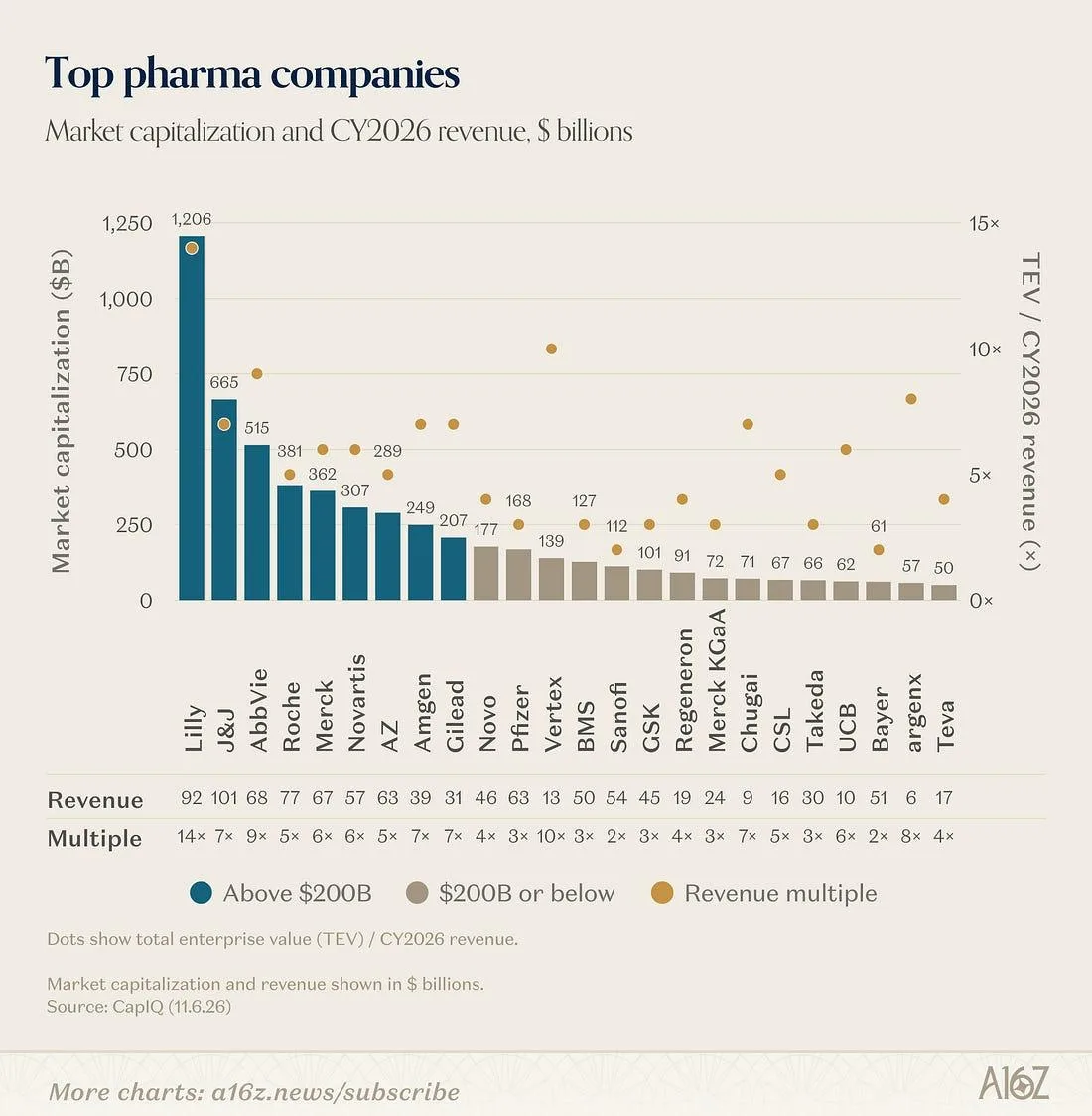
The top 30 pharmaceutical companies have a combined market capitalization of roughly $5 trillion, putting the sector on a scale comparable to major software businesses. Nine publicly traded pharma companies are valued at more than $200 billion.
In its “Big Pharma Can Rival Big Software” report published on November 13, 2026, Andreessen Horowitz said 16 publicly traded software companies exceed the same $200 billion threshold. The report also compared leading drug portfolios with major software companies by revenue.
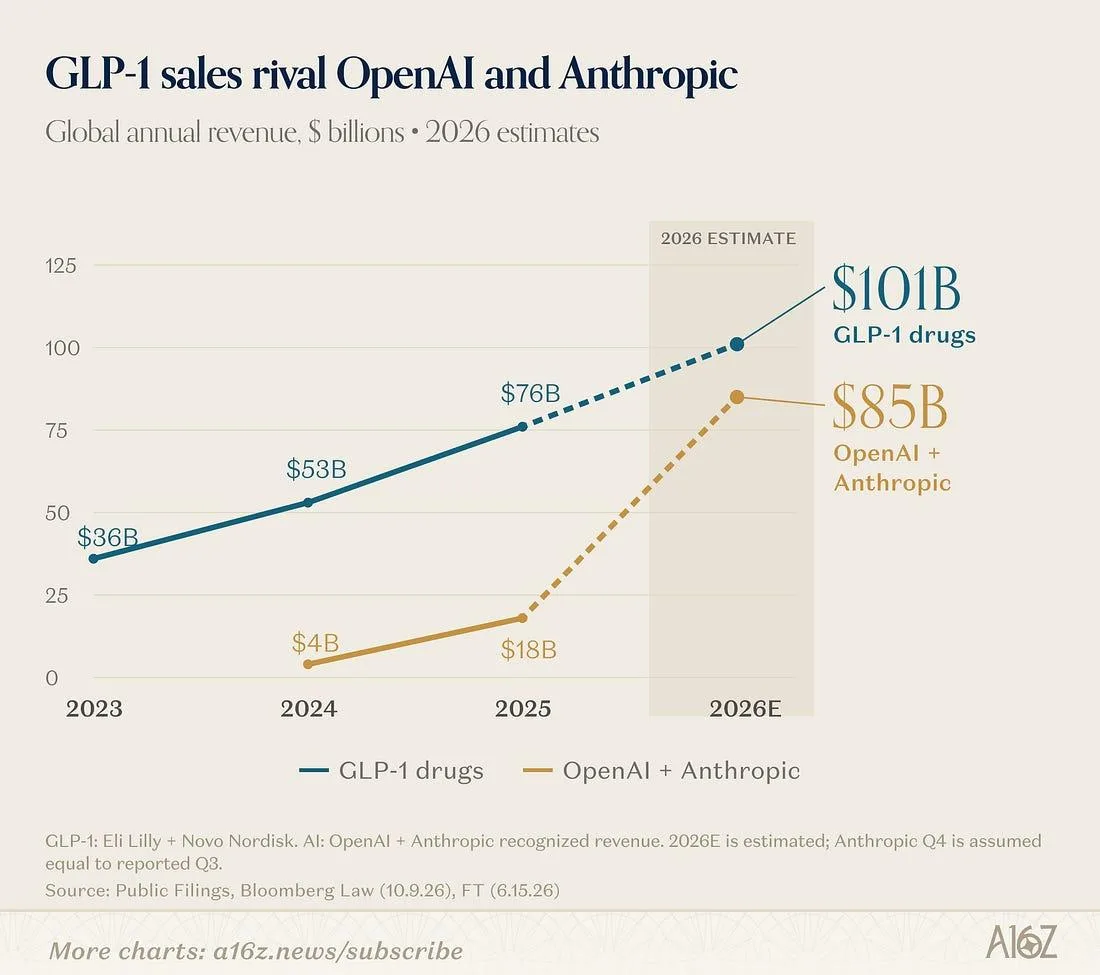
Eli Lilly illustrates that scale, with a market capitalization exceeding $1 trillion. According to the report, roughly 16 companies belong to that valuation bracket, primarily technology, infrastructure and frontier businesses. Lilly entered the group following the successful launch of tirzepatide, a key drug in the GLP-1+ class.
Lilly’s GLP-1 portfolio generated close to $17 billion in revenue in the third quarter of 2026, nearly matching Anthropic’s revenue for that quarter, the report said. It cited analyst expectations that annual sales from the portfolio would exceed $100 billion by 2030. Lilly’s injectable GLP-1 drugs, Mounjaro and Zepbound, also generated nearly $40 billion in sales in 2025, roughly matching Salesforce’s revenue over the same period.
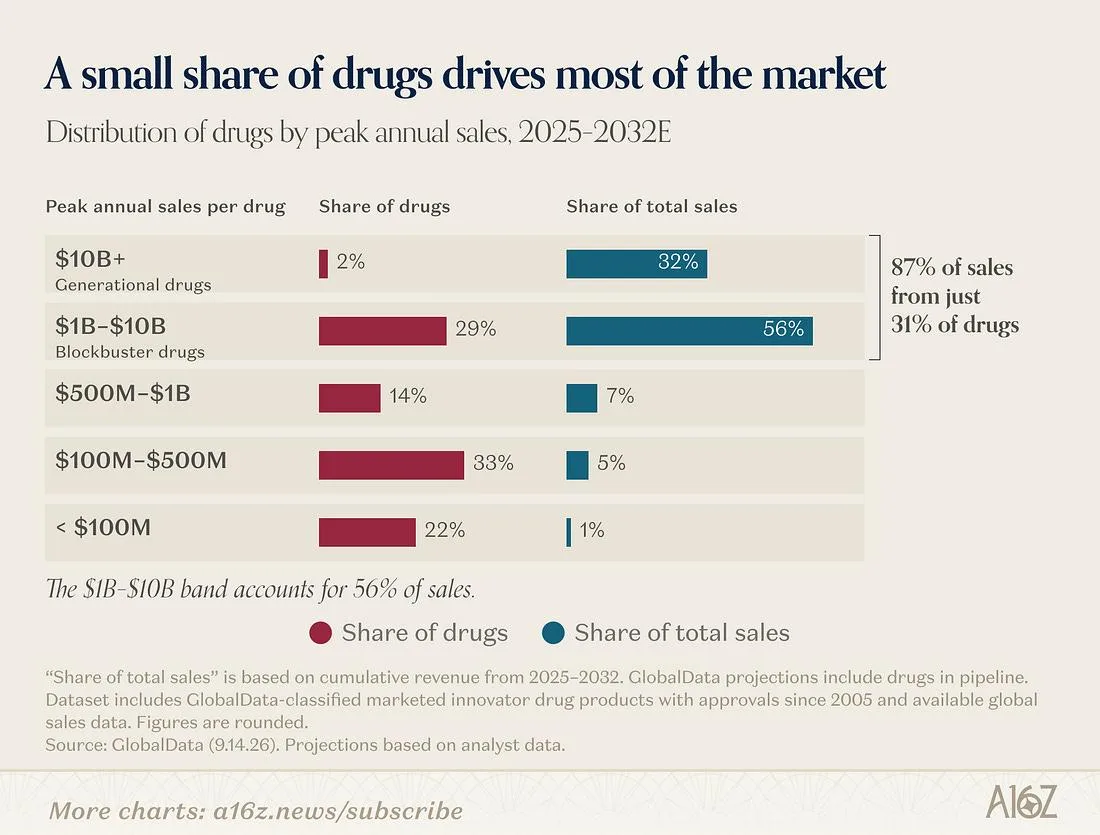
Andreessen Horowitz described drug development as dependent on a small number of major successes, while approved drugs can provide recurring revenue for years. The top 10 pharmaceutical companies derive roughly 50% of revenue from their three leading assets. Lilly’s GLP portfolio accounted for 63% of its revenue in 2025, illustrating how a few successful drugs can shape a company’s overall results.
The report identified patent protection as a foundation for sustained revenue. Drug patents are typically filed before clinical trials and provide 20 years of exclusivity from filing, leaving a typical commercial exclusivity period of 10–14 years after launch. Sales reach their peak an average of six years after commercial launch. Successful drugs can therefore maintain market leadership for years under patent protection, the report said.
John Kim
John Kim reports on the digital-asset business for TokenPost. Send corrections or tips to info@tokenpost.com.