
 Add as a preferred source on Google
Electric Twin: Gen Z is a collection of online microcultures, not one generation
Electric Twin’s analysis says Gen Z is divided into online microcultures shaped by short-form video, making nationality and political affiliation weaker predictors of beliefs.

Gen Z is a diverse set of online groups that is harder to describe through nationality or party affiliation than older generations. Short-form video centered information consumption has widened cultural differences within the generation.
In its Charts of the Week: There is No Gen Z report published on November 20, 2026, Andreessen Horowitz said Electric Twin’s analysis shows Gen Z is a collection of online microcultures rather than a homogeneous generation.
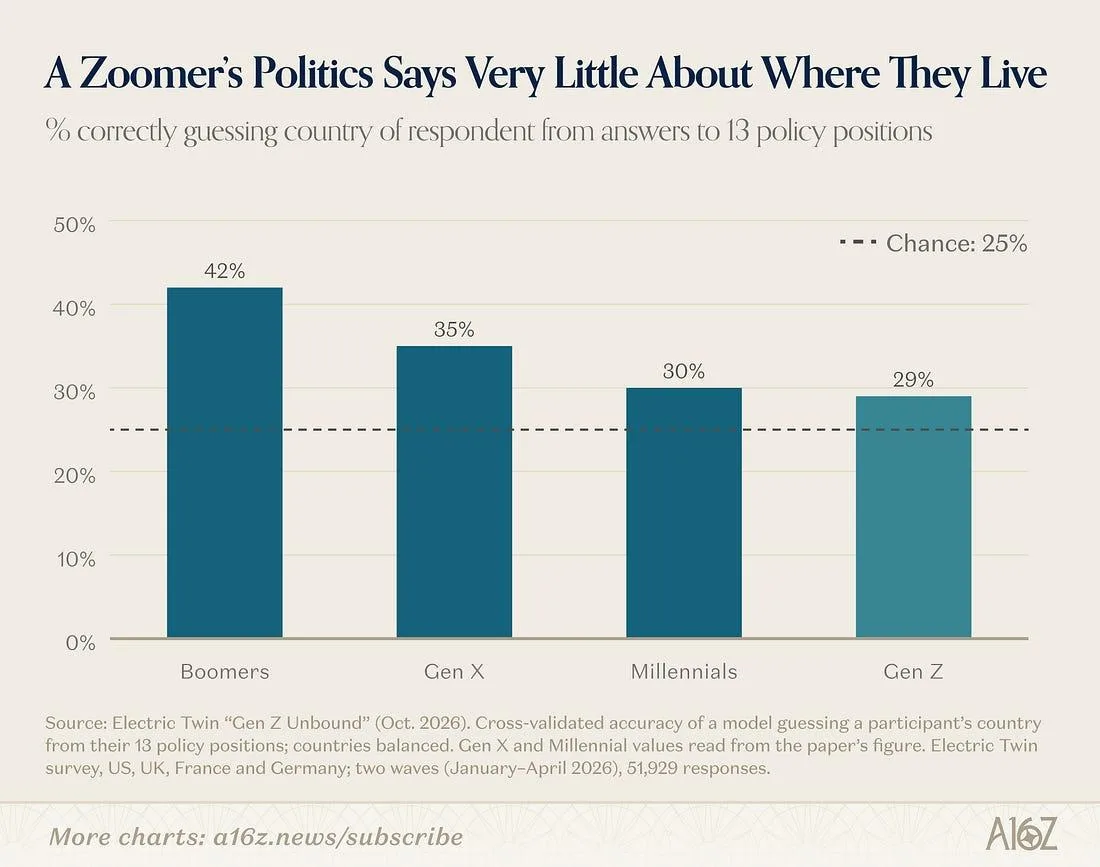
In a political survey of participants from four countries, a model correctly identified the nationality of Boomers about 42% of the time, but its success rate fell to 29% for Zoomers.
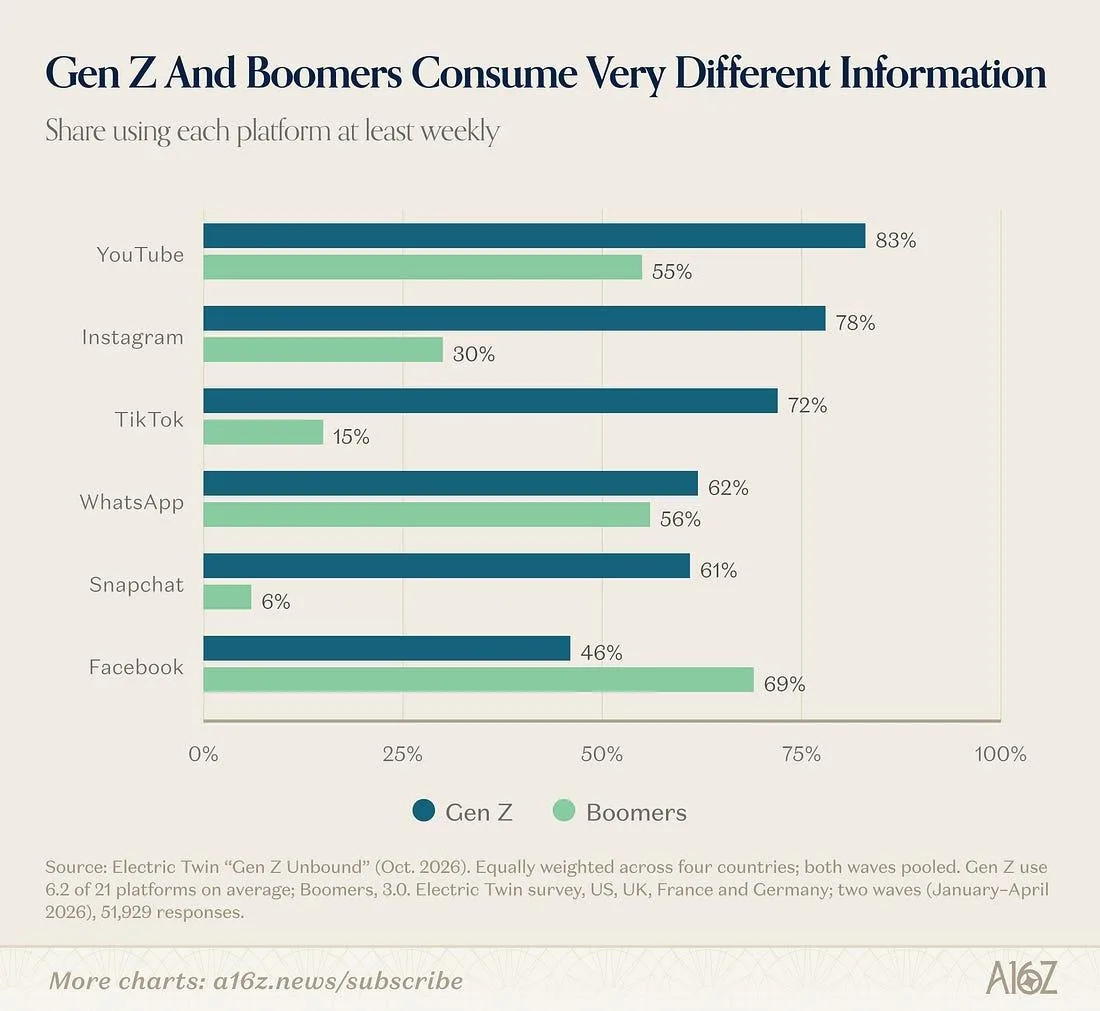
Information sources also differed sharply by generation. Zoomers favored YouTube, Instagram and TikTok, while Boomers relied relatively more on Facebook.
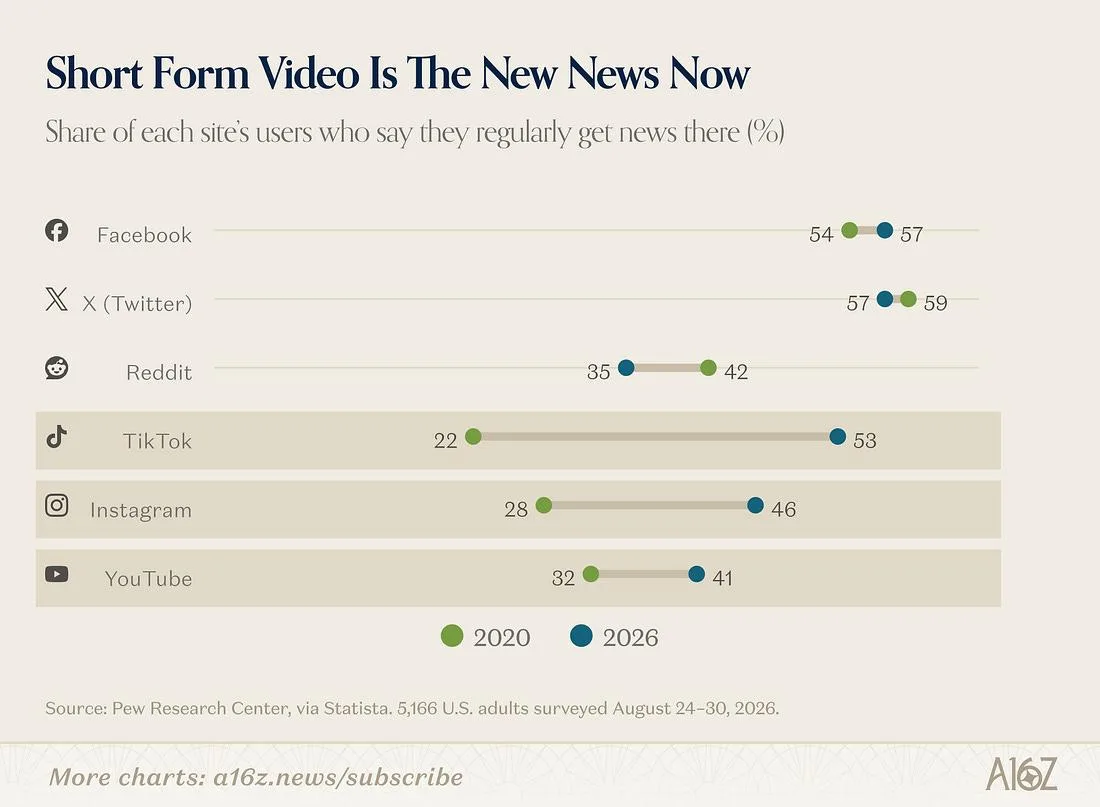
Pew Research data showed that short-form video platforms became major news channels only recently. Since 2020, news use through TikTok and Instagram rose substantially, while YouTube and Reddit also gained ground. TikTok’s share as a news source rose from about 20% in 2020 to more than half by 2026.
The shift was attributed less to existing adults changing their information mix than to more Zoomers being included in the adult population. Because Zoomers use TikTok heavily, the platform now accounts for a larger share of adults’ news consumption.
TikTok-centered information consumption sorts users into groups differently from traditional media. These groups tend to form around shared online interests and culture rather than party affiliation or nationality.
Boomers from the United States, United Kingdom, France and Germany found “like with like” matches among people of the same nationality about 15% to 20% of the time. The highest matching rate for Zoomers was about 9.6% in the United Kingdom, with the full range between 6.7% and 9.6%.
Electric Twin concluded that simply being Gen Z offers little predictive power about a person’s beliefs or political views. Zoomers were less likely than Boomers to find someone with a fully matching outlook, regardless of country.
John Kim
John Kim reports on the digital-asset business for TokenPost. Send corrections or tips to info@tokenpost.com.