
 Add as a preferred source on Google
US needs allies, not just tariffs, to counter China, Emanuel says
Former U.S. Ambassador to Japan Rahm Emanuel said Washington should work with allies to counter China and use chip export controls to buy time for investment in critical minerals and technology.

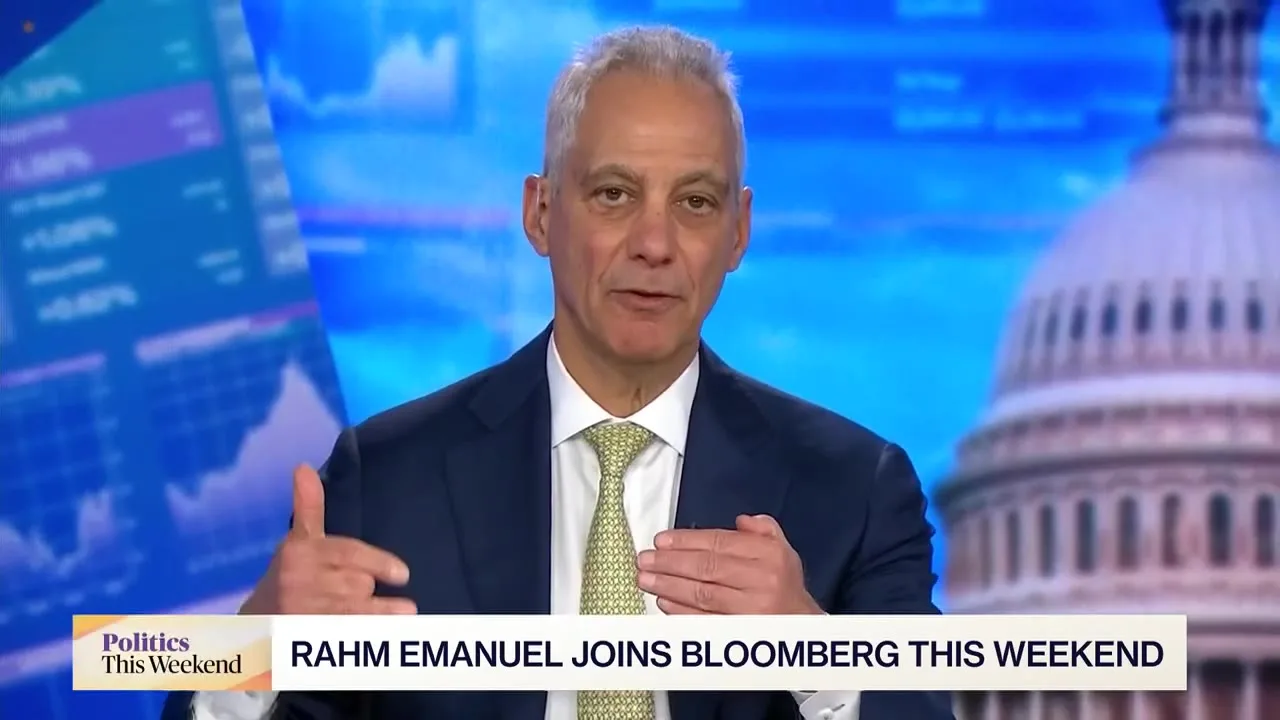
The United States should strengthen cooperation with allies and invest in critical minerals and advanced technology to counter China, former U.S. Ambassador to Japan Rahm Emanuel said.
In a Bloomberg interview on November 22, Emanuel criticized President Donald Trump's foreign policy, saying it had weakened alliances and undermined confidence in U.S. deterrence.
Emanuel said Trump had given Russian President Vladimir Putin legitimacy without getting anything in return. He also characterized Trump's meeting with Chinese President Xi Jinping as heavy on spectacle and light on substance, arguing that personal relationships between leaders are separate from U.S. national security.
He described cooperation among the United States, Japan and South Korea as a strategic asset for countering China. Emanuel said he had played an active role in creating an unprecedented opening for the three countries and called their cooperation at Camp David an achievement for U.S. leadership and its Indo-Pacific policy.
Emanuel criticized Trump for not meeting with South Korea as North Korea, backed by China and Russia, escalates its threats. He said Trump appeared more interested in meeting the North Korean leader than in reinforcing deterrence by meeting the leaders of South Korea and Japan.
He also pointed to vulnerabilities in China's economy, saying its exports were shifting domestic problems onto other countries. He cited youth unemployment, housing stock and local government debt, and said U.S. tariffs had weakened allies and potential partners, allowing China to escape pressure.
Emanuel said controls on advanced chip exports could buy the United States time to prepare, rather than permanently halt China's technological progress. He called for policies to reduce dependence on China for critical minerals, attract talent through legal immigration and invest in next-generation technology.
He rejected the argument that allowing China to buy advanced chips serves U.S. national security. Such sales might be in NVIDIA's interest, he said, but not in the national security interest of the United States.
On the domestic economy, Emanuel said he supported free markets but called for fundamental reforms to address corruption in politics, the economy and the tax code. He said people had reason to be angry when they followed the rules of the economic system but could not get ahead.
Riza Dagoc
Riza Dagoc reports on regulation, investing and the digital-asset business for TokenPost. Send corrections or tips to info@tokenpost.com.