
 Add as a preferred source on Google
AI trade may have found a bottom as credit strain meets rate-cut outlook
Andreas Steno sees a possible temporary bottom in the AI trade as credit markets tighten. He expects falling energy costs to ease inflation and potentially pave the way for Federal Reserve rate cuts next year.

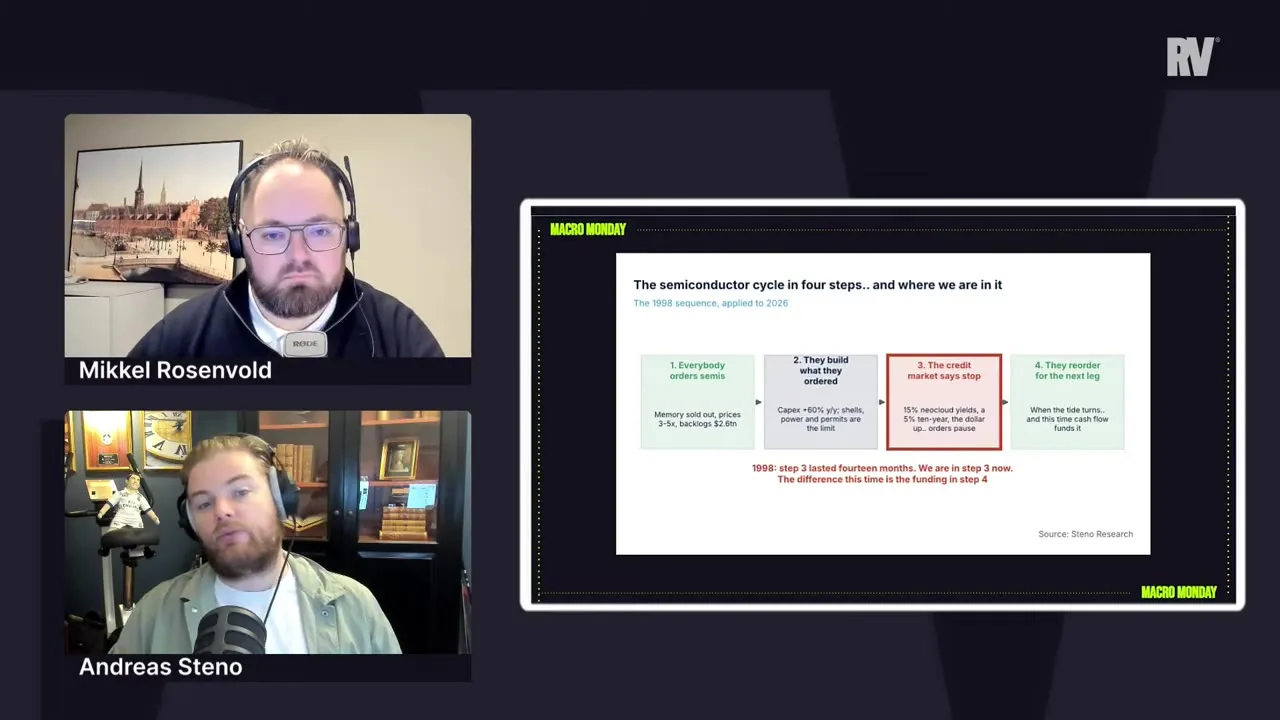
The selloff in AI-related assets may have reached a temporary bottom, even as tighter credit conditions constrain investment in the sector. Slowing inflation could also create room for U.S. interest rate cuts, according to Andreas Steno.
In a Real Vision interview on November 23, Steno said the AI trade may have bottomed on the previous Friday. He expressed mixed views about Jensen Huang's return to Nvidia.
Steno said he believed Huang would ultimately have returned, but argued that the U.S. administration had intervened. He said it would have been better from a capitalist standpoint to let Nvidia's board reach its decision without political involvement.
Credit markets have become a constraint on AI infrastructure spending, Steno said. After companies ordered semiconductors and hardware at the same time and began building out capacity, signs emerged from late October into November that funding could not continue at the same pace. He said yields on some newer cloud companies' debt reached 50%, while Oracle's credit traded like junk debt.
Steno compared the pattern to 1997–1998, when semiconductor and other technology infrastructure assets fell sharply amid crises including the Asian financial crisis. The Federal Reserve cut rates three times in 1998, he said. He also noted a difference: AI companies today have earnings momentum that was absent during the late-1990s dot-com period.
Falling oil prices, shipping costs and insurance premiums could push inflation lower than expected, Steno said. He estimated that the cost of a barrel of Middle Eastern oil delivered to the United States had fallen by about $50 in a month, and forecast that the next consumer price index could decline 0.3% to 0.4% from the previous month.
Several softer inflation reports could prompt the Fed to change course quickly, Steno said, raising the prospect of rate cuts next year. He said the previous Friday may have marked at least a temporary low, while acknowledging that he could not pinpoint when the market would turn.
Riza Dagoc
Riza Dagoc reports on regulation, investing and the digital-asset business for TokenPost. Send corrections or tips to info@tokenpost.com.