

 News
News  Coin Information
  About us
  Customer Service


 Add as a preferred source on Google

Telegram trading communities are increasingly framing recent altcoin strength as a potential 'altseason signal', with a surge in short-term technical setups and momentum-based commentary that is fanning speculative interest across several mid- and large-cap tokens.
The observations come from a “KOL Index” community-tracking series produced using Telegram message analysis tools, which monitors which narratives and charts are drawing the strongest engagement. The latest reading points to a clear clustering of discussion around breakout-style patterns—particularly tokens “riding the upper Bollinger Band” while showing positive MACD momentum—paired with repeated reminders to defend key ‘pivot’ levels.
Solana (SOL) and Dash (DASH) have been frequent reference points in the recent flow of posts. SOL/USDT was widely described as maintaining a bullish structure as price tracked the upper Bollinger Band alongside supportive MACD signals, while some traders flagged the RSI near 68 as “strong but nearing overheated,” repeatedly citing 85.52 as a short-term support that could determine whether the trend continues or stalls.
DASH/USDT attracted similarly momentum-driven commentary, with posts emphasizing its proximity to the upper band and a constructive MACD. At the same time, an RSI reading near 74 was often used to justify caution, producing a two-track scenario: a push toward 33.40 if 32.13 holds as the pivot, or a deeper pullback toward 30.42 if 31.75 gives way.
Other tokens—Filecoin (FIL), Avalanche (AVAX), and dogwifhat (WIF)—were more often discussed through “support-first” playbooks rather than pure breakout calls. FIL/USDT was framed as having comparatively less overheating risk with RSI near 60, with traders focusing on whether 0.8829 can hold for a retest of the 0.90 resistance area. AVAX/USDT drew similar RSI-based framing, with 9.55 highlighted as a line to defend for a move toward 9.86, while 9.25 was commonly cited as a breakdown trigger that could reopen the 9.10 zone.
For WIF/USDT, posts leaned toward a ‘trend-following’ stance, pointing to MACD momentum and RSI around 66 as evidence the move could persist—so long as 0.1657 continues to act as near-term support. Across these discussions, the dominant tone was conditional: bullish bias remains intact, but invalidation levels are treated as non-negotiable.
Polkadot (DOT) stood out for splitting commentary into two camps—those describing a broader bearish structure but acknowledging a short-term bullish push, and those promoting explicit “signal long” calls. One set of analyses argued that DOT/USDT was still structurally weak, yet could extend a rebound given upper-band pressure, RSI near 68, and a firm MACD, with 1.5377 repeatedly referenced as a level to monitor for continuation or failure.
In parallel, other posts characterized a move through the 1.61 area as a volume-backed breakout, circulating a ladder of targets from 1.64 up to 1.80, with 1.57 commonly presented as a stop level. After the first target was reportedly reached, screenshots and “profit confirmation” posts were widely re-shared—an engagement pattern that tends to amplify momentum-chasing behavior in retail-heavy channels.
That feedback loop extended beyond DOT. In posts tied to Hyperliquid (HYPE), communities circulated checklist-style “target achieved” scoreboards and leveraged return figures—frequently citing 37% to 56% gains on a 5x basis—often bundled with prompts urging users not to miss future signals via VIP bots or paid channels. The accompanying marketing language suggests a shift from open analysis sharing toward subscription-driven signal distribution.
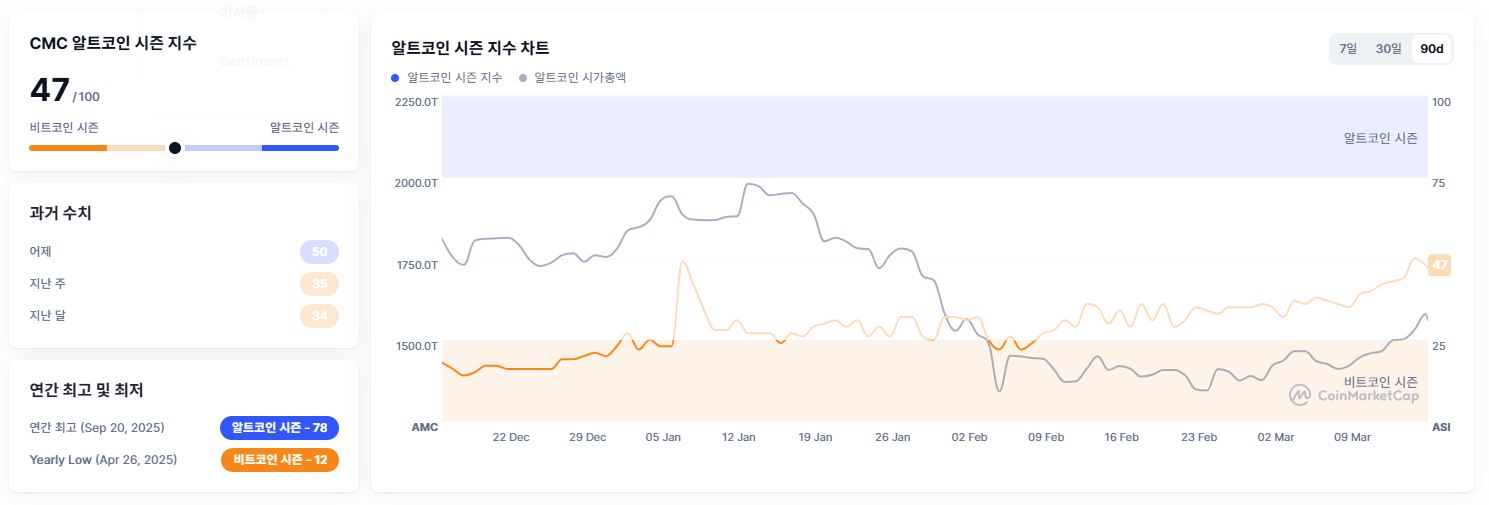
Macro-style sentiment snapshots also circulated alongside the trading chatter, reinforcing the tension between price action and risk mood. Community briefs cited a roughly 0.8% rise in total crypto market capitalization, Bitcoin (BTC) dominance around 56.7%, and a Crypto Fear & Greed reading of 28—firmly in ‘fear’ territory—summarizing the environment as one where “prices rise, but positioning still feels defensive.”
Outside pure chart talk, several headlines competed for attention. OpenSea’s reported delay of its $SEA token-related event—attributed to market conditions and preparation needs, including discussion of fee refund options—revived debate about scheduling and execution risk for NFT-linked token launches. Separately, commentary on the Ethereum Foundation’s move into staking and changes to OTC selling methods was framed as an attempt to improve operational sustainability while limiting market impact.
Payments narratives also resurfaced after reports that PayPal’s stablecoin support expanded to 68 countries, feeding into broader themes around stablecoin distribution and real-world settlement rails. Taken together, the most amplified themes were the synchronized spread of Bollinger Band–MACD–RSI “checklist” trading posts, the re-production of signal calls and profit screenshots, and a parallel stream of ecosystem news that kept risk discussions active despite the altcoin bid.
The overarching takeaway from the latest community read is not outright euphoria, but conditional optimism: traders appear willing to assume continuation in the current upswing, while repeatedly stressing that a break of key ‘pivot’ supports should trigger swift reassessment of the bullish case.
















Comment 0