

 News
News  Coin Information
  About us
  Customer Service


 Add as a preferred source on Google
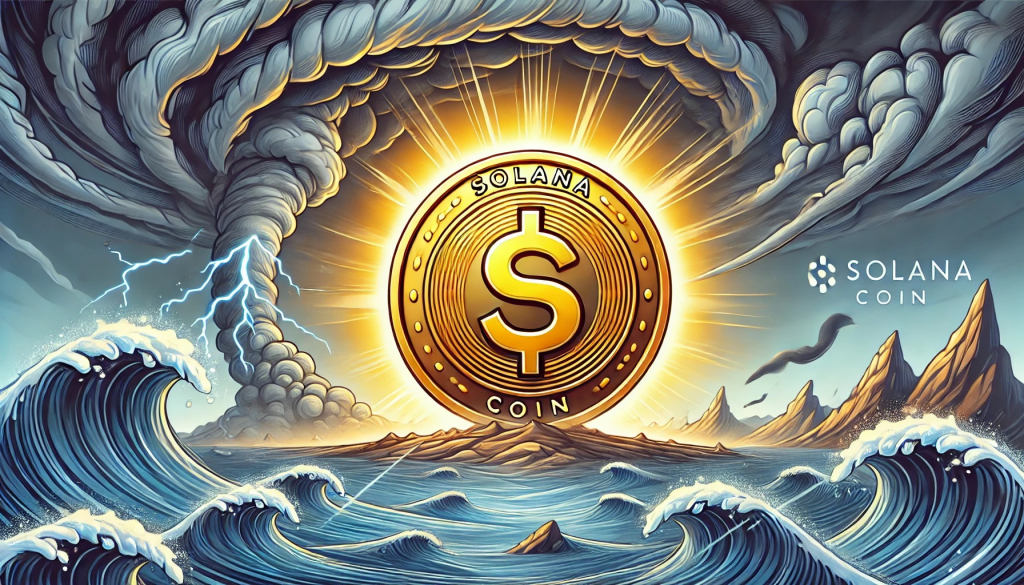
Solana (SOL) held near $83.90 on Thursday UTC (May 1), signaling relative stability in a market still prone to sharp swings. While the token remains well below its late-2024 highs, its steady performance over the past month and continued ecosystem adoption are keeping long-term bulls engaged.
According to CoinMarketCap data cited in the report, SOL was up 0.77% over the past 30 days, a modest gain that stands out against broader risk-asset jitteriness. Solana’s market capitalization was estimated at roughly $48.3 billion, ranking it seventh among cryptocurrencies and reinforcing its position as a major layer-1 platform competing with Ethereum (ETH) and other smart-contract networks.
Trading activity cools as investors wait for clearer signals
Despite the stable spot price, trading activity has softened. Solana’s 24-hour trading volume fell about 30.09% to roughly $3.16 billion, suggesting a more cautious, wait-and-see stance across the crypto market. The flow remained heavily concentrated on centralized exchanges, with the report noting centralized exchange (CEX) volume far outweighing decentralized exchange (DEX) activity.
Short-term price action reflected that indecision. SOL was marginally lower over the prior hour but up 1.14% on a 24-hour basis. Over the last seven days, however, it slipped 2.13%, consistent with the kind of shallow pullbacks traders often see when momentum fades but longer-term conviction remains intact.
Medium-term weakness persists, but the bull case centers on throughput and adoption
Zooming out, Solana’s recent quarter has been defined by drawdowns rather than breakouts. The token fell 28.05% over the past 90 days, underscoring that the market has yet to fully rebuild risk appetite for high-beta layer-1 assets. Over 60 days, the move was essentially flat, pointing to a prolonged consolidation phase.
Still, analysts and market participants continue to highlight Solana’s technical profile as a potential catalyst for renewed growth. The network markets itself as a high-performance blockchain capable of processing tens of thousands of transactions per second, a design that has made it a popular base layer for DeFi, NFTs, and consumer-facing crypto applications such as games. In a market where users and developers increasingly prioritize low fees and fast settlement, supporters argue that Solana’s emphasis on speed remains a durable advantage.
Supply profile: large float and no hard cap
On token economics, the report estimated circulating supply at about 576.09 million SOL, with total supply around 625.44 million. Unlike Bitcoin (BTC), Solana has no fixed maximum supply—an 'infinite supply' structure intended to sustain validator incentives and long-term network security through ongoing issuance.
That design, while common among proof-of-stake networks, can shape investor perceptions in different ways: supporters emphasize the security and sustainability benefits, while critics point to the potential for dilution if demand does not keep pace. The report also referenced a fully diluted valuation of roughly $52.4 billion, a theoretical figure that becomes more relevant if additional tokens enter the market over time.
Liquidity remains deep, with broad exchange support
Solana also retains strong market plumbing. The token is supported across global exchanges with more than 1,100 trading pairs, according to the report, a sign of robust liquidity and accessibility for both retail and institutional participants. Its share of the total crypto market was estimated at 1.88%, leaving room for expansion if the network can capture incremental developer mindshare and user activity amid intensifying layer-1 competition.
Proof-of-stake positioning and institutional visibility
Solana operates under a proof-of-stake (PoS) model, positioning itself as an energy-efficient and scalable alternative for on-chain applications. The network’s low-cost transactions have made it a frequent comparison point for Ethereum, particularly during periods when Ethereum gas fees spike and smaller users seek cheaper venues.
The ecosystem continues to draw attention from major industry players. The report pointed to interest from large crypto platforms and venture investors, an indicator that institutional capital still views Solana as a key infrastructure bet even as the market cycles through risk-on and risk-off phases.
Regulatory overhang and FTX-linked supply concerns linger
Regulatory uncertainty remains a key variable. Solana has been cited in discussions about tokens the U.S. Securities and Exchange Commission (SEC) could scrutinize under securities laws, a risk that can weigh on sentiment—particularly for U.S.-facing exchanges and institutional allocators. At the same time, the Commodity Futures Trading Commission (CFTC) has signaled a different approach for certain digital assets by treating them more like commodities, leaving the ultimate classification of many tokens unsettled.
Another recurring concern is supply associated with the FTX bankruptcy estate, as Solana was among the assets linked to the collapsed exchange. While periodic fears of large-scale selling have surfaced, the report suggested that market impact has so far been limited, and some investors interpret the network’s continued activity post-FTX as evidence of a more resilient fundamentals story than headline risk alone might imply.
Speculation around a U.S. strategic crypto reserve adds a political narrative
The report also revived a political angle: Solana being mentioned as a candidate for inclusion in a potential U.S. strategic cryptocurrency reserve. The idea remains speculative, but proponents frame Solana as a domestically recognized blockchain project and argue that its technical capabilities could align with broader goals of technological competitiveness. Any concrete policy movement in this direction could become a sentiment driver—both as a potential legitimacy boost and as a signal of shifting government posture toward crypto infrastructure.
For now, Solana’s price is reflecting a market caught between near-term caution and longer-term narratives around 'scalability', developer adoption, and institutional positioning. Whether SOL can transition from consolidation to sustained recovery will likely depend on broader crypto liquidity conditions, regulatory clarity in the U.S., and the network’s ability to keep attracting real users in an increasingly crowded layer-1 landscape.
🔎 Market Interpretation
{
"price_snapshot": [
{
"signal": "SOL held around $83.90 (May 1, UTC), indicating near-term stability despite a volatile broader market.",
"context": "Still far below late-2024 highs, suggesting recovery remains incomplete."
},
{
"signal": "Performance is mixed across timeframes.",
"metrics": {
"30d": "+0.77%",
"24h": "+1.14%",
"7d": "-2.13%",
"90d": "-28.05%",
"60d": "~flat (consolidation)"
}
},
{
"signal": "Market strength is more structural than momentum-driven right now.",
"evidence": {
"market_cap": "$48.3B (rank #7)",
"market_share": "~1.88%",
"liquidity": ">1,100 trading pairs"
}
},
{
"signal": "Participation is cooling, often associated with consolidation phases.",
"evidence": {
"24h_volume": "$3.16B",
"volume_change": "-30.09%",
"flow": "CEX volume dominates DEX activity"
},
"interpretation": "Traders appear to be waiting for clearer macro/crypto catalysts, reducing turnover even as price holds steady."
},
{
"signal": "Key overhangs remain unresolved.",
"risk_factors": [
"U.S. regulatory classification uncertainty (SEC scrutiny risk vs. CFTC commodity framing)",
"FTX estate-linked supply concerns (headline risk of episodic sell-pressure)"
]
},
{
"signal": "Narrative catalysts are present but largely speculative.",
"potential_drivers": [
"Ongoing adoption for DeFi/NFTs/consumer apps due to speed and low fees",
"Institutional/venture attention persists",
"Speculation about inclusion in a hypothetical U.S. strategic crypto reserve"
]
}
]
}
💡 Strategic Points
{
"investor_takeaways": [
{
"theme": "Consolidation with declining volume",
"why_it_matters": "Price stability alongside falling volume can imply reduced conviction in the short term; breakouts/breakdowns often require volume to return.",
"what_to_watch": [
"Re-acceleration in spot volume",
"Improving weekly trend (7D turning positive)",
"On-chain/DApp usage translating into measurable demand"
]
},
{
"theme": "Timeframe segmentation",
"positioning_logic": {
"short_term": "Choppy, headline-sensitive; expect shallow pullbacks if momentum remains weak.",
"medium_term": "90D drawdown signals risk appetite has not fully returned to high-beta L1s.",
"long_term": "Bull case leans on throughput, low fees, and developer/user adoption."
}
},
{
"theme": "Token supply and dilution awareness",
"key_points": [
"No fixed max supply; ongoing issuance supports validator incentives and security.",
"Circulating ~576.09M SOL vs. total ~625.44M SOL implies additional supply may enter over time.",
"FDV (~$52.4B) is a relevant benchmark if more tokens become liquid."
],
"practical_implication": "Demand growth (users, fees, applications) must keep pace with issuance to support sustained price appreciation."
},
{
"theme": "Ecosystem competition and product-market fit",
"bull_case": "Solana’s performance profile (fast settlement, low cost) remains attractive as users seek cheaper alternatives during periods of high Ethereum gas.",
"bear_case": "Layer-1 competition is intensifying; adoption must be durable, not cyclical.",
"what_to_watch": [
"Developer activity and flagship app traction",
"User retention and transaction demand quality (real usage vs. incentives)",
"Relative fee environment vs. competing chains"
]
},
{
"theme": "Event risks and narrative volatility",
"risks": [
"Regulatory actions or guidance that increases perceived securities-law exposure",
"Renewed concerns about FTX estate distributions/sales",
"Macro risk-off moves impacting high-beta assets"
],
"potential_upside_catalysts": [
"Clearer U.S. regulatory framework that reduces compliance uncertainty",
"Broader crypto liquidity recovery",
"Credible policy developments (strategic reserve narrative remains speculative until formalized)"
]
}
]
}
📘 Glossary
{
"terms": [
{
"term": "Layer-1 (L1)",
"definition": "A base blockchain network (e.g., Solana, Ethereum) that processes transactions and supports applications without relying on another chain for security."
},
{
"term": "Market Capitalization",
"definition": "Token price multiplied by circulating supply; a rough measure of a network’s market value."
},
{
"term": "Trading Volume",
"definition": "Total value of tokens traded over a period (e.g., 24h). Falling volume can signal reduced participation or conviction."
},
{
"term": "CEX vs. DEX",
"definition": "CEX (centralized exchange) is a custodial trading venue (e.g., major exchanges). DEX (decentralized exchange) is on-chain trading via smart contracts."
},
{
"term": "Consolidation",
"definition": "A phase where price moves sideways in a range, often after a large move, as the market searches for direction."
},
{
"term": "Drawdown",
"definition": "The decline from a prior price level over a given period; used to describe medium-term weakness."
},
{
"term": "Proof-of-Stake (PoS)",
"definition": "A consensus system where validators secure the network by staking tokens rather than using energy-intensive mining."
},
{
"term": "Circulating Supply / Total Supply",
"definition": "Circulating supply is the amount currently available in the market; total supply includes tokens that exist but may be locked or not yet circulating."
},
{
"term": "Maximum Supply (Hard Cap)",
"definition": "A fixed upper limit on the number of tokens that can ever exist (e.g., Bitcoin). Solana has no hard cap."
},
{
"term": "Fully Diluted Valuation (FDV)",
"definition": "Market cap calculated as if all tokens in total supply were circulating; useful for gauging potential dilution impacts."
},
{
"term": "Blockchain Throughput",
"definition": "How many transactions a network can process per second; often linked to user experience and fee levels."
},
{
"term": "Regulatory Classification (SEC/CFTC)",
"definition": "Whether an asset is treated as a security (SEC focus) or commodity (CFTC framing); classification affects listing, compliance, and institutional access."
}
]
}












Comment 0