

 News
News  Coin Information
  About us
  Customer Service



XRP (XRP) slipped back under key technical levels on Thursday ET, extending a short-term downtrend as selling pressure intensified around the $1.30 area. The move comes amid fresh signs of weakening demand—most notably exchange-traded fund (ETF) outflows and a sharp drop in on-chain activity—yet Ripple’s push into corporate treasury infrastructure and a spike in token burns are keeping the medium-term recovery narrative alive for some market watchers.
As of April 3 ET, XRP traded in a roughly $1.28 to $1.32 range after losing the $1.31 support area and sliding intraday to about $1.2801. The token was down around 4% over the past 24 hours, underperforming a broader market that has been sensitive to liquidity shifts and derivatives positioning.
Technically, XRP remains below both its 50-day moving average near $1.44 and its 200-day moving average around $1.89—levels many traders view as benchmarks for trend confirmation. Analysts tracking downside risk said a deeper breakdown could bring the $1.05 to $1.09 zone into focus, a range that previously acted as a base during earlier consolidations.
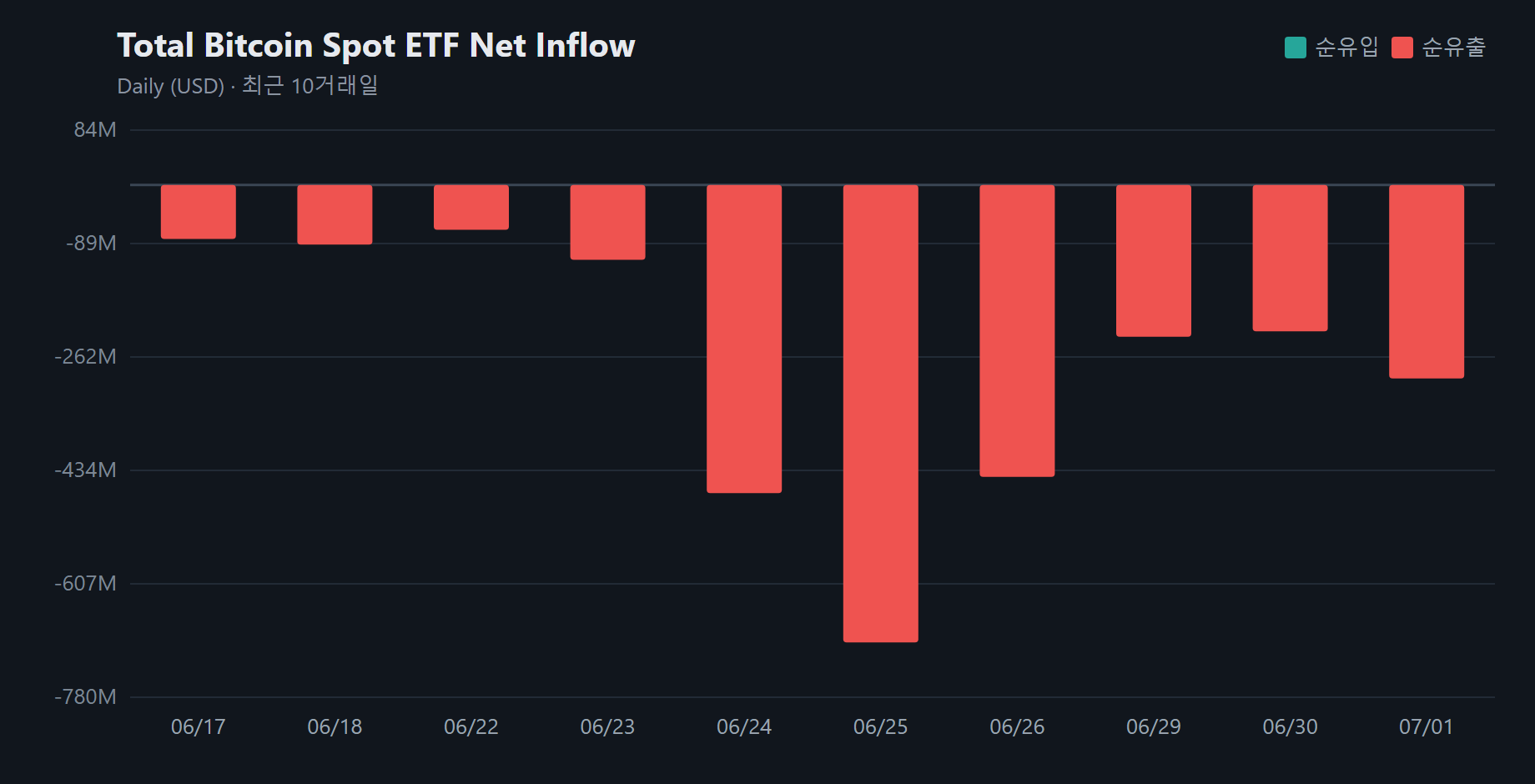
Flows and activity data offered a clear catalyst for the latest leg lower. XRP-linked ETFs posted approximately $1.32 million in net outflows, a figure that signaled softer 'institutional demand' at the margin. At the same time, network participation cooled notably: active addresses fell by roughly 42% to around 18,000, suggesting reduced transactional momentum and fewer users engaging with the ledger.
Derivatives markets echoed that risk-off tone. Funding rates turned negative, indicating that short positions were paying to maintain exposure—often a sign of bearish conviction. Open interest also rose, a combination that can amplify price swings if the market is forced into rapid unwinds during sudden reversals.
Still, the фундаментals were not uniformly negative. Ripple said it has completed an integration with GTreasury, adding support for XRP and RLUSD. GTreasury is positioned as an enterprise treasury and payments platform that processed about $13 trillion in payments last year, and the integration is being framed as a pathway to broaden corporate use of Ripple’s infrastructure. For XRP, such integrations are closely watched because they potentially expand non-speculative transaction demand—an ingredient investors often cite when discussing longer-duration valuation upside.
On-chain metrics also provided a counterpoint to the price decline. XRP’s burn activity jumped over the past 24 hours to about 1,031 XRP, attributed to increased network usage. While the absolute quantity remains modest relative to total supply, traders often interpret a rising burn rate as a signal of active ledger utilization, especially when it occurs during a period of weaker price action.
Regulatory developments added another layer to the outlook. A rule that took effect on April 1 under the U.S. Office of the Comptroller of the Currency (OCC) has been cited as enabling Ripple’s national trust bank charter to become operational, a step that could support broader 'institutional adoption' if it improves the company’s ability to serve regulated financial counterparties. Even so, uncertainty tied to Ripple’s ongoing legal fight with the U.S. Securities and Exchange Commission (SEC) continues to overhang sentiment, with traders treating litigation headlines as a potential volatility trigger.
Looking ahead, market views remain split across time horizons. Some analysts argue that if enterprise tooling expands and institutional participation accelerates, XRP could eventually revisit far higher levels—one bullish scenario cited a long-term path as high as $27 following a multi-stage cycle. In the near term, however, traders appear focused on whether XRP can reclaim $1.31 decisively. Persistent ETF outflows and a sustained slowdown in network activity are likely to remain key variables shaping price action in the days ahead.
🔎 Market Interpretation
- Price/Trend: XRP fell back below the $1.31 support and traded around $1.28–$1.32, down ~4% in 24 hours, extending a short-term downtrend.
- Key technical pressure: Price remains below the 50-day MA (~$1.44) and 200-day MA (~$1.89), keeping broader trend confirmation bearish/neutral.
- Downside levels to watch: If weakness persists, bearish attention shifts to the $1.05–$1.09 zone, previously a consolidation base.
- Primary catalysts: ETF outflows (~$1.32M) and a large drop in active addresses (~42% to ~18,000) signal cooling demand and weaker on-chain engagement.
- Derivatives tone: Negative funding with rising open interest suggests growing bearish positioning and higher risk of sharp moves via liquidations/short squeezes.
- Medium-term offset: Enterprise integration news (GTreasury) and a rise in burn activity provide a counter-narrative that utility-driven adoption could support recovery over a longer horizon.
💡 Strategic Points
- Support/Resistance roadmap: Near-term traders are focused on reclaiming $1.31; failure to regain it increases probability of a retest toward $1.05–$1.09. Upside regains would first need to challenge the 50-day MA (~$1.44).
- Flow confirmation: Continued ETF outflows may reinforce downside momentum; stabilization or net inflows would be an early signal that marginal institutional demand is returning.
- On-chain participation check: The active address decline is a central risk metric; a sustained rebound would better support the “utility demand” thesis than burn spikes alone.
- Derivatives risk management: With negative funding + rising open interest, volatility can increase. Position sizing and liquidation levels matter more because sudden reversals can trigger cascades in either direction.
- Fundamental catalysts to monitor:
- GTreasury integration: Potential pathway for corporate treasury/payment usage (platform cited as processing ~$13T annually), which could diversify demand beyond speculation.
- Regulatory pathway (OCC rule): Mentioned as supporting Ripple’s national trust bank charter becoming operational—could improve credibility with regulated counterparties if realized.
- SEC litigation headline risk: Ongoing case remains a sentiment overhang and a likely near-term volatility trigger.
- Time-horizon split: Long-term bullish projections (e.g., multi-stage cycle scenario up to $27) contrast with near-term market focus on technical reclaim levels and demand indicators.
📘 Glossary
- Support/Resistance: Price areas where buying (support) or selling (resistance) tends to intensify.
- Moving Average (50-day/200-day): Trend indicators; trading below them often signals weaker momentum or downtrends.
- ETF Outflows: Net withdrawals from exchange-traded funds; can indicate reduced institutional/allocator interest at the margin.
- Active Addresses: Number of unique addresses participating on-chain over a period; a proxy for network activity and user engagement.
- Funding Rate: Periodic payment in perpetual futures; negative funding generally indicates shorts are dominant (shorts pay longs).
- Open Interest: Total outstanding derivatives contracts; rising open interest can amplify volatility if positions unwind quickly.
- Token Burn: Permanent removal of tokens from circulation (often via fees); rising burns can reflect increased network usage, though magnitude matters vs total supply.
- OCC (Office of the Comptroller of the Currency): U.S. regulator of national banks; rule changes can affect how crypto-related financial entities operate under banking frameworks.





















Comment 0