

 News
News  Coin Information
  About us
  Customer Service


 Add as a preferred source on Google
Solana (SOL) is struggling to regain clear direction around $73.6, with weakening short-term momentum keeping the token pinned below several key technical levels even as ‘institutional demand’ via ETFs and a steady drumbeat of ecosystem expansion headlines continue to draw attention.
As of Wednesday ET, SOL traded at $73.59, down 0.28% over the past 24 hours and off 4.86% over the last seven days. Its market capitalization stood near $42.66 billion, representing roughly 1.946% of the total crypto market, while daily trading volume slipped 4.65% to about $1.77 billion—an additional sign that near-term buying interest has cooled.
Technical analysts cited by U.Today and CoinAlert noted that SOL has dropped below its 100-day moving average, clustered around $74.50–$75.00, a development commonly read as reinforcing a mid-term bearish structure. With price sitting beneath most overhead resistance levels, the 200-day moving average near $79–$80 is increasingly viewed as the immediate barrier bulls would need to reclaim to re-establish a more constructive trend.
Momentum signals remain mixed-to-soft. TradingKey highlighted a negative MACD reading (around -0.867), while the RSI sits in the mid-40s—generally interpreted as neutral but leaning weak. The Williams %R hovering near 79 indicates SOL has spent time in ‘oversold’ territory, though CoinAlert cautioned that thinner volume alongside an RSI near the high-40s points to fading conviction rather than a strong reversal setup.
Support is now concentrated around $72, with analysts warning that a decisive break could expose the $68–$70 zone—an area that previously served as a base for a rebound in June. In other words, SOL’s immediate roadmap is increasingly defined by whether buyers can defend the low-$70s while attempting to re-test the upper-$70s.
Meanwhile, flows in the Solana spot ETF market have turned uneven. Recent data cited in local reporting indicated roughly $8.6 million in net outflows, suggesting a bout of short-term profit-taking or risk reduction. Even so, cumulative net inflows since spot products launched earlier this year remain above $1 billion, underscoring that the broader ‘ETF adoption’ narrative has not collapsed. Products such as Bitwise’s BSOL and Fidelity’s FSOL were pointed to as key vehicles helping anchor participation from larger allocators.
TradingKey also tied a recent 1.48% intraday uptick in SOL to ETF-driven institutional bids and broader risk-asset sentiment. But the market has struggled to translate macro tailwinds into a sustained breakout. Despite the Federal Reserve holding rates steady and the U.S. dollar weakening to around a two-week low, major cryptocurrencies—including SOL—failed to establish a decisive upside trend. Commentary from SpendNode and Up&Down described SOL as moving largely sideways near $73.9 after the Fed decision, reflecting lingering caution even in the presence of improved liquidity conditions.
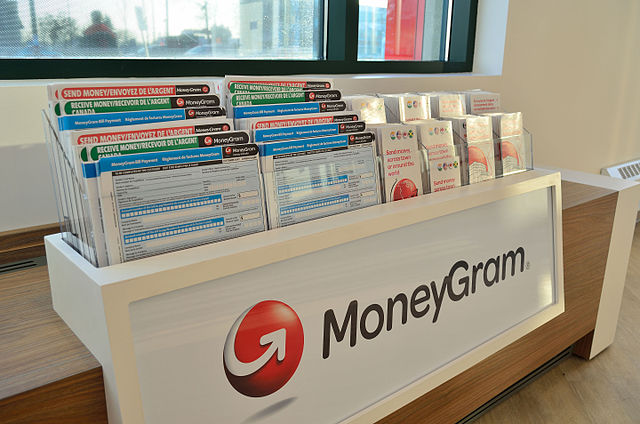
On the fundamentals side, the ecosystem continues to produce signals of expanding participation and capital formation. CoinGecko reported that MoneyGram, the global remittance firm, has deployed a Solana validator node and joined the Solana developer platform—an enterprise-facing milestone that suggests more traditional corporate players are directly engaging with network infrastructure rather than remaining only at the application layer. Separately, TradingKey said capital has been flowing into Solana-based liquid staking protocols and DePIN (decentralized physical infrastructure network) projects, reinforcing the thesis that ‘yield-bearing’ on-chain products and real-world infrastructure use cases are supporting network activity even while price action remains range-bound.
Corporate treasury adoption has also re-entered the conversation. Forward Industries, which has been described in market chatter as holding SOL on its balance sheet, is expected to provide an update on its SOL treasury strategy alongside its third-quarter earnings release scheduled for August 12, 2026. Market participants view such disclosures as incremental evidence that SOL is gaining traction as a corporate-held digital asset, particularly among smaller public companies willing to communicate crypto exposure more explicitly to shareholders.
Separately, social media claims circulated suggesting that Morgan Stanley had listed Ethereum (ETH) and Solana staking ETFs on NYSE Arca, touting a low management fee and pass-through of net staking rewards. The report was not confirmed through official filings in the cited coverage, but analysts noted the rumor aligns with a broader direction of travel: traditional finance firms exploring regulated wrappers for staking yield and productizing ‘on-chain income’ for conventional investors.
For now, the key technical test remains overhead. Several analysts framed the $78 area as a potential inflection point, arguing that a move above roughly $78—and especially a reclaim of the 200-day moving average in the $79–$80 band—would provide a more credible shift toward a bullish structure. Until then, SOL appears caught between weakening technical signals and strengthening longer-term fundamentals, with ETF asset bases holding up and ecosystem participation expanding even as short-term traders continue to fade rallies.
The coming sessions may therefore hinge on two levels: whether $68–$72 continues to act as a durable demand zone, and whether SOL can eventually force a break through the $79–$80 ceiling that has become the market’s immediate line in the sand.




















Comment 0