

 News
News  Coin Information
  About us
  Customer Service


 Add as a preferred source on Google
Solana (SOL) is hovering around a critical technical inflection point near the mid-$73 range, with traders watching whether the market can defend a key support level after repeated failures to reclaim overhead resistance. The standoff matters because a decisive break in either direction could set the tone for short-term price action, even as ecosystem headlines—from a Korean payments push to a major 2026 protocol overhaul—pull sentiment in opposite directions.
As of Saturday ET, Solana was trading around $72.89, extending a short-term bearish bias. Chart watchers describe SOL as pressing into the apex of a ‘triangle consolidation’ pattern, a zone that often precedes volatility once price escapes the narrowing range. Analysts highlighted $73.75 as a near-term ‘line in the sand’: if SOL fails to hold the area and confirms a close below it, downside targets around $60—and in a more aggressive selloff, $50—are being discussed. If the level holds, however, a relief bounce toward $76.50 and $79 could come into view as short-term resistance checkpoints.
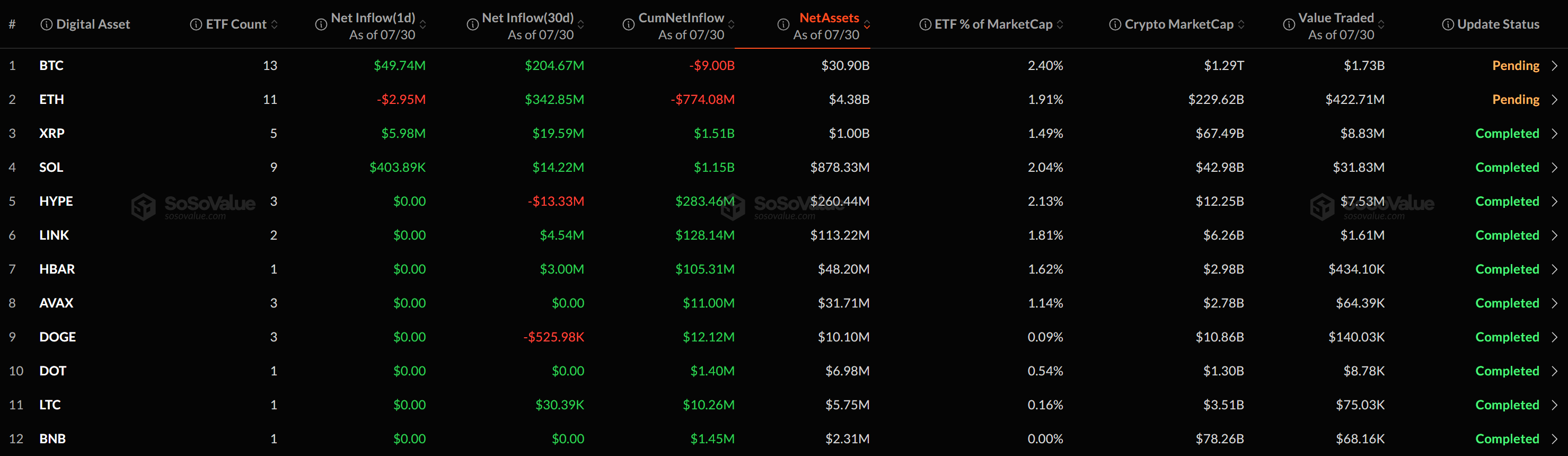
Institutional positioning appears mixed, reflecting a market still searching for conviction. CoinEdition reported inflows into MSOL, a Solana-linked product associated with Morgan Stanley, a development some interpret as a potential catalyst for renewed ‘institutional demand’. At the same time, TipRanks pointed to outflows from the Bitwise Solana Staking ETF (BSOL), suggesting that not all professional allocators are willing to add exposure at current levels, particularly given the broader risk-off tone in parts of the altcoin complex.
Beyond price and flows, Solana’s ecosystem is pushing deeper into real-world payment rails—especially in South Korea. Local reports said KSNET, a Korean payments network operator, signed a memorandum of understanding with the Solana Foundation to integrate Solana Pay. The partnership is framed as a two-track effort: linking digital-asset payments with Korea’s won-based network while also exploring more autonomous on-chain transaction pathways. If implemented at scale, the initiative could expand Solana’s footprint in everyday commerce, though market participants will likely wait for concrete deployment metrics before pricing in meaningful adoption impacts.
On the consumer side, Solana Mobile is also attempting to boost participation through an expanded incentive program. The company is running the “Seeker Summer” Round 2 campaign—described as larger than Round 1—designed to reward users for interacting with native apps on Solana Mobile devices. The initiative underscores Solana’s broader thesis that hardware-adjacent distribution and user incentives can accelerate developer traction and on-chain activity, even as the wider market remains sensitive to macro-driven liquidity conditions.
Longer term, attention is building around a sweeping protocol upgrade known as “Alpenglow,” slated for a phased rollout between August and October 2026. According to reports, the upgrade is expected to reshape the consensus architecture and affect everything from block production to user experience. Key goals include faster transaction ‘finality’—the point at which transactions are considered irreversible—and the introduction of a new security model intended to structurally reinforce network safety. While the timeline is extended, major upgrades can influence developer planning and valuation narratives well in advance, particularly if they promise measurable improvements in throughput and reliability.
Derivatives data, meanwhile, suggests retail traders remain engaged despite weakness in the spot market. Reports pointed to continued long-side interest, indicating that some retail participants are treating the current zone as an opportunity to position for a rebound. Whether that optimism proves durable may depend on how SOL resolves the $73–$74 technical battleground and whether upcoming ecosystem catalysts translate into observable growth in usage and liquidity.
🔎 Market Interpretation
- Key inflection zone: SOL is trading near $72.89, pressing a critical support/decision area around $73–$74 after repeated failures to reclaim overhead resistance.
- Pattern setup: Price action is described as a triangle consolidation nearing its apex, a configuration that often precedes a volatility expansion once a breakout/breakdown confirms.
- Downside if support fails: A confirmed close below the cited “line in the sand” (~$73.75) raises bearish continuation risk toward $60, and in a sharper liquidation scenario, $50.
- Upside if support holds: Defending the area could trigger a relief bounce with near-term checkpoints at $76.50 and $79, which act as immediate resistance levels to clear for trend improvement.
- Positioning split: Flows suggest mixed conviction—reported inflows into a Solana-linked product (MSOL) versus outflows from the Bitwise Solana Staking ETF (BSOL), reflecting push-pull sentiment amid a broader risk-off altcoin backdrop.
- Derivatives vs spot: Despite spot weakness, derivatives data indicates ongoing retail long interest, implying traders are attempting to pre-position for a bounce—an approach that becomes fragile if support breaks cleanly.
💡 Strategic Points
- Levels to monitor (short-term):
- Support/decision: $73–$74 (reported “line in the sand” near $73.75)
- Bear triggers: daily/confirmed close below support; watch for increasing volume and funding/long liquidation acceleration
- Bear targets: $60 then $50 (contingent on breakdown follow-through)
- Relief-bounce resistance: $76.50 then $79; reclaiming and holding would improve near-term structure
- Catalyst watch (adoption): Korea’s KSNET–Solana Foundation MOU to integrate Solana Pay could be meaningful, but markets may demand deployment evidence (merchant counts, transaction volume, repeat usage) before repricing adoption.
- Consumer growth lever: Solana Mobile is expanding incentives via “Seeker Summer” Round 2 to boost native app engagement—potentially supportive if it translates into measurable on-chain activity and developer traction.
- Long-horizon narrative: The Alpenglow upgrade (phased Aug–Oct 2026) aims to reshape consensus, improve finality, and introduce a new security model—likely influencing developer roadmaps and valuation narratives ahead of launch.
- How to interpret flow divergence: MSOL inflows may signal selective institutional/risk-managed exposure, while BSOL outflows suggest hesitation around staking/alt risk—together implying no unified institutional bid yet at current prices.
- What could invalidate the bearish bias: A sustained reclaim of resistance (holding above $76.50/$79) combined with improving ecosystem usage metrics could reduce breakdown odds and shift focus back to upside continuation.
📘 Glossary
- Triangle consolidation: A chart pattern where price range narrows between converging trendlines, often preceding a sharp move once price breaks out or down.
- Support: A price area where buying demand historically steps in, potentially preventing further declines.
- Resistance: A price area where selling pressure historically emerges, potentially capping rallies.
- Confirmed close: A timeframe-based validation (often daily) that price ended the session beyond a key level, used to reduce false-break signals.
- Institutional flows: Net creations/redemptions or capital movements into products (ETFs/ETNs/wrapped or structured products) that can reflect professional positioning.
- Solana Pay: A payments framework enabling transactions using Solana-based rails, aimed at merchant and consumer payment use cases.
- Finality: The point at which a blockchain transaction is considered irreversible under normal network assumptions.
- Consensus architecture: The set of mechanisms and rules that nodes use to agree on the state of the ledger and the ordering/validity of blocks.
- Derivatives (perps/options): Instruments whose value derives from an underlying asset; used for leverage, hedging, and directional positioning.
- Risk-off tone: Market behavior where investors reduce exposure to higher-volatility assets (often altcoins) in favor of perceived safer holdings.















Comment 0