
 Add as a preferred source on Google
U.S. Gulf-to-China Supertanker Rates Slip From Record High
The TD22 rate fell to $634,974 per day on Oct. 9 after reaching $637,675 the previous day, while Hormuz disruptions continue to constrain tanker capacity.

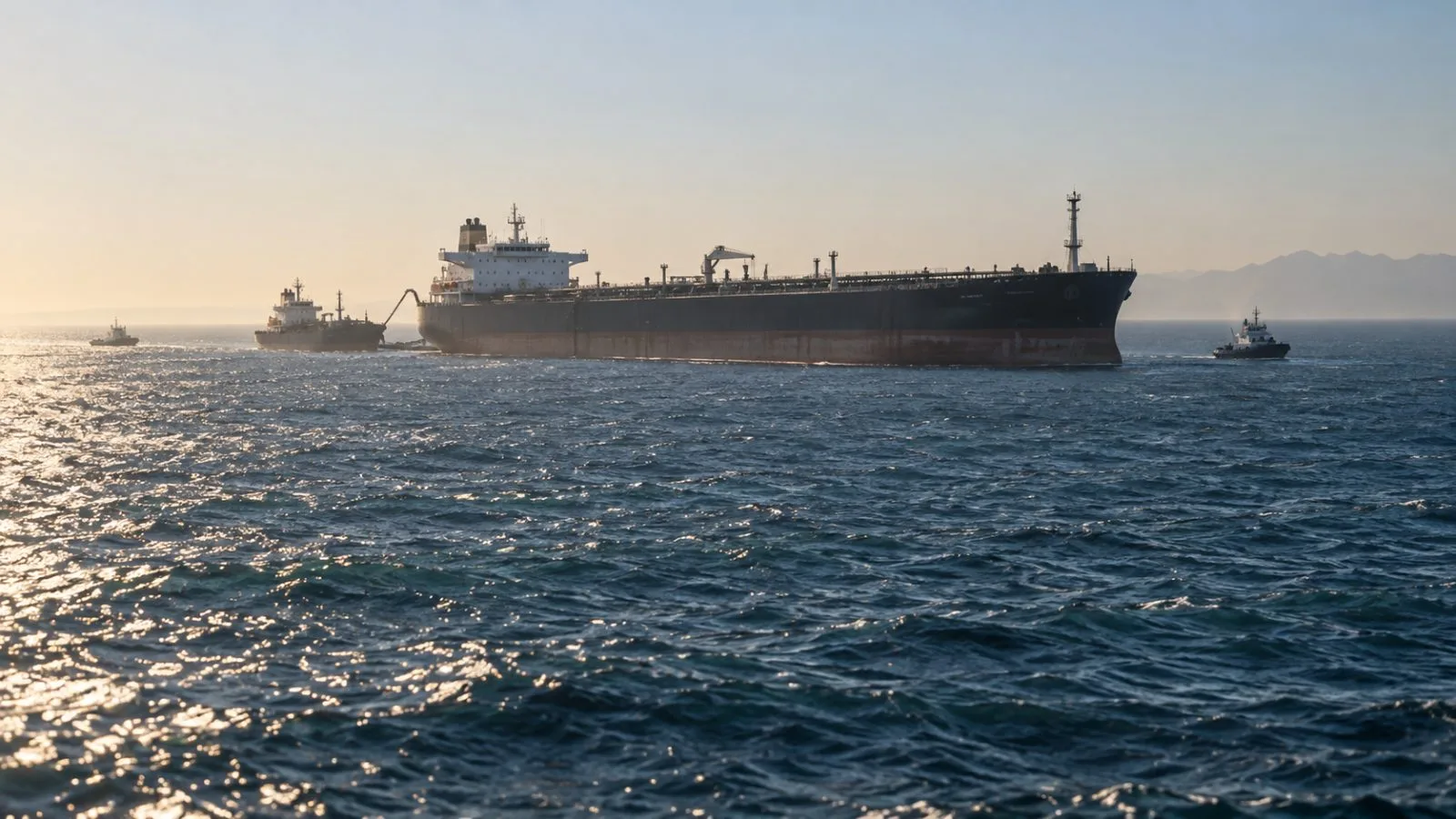
On Oct. 9, the daily rate for a very large crude carrier carrying oil from the U.S. Gulf to China slipped to $634,974, staying close to the prior day's record as disruptions near the Strait of Hormuz limited vessel availability.
The TD22 benchmark covers a 270,000-metric-ton voyage from the Galveston offshore lightering area to Ningbo, China. It reached $637,675 per day on Oct. 8, the highest level since the route was introduced, before falling $2,701 the following day.
The one-day decline offers limited relief to crude buyers and charterers. Disruptions around the Strait of Hormuz have encouraged ship-to-ship transfers, with smaller tankers moving crude before transferring cargoes to larger vessels in the Gulf of Oman.
The transfers increase voyage inefficiency and tie up tanker capacity. Freight on both the U.S. Gulf-to-China and Fujairah-to-Asia routes rose as much as 300% during the period described in the market assessment.
“The reasons for such exorbitant increases in VLCC freight rates are the hugely inefficient ship-to-ship (STS) activities as a workaround to the Strait of Hormuz closure and increased Atlantic Basin arbitrage crudes into the Far East, leading to lower open tonnage available,” said June Goh, a senior oil analyst.
A separate assessment earlier in the week of Oct. 9 valued a November U.S. Gulf-to-China VLCC charter carrying 2 million barrels at $80 million.
The higher freight costs have weakened the economics of sending U.S. crude to Asian refiners. However, continued disruption to Middle Eastern supply routes has kept Atlantic Basin crude among the available alternatives.
“The diversification angle for crude supplies remains in play while the flow from the Strait of Hormuz can still be disrupted, which means even if the arbitrage looks shut, there will likely be more Atlantic crude flows into Asia,” Goh said.
“We started this conflict with a crude crisis. Then it turned into a product crisis. Now we have more crude oil coming out of the Middle East, but it is turning into a shipping crisis,” Vitol’s chief executive said.
The latest TD22 reading remains close to its record, keeping transportation costs high for U.S. crude shipments to Asia. TokenPost previously covered the earlier surge in Gulf-to-Asia supertanker rates.
Enna Lee
ReporterEnna Lee reports on investing and digital-asset markets for TokenPost. Send corrections or tips to info@tokenpost.com.