
 Add as a preferred source on Google
Japan-Linked Tankers Avoid Hormuz in Middle East Crude Transfers
Ship-to-ship activity in the Gulf of Oman is rising as Japan-linked vessels collect crude without entering the Persian Gulf.

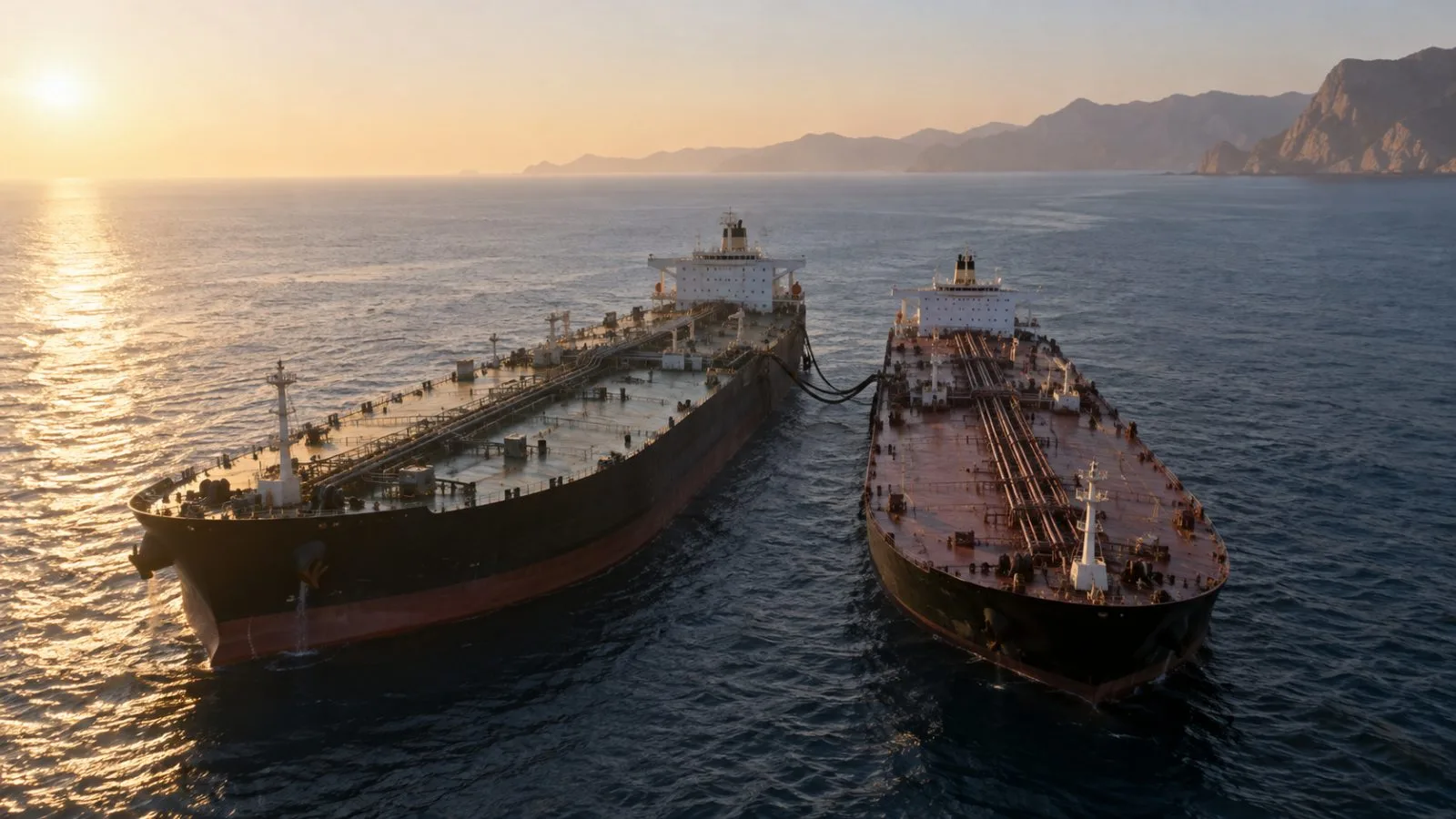
Japan-linked tankers are collecting Middle Eastern crude through ship-to-ship transfers while avoiding the Strait of Hormuz, showing that energy flows remain disrupted around the key export route.
The transfers are taking place in the Gulf of Oman, including waters near Oman and Fujairah. Offshore vessel-to-vessel transfers allow Japan-bound cargoes to move without sending the receiving tankers into the Persian Gulf.
Nearly 3.7 million barrels moved through Middle Eastern ship-to-ship transfers by early October, approaching the roughly 4 million barrels recorded during all of September. Gulf of Oman ship-to-ship activity reached record levels in August, when crude and condensate averaged 6.9 million barrels per day, or 90% of total activity.
The routing shift matters because Middle Eastern crude accounted for 93% of Japan’s approximately 823 million barrels of crude imports in 2025. It also points to continuing pressure on shipping routes and energy markets as refiners seek supplies while limiting exposure to risks around Hormuz.
Some crude may change vessels more than once, meaning transfer volumes do not represent unique production or final consumption volumes.
Enna Lee
ReporterEnna Lee reports on investing and digital-asset markets for TokenPost. Send corrections or tips to info@tokenpost.com.