
 Add as a preferred source on Google
Brazil’s Bitcoin treasury firm holds 3,950 BTC, targets institutions with yield ETF
OranjeBTC is using its 3,950 BTC treasury to expand into capital-markets products as it seeks to bridge Brazil’s retail and institutional adoption gap. Its yield-focused ETF has attracted more than 1,000 investors.


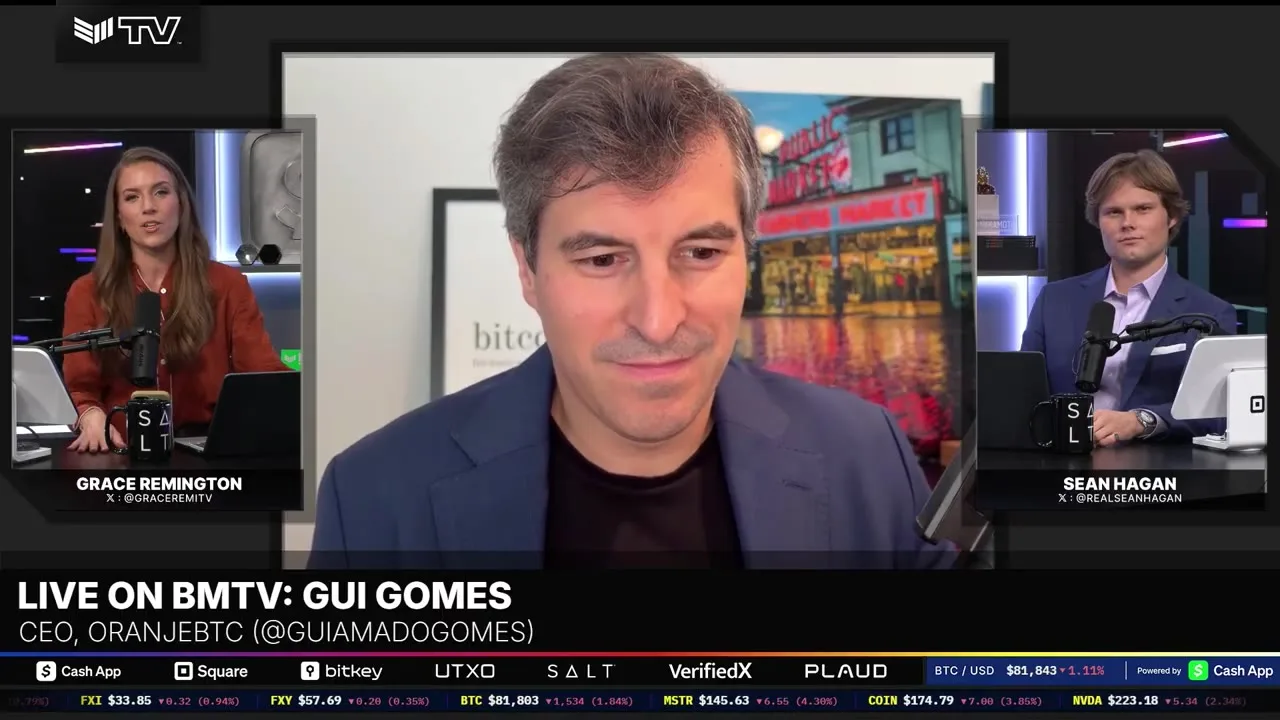
Brazil’s strong retail adoption of Bitcoin contrasts sharply with limited institutional participation. OranjeBTC is seeking to close that gap by expanding its capital-markets products around a treasury holding of 3,950 BTC.
In an Oct. 14 interview with Bitcoin Magazine, OranjeBTC founder and CEO Gui Gomes said Brazil is advanced in grassroots adoption but remains behind the United States at the institutional level. He said the company aims to show local investors how Bitcoin can serve as a long-term store of wealth.
Gomes cited Brazil’s No. 1 ranking in Chainalysis’ 2026 global adoption index. He said the country’s history of currency weakness and debasement has encouraged people to seek new ways to preserve wealth and transact internationally, while institutions and large wealthy families still hold limited Bitcoin positions.
OranjeBTC holds 3,950 BTC on its balance sheet and uses capital markets to increase Bitcoin per share. Gomes said it is the only publicly listed company in Brazil pursuing a Bitcoin strategy, giving it an advantage in a market with less competition than the United States.
As an initial step into asset management, the company launched an index-based ETF about one month ago that invests in perpetual preferred shares issued by U.S. Bitcoin treasury companies. The product gives Brazilian investors access without requiring a foreign brokerage account or separate foreign-exchange transactions.
More than 1,000 investors bought the ETF during its first few weeks, taking assets under management to nearly $10 million. Its first distribution was about $0.14 per share and reached more than 1,000 holders through their brokerage accounts. Gomes said subsequent inflows indicated that many investors had reinvested the proceeds.
The ETF combines preferred-share dividends with currency hedging and is expected to pay 18% to 19% in Brazilian real terms, compared with local interest rates of about 13%. Gomes said the product provides both yield and diversification for Brazilian investors whose portfolios are heavily concentrated in domestic companies and credit.
Gomes said Brazil’s regulatory framework is becoming clearer even as compliance costs rise. From October 2026, companies offering services in the sector must qualify as virtual asset service providers and meet documentation and capital requirements. Some local and global exchanges have left the market because of the new framework, he said.
OranjeBTC is not directly covered because it neither sells Bitcoin to end users nor holds it on their behalf, Gomes said. He added that a more pro-market environment and lower interest rates could reduce funding costs and support more advanced rules for Bitcoin and digital assets.
Riza Dagoc
Riza Dagoc reports on regulation, investing and the digital-asset business for TokenPost. Send corrections or tips to info@tokenpost.com.