
 Add as a preferred source on Google
Ether options OI reaches $6.00 billion; $2,600 call leads volume
Ether options open interest rose 3.2% to $6.00 billion. Calls accounted for 62.08% of OI, while a Deribit $2,600 call led trading volume.


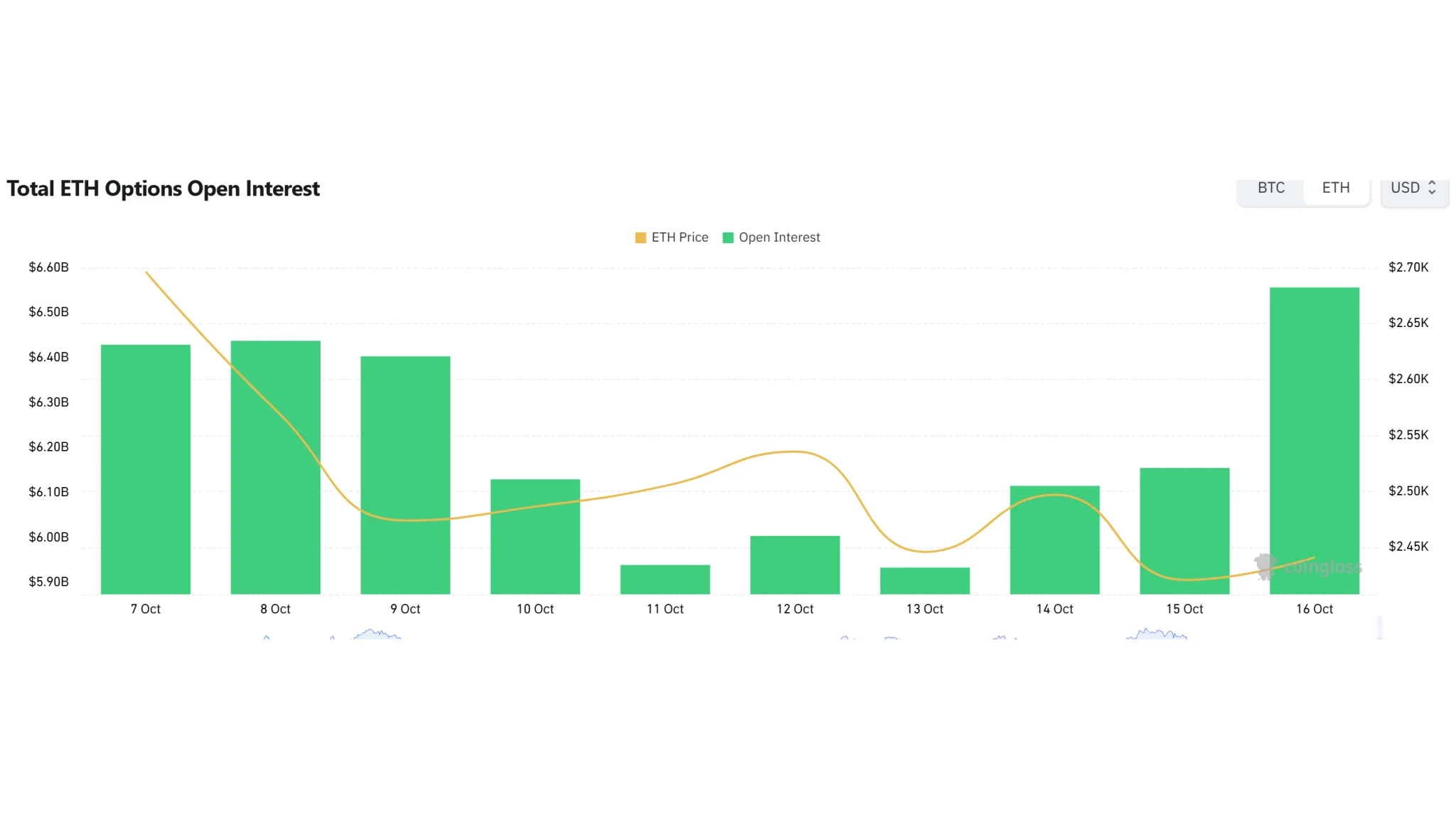
Ether options open interest rose 3.2% from the previous day. Calls held the larger share of both open interest and trading volume.
Positioning and daily trading activity in the Ether options market both leaned toward calls, indicating a modest bullish tilt across medium- and short-term sentiment.
As of Oct. 16, total Ether options open interest stood at $6.00 billion, up 3.2% from $5.81 billion the previous day. Options trading volume totaled $1.53 billion, while ETH was priced at $2,484.65.
Calls accounted for 62.08% of open interest and puts for 37.92%. By trading volume, calls represented 51.49% and puts 48.51%.
The call-heavy open-interest mix showed more medium-term positioning on the upside. Calls also maintained a narrower lead in trading volume, suggesting a slight bullish bias in shorter-term activity.
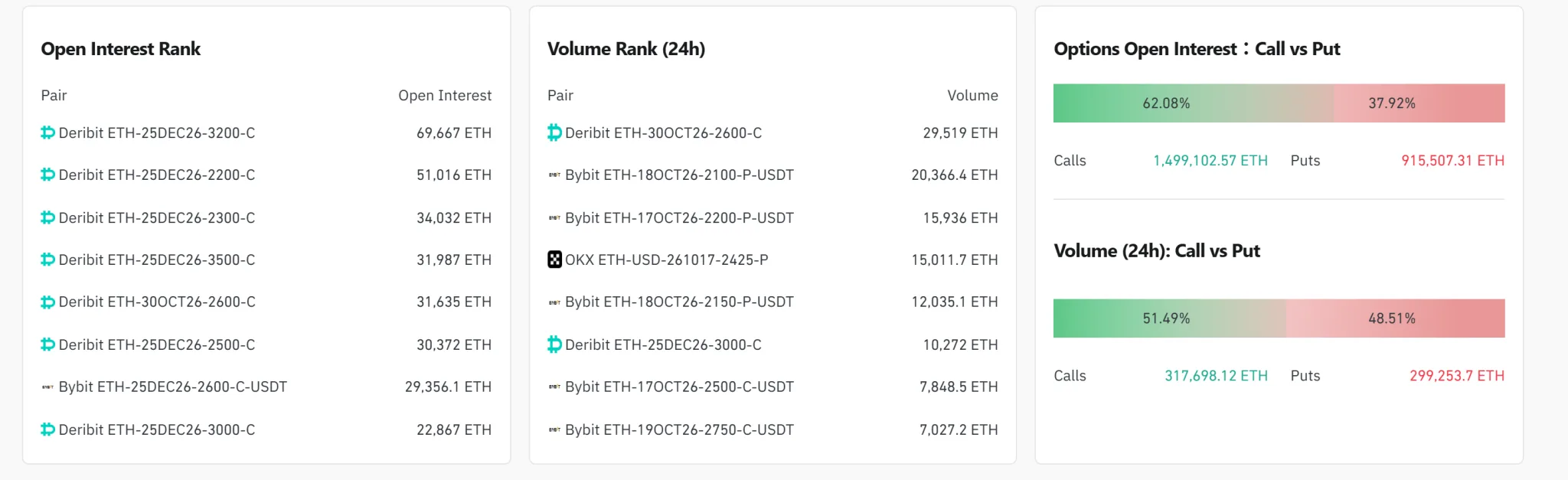
The largest open-interest contracts were the $3,200 call expiring Dec. 25 on Deribit, followed by the $2,200 call and the $2,300 call with the same expiry and venue.
The leading contracts by trading volume were the $2,600 call expiring Oct. 30 on Deribit, the $2,100 put expiring Oct. 18 on Bybit and the $2,200 put expiring Oct. 17 on Bybit.
Editor’s note Options are derivatives used to take leveraged positions on an underlying asset’s price or hedge existing exposure. A call grants the right to buy at a predetermined price, while a put grants the right to sell. Open interest measures the total number of outstanding contracts.
Call-put shares and changes in open interest and volume can help distinguish medium-term positioning from short-term trading. Rising open interest points to new positions entering the market, while differences between open-interest and volume composition may reflect hedging or volatility management.
This article is based on market data and does not constitute investment advice.
Enna Lee
ReporterEnna Lee reports on investing and digital-asset markets for TokenPost. Send corrections or tips to info@tokenpost.com.