
 Add as a preferred source on Google
Michael Saylor says Bitcoin is back in a bull market as bank custody gains momentum
Michael Saylor says Bitcoin has returned to a bull market after rebounding from its 200-week moving average. He sees bank custody, credit creation and tokenization as key tailwinds over the next 12 to 24 months.


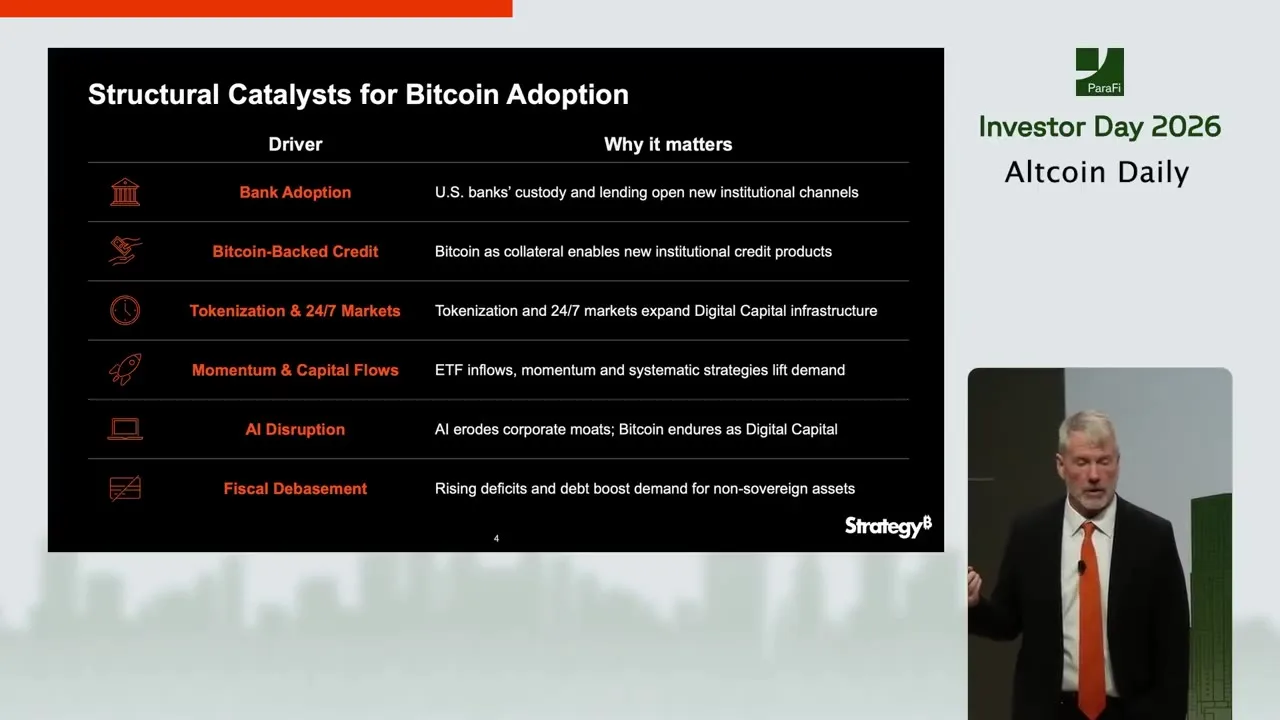
Bitcoin has returned to a bull market after rebounding from its 200-week simple moving average, according to Michael Saylor, chairman of Strategy. He said expanding bank custody and lending, along with securities tokenization, could drive prices over the next 12 to 24 months.
Speaking in an Altcoin Daily video on Oct. 17, Saylor said Bitcoin bounced off its 200-week simple moving average about three months ago and is now trading at a slight premium, with its long-term price trajectory remaining within expectations.
Saylor identified restrictive trade, foreign and monetary policies as the main headwinds for Bitcoin. He said all three have weighed on markets over the past year, while the vast sums flowing into the AI buildout are also competing with crypto for capital.
He described Bitcoin as “pure capital” and particularly sensitive to shifts in capital markets. A risk-off environment that hurts equities can be two or three times worse for Bitcoin, while trade conflicts, escalating wars and a 100-basis-point rise in yield curves also challenge broader markets, he said.
By contrast, bank adoption of Bitcoin could become a key price driver. Saylor said every $10 billion of newly created credit represents one year of Bitcoin supply, adding that $100 billion of credit formed around a $1 trillion asset class would be enormously bullish.
Saylor said credit networks can develop only after banks accept Bitcoin as collateral or take it into custody. He expects expanding bank custody and related credit creation to provide a strong tailwind over the next 12 to 24 months. Strategy’s Bitcoin banking index has risen from 9% to 34%, he added.
Securities tokenization is another positive catalyst, Saylor said. Tokenized credit, equity and capital can be traded and cross-collateralized, broadening their use across Bitcoin and crypto markets.
He also argued that AI adoption highlights Bitcoin’s scarcity. As automation pushes the marginal value of goods and services toward zero, consumers may benefit while producers that rely on selling them at high prices could face pressure.
In that environment, Saylor said investors may favor scarce assets that machines cannot produce. “Bitcoin is a scarce desirable piece of property in cyberspace,” he said. “The robots can't make more Bitcoin.”
On regulation, Saylor welcomed the Treasury’s stablecoin rules, the SEC’s path for tokenized securities in the U.S. and the CFTC’s approval of crypto derivatives for U.S. investors. He argued that concise principles and clear, supportive regulatory guidance would benefit the industry more than hundreds of pages of restrictions.
Riza Dagoc
Riza Dagoc reports on regulation, investing and the digital-asset business for TokenPost. Send corrections or tips to info@tokenpost.com.