
 Add as a preferred source on Google
Newcastle Coal Grade Reaches $111.75 Amid Indonesian Supply Uncertainty
Indonesian thermal coal exports are projected to fall in 2026, while high natural gas costs support coal use in parts of Asia.

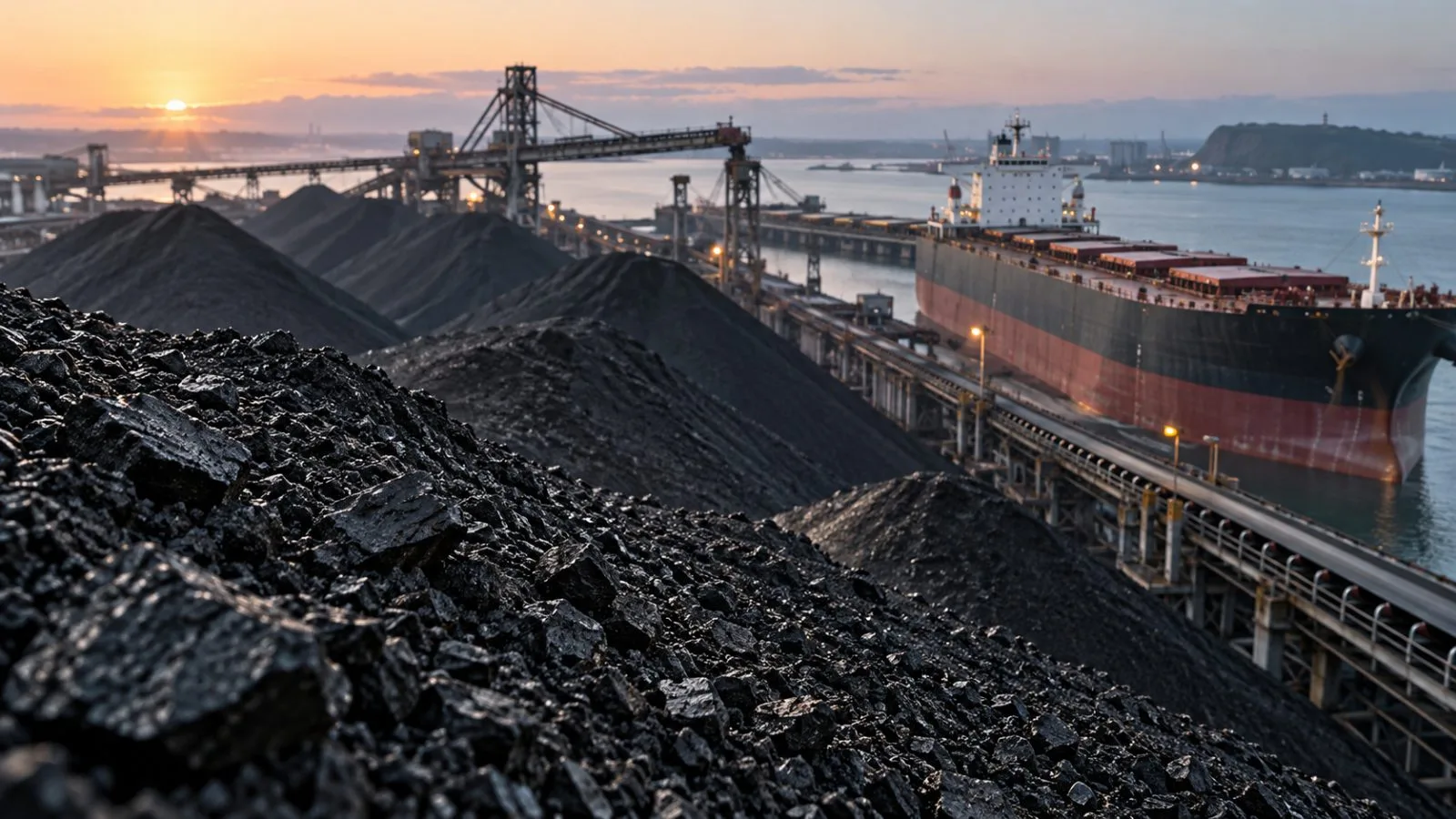
An Australian thermal coal export grade has risen more than 50% since January as uncertainty over Indonesian shipments slows supply talks and costly natural gas supports coal use in parts of Asia.
On Oct. 14, Newcastle coal graded at 5,500 kilocalories per kilogram stood at $111.75 per metric ton, compared with $71.50 on Jan. 2. The figures refer to that specific export grade; coal sold from Newcastle at other heat-content grades follows different price series.
Unresolved production approvals and export rules have slowed talks between Indonesian miners and Asian buyers over 2027 supply contracts. Indonesia’s thermal coal exports are projected to reach about 495 million metric tons in 2026, down from a preliminary 517 million tons in 2025.
In September, China’s major industrial producers extracted 390 million metric tons of raw coal, a 6.8% annual decline. From January through September 2026, their production totaled 3.45 billion metric tons, down 3.5% from a year earlier. Those production figures add to the region’s supply picture, but China’s latest power data show that demand is uneven.
Thermal power generation by Chinese industrial enterprises above the designated size fell 1.4% in September from a year earlier. China’s coal imports also declined 5.7% year over year that month, even as domestic coal prices rose.
South Korea’s coal consumption is projected to increase 6% to 119 million metric tons in 2026. High gas prices and reduced nuclear availability are supporting coal-fired generation there. The projection points to stronger coal use in one major Asian market despite softer indicators in China.
Japan presents a different demand picture. Its coal consumption is projected to fall 1% to 161 million metric tons this year, although expensive natural gas still provides some support for coal-fired power. The differing country outlooks limit the case for treating the price rise as evidence of a regionwide jump in consumption.
Worldwide coal demand is projected to grow 1.2% to 8.94 billion metric tons in 2026. A decline is projected for 2027 if Middle East tensions ease and the gas-price pressure encouraging coal use subsides. Under those conditions, global demand would fall 0.4% to 8.91 billion metric tons.
Enna Lee
ReporterEnna Lee reports on investing and digital-asset markets for TokenPost. Send corrections or tips to info@tokenpost.com.