
 Add as a preferred source on Google
Bitcoin holds $80,000 support as supply near $87,000 limits recovery
Bitcoin tested support near the ETF and corporate cost bases around $80,000. Glassnode identified overlapping supply near $87,000, while renewed ETF inflows were accompanied by subdued trading volume.


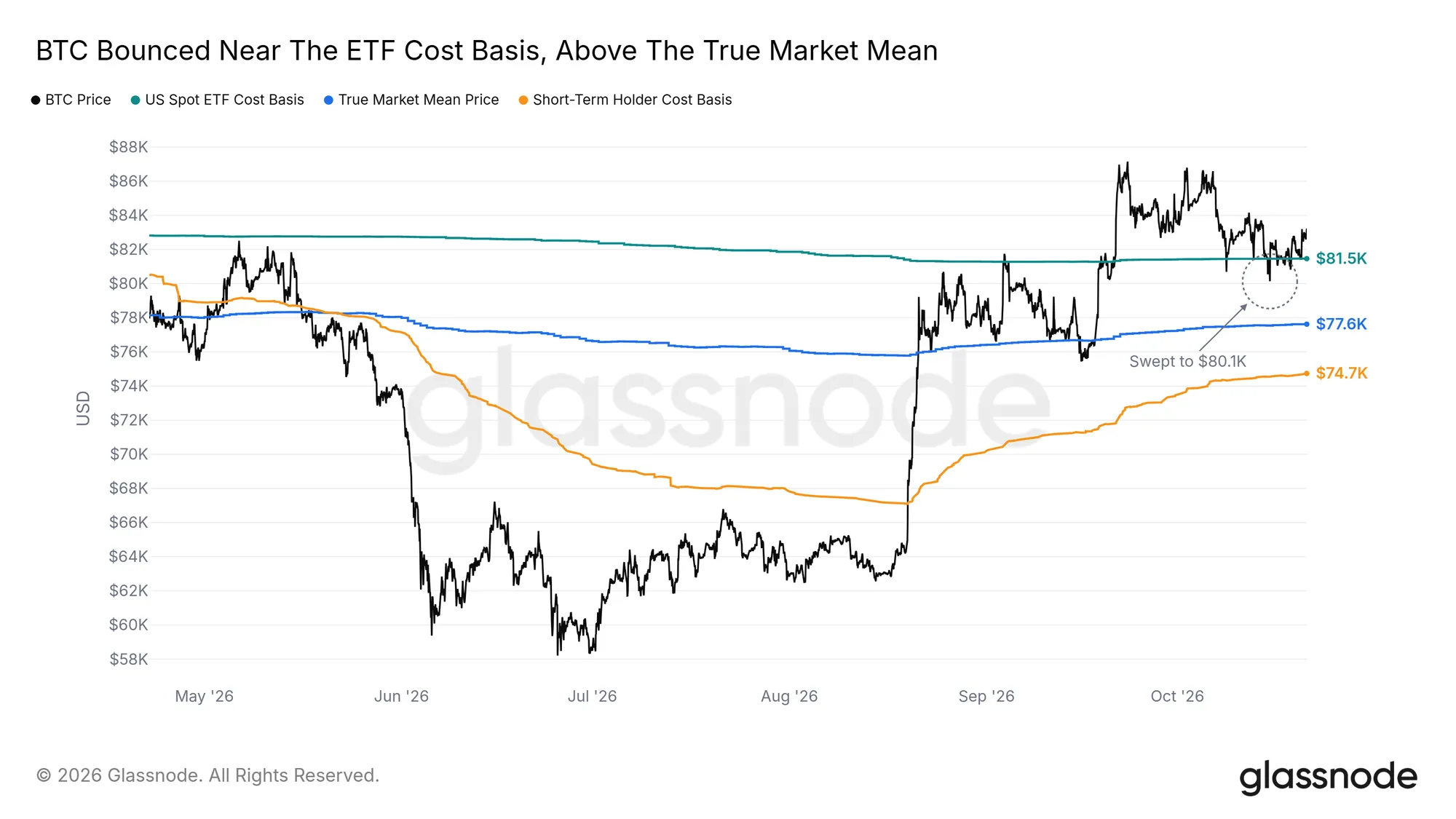
Bitcoin tested support near $80,000, where the average purchase prices of US spot ETFs and corporate holders converge. Sell orders and liquidation clusters around $87,000 remain the next major obstacle to a sustained recovery.
In its “Swept and Refilled” report published on October 21, 2026, Glassnode said Bitcoin had been trading around the US spot ETF cost basis, the average purchase price of the funds’ holdings. Its previous report identified that level as the nearest on-chain support. Bitcoin has crossed below it several times since October 8. On October 15, the hourly close fell to $80,100 before the next hourly close returned above the line.
The ETF cost basis acted as resistance in the spring. Bitcoin stalled just below it in early May and first closed above it on an hourly basis on September 3. In October, the same level has provided support. Glassnode placed the True Market Mean, the average cost basis of active investors, near $77,600. The October decline stopped above that level.
ETF and corporate cost bases converge near $80,000
Glassnode estimated the average purchase price of the Bitcoin treasury companies it tracks at about $80,200, slightly below the ETF cost basis, using their holdings and unrealized profits. Bitcoin traded below that level for most of the year and fell more than 25% beneath it at the end of June. Daily closes have remained above it since September 18.
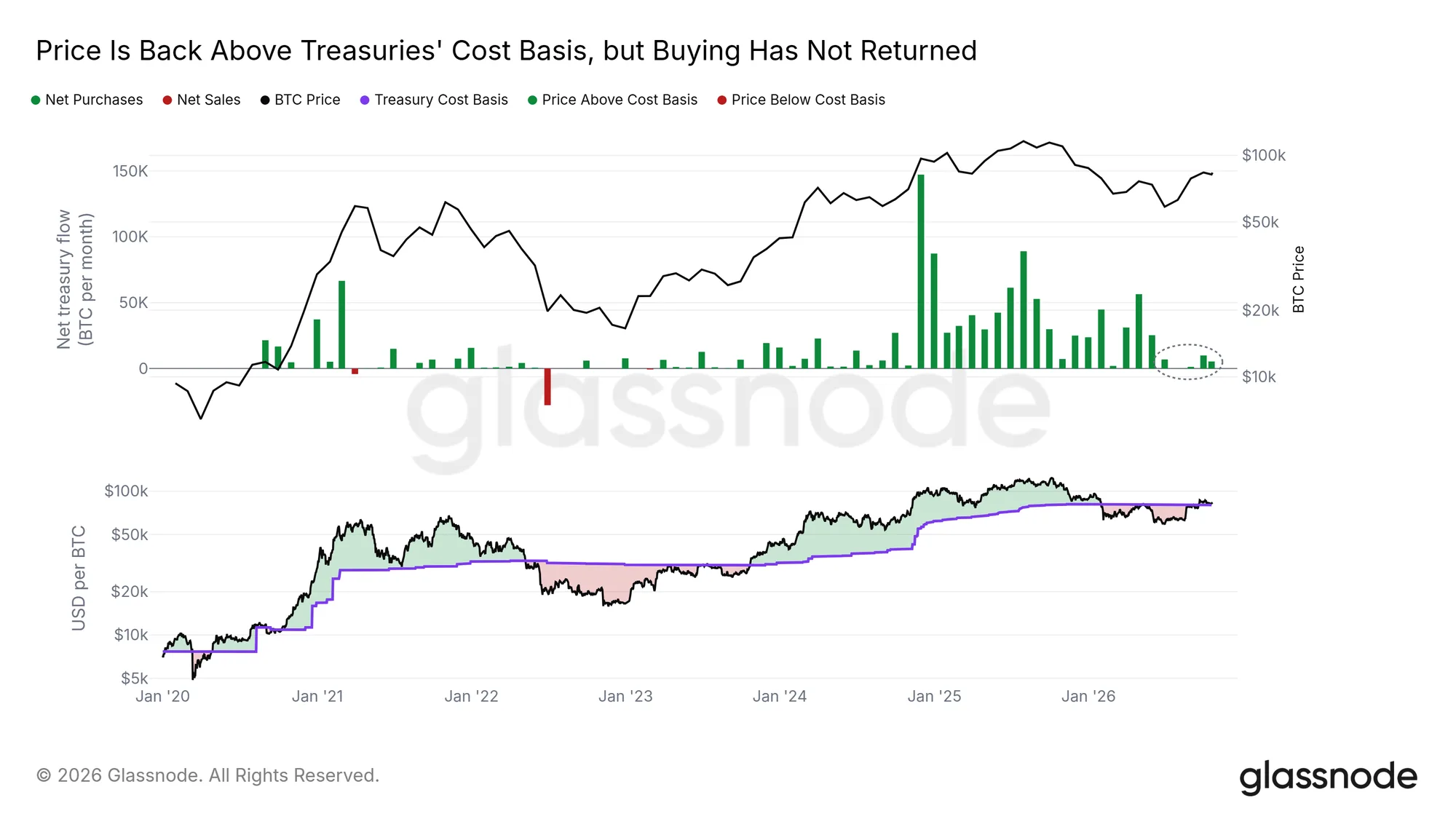
Corporate buying has lagged the price recovery. Every month since June recorded purchases below a tenth of the peak reached in November 2024. With both groups’ cost bases between $80,000 and $81,500, the October 15 decline tested two major holder groups simultaneously. Glassnode identified a daily close below $80,000 as the threshold that would leave both groups holding losses on average.
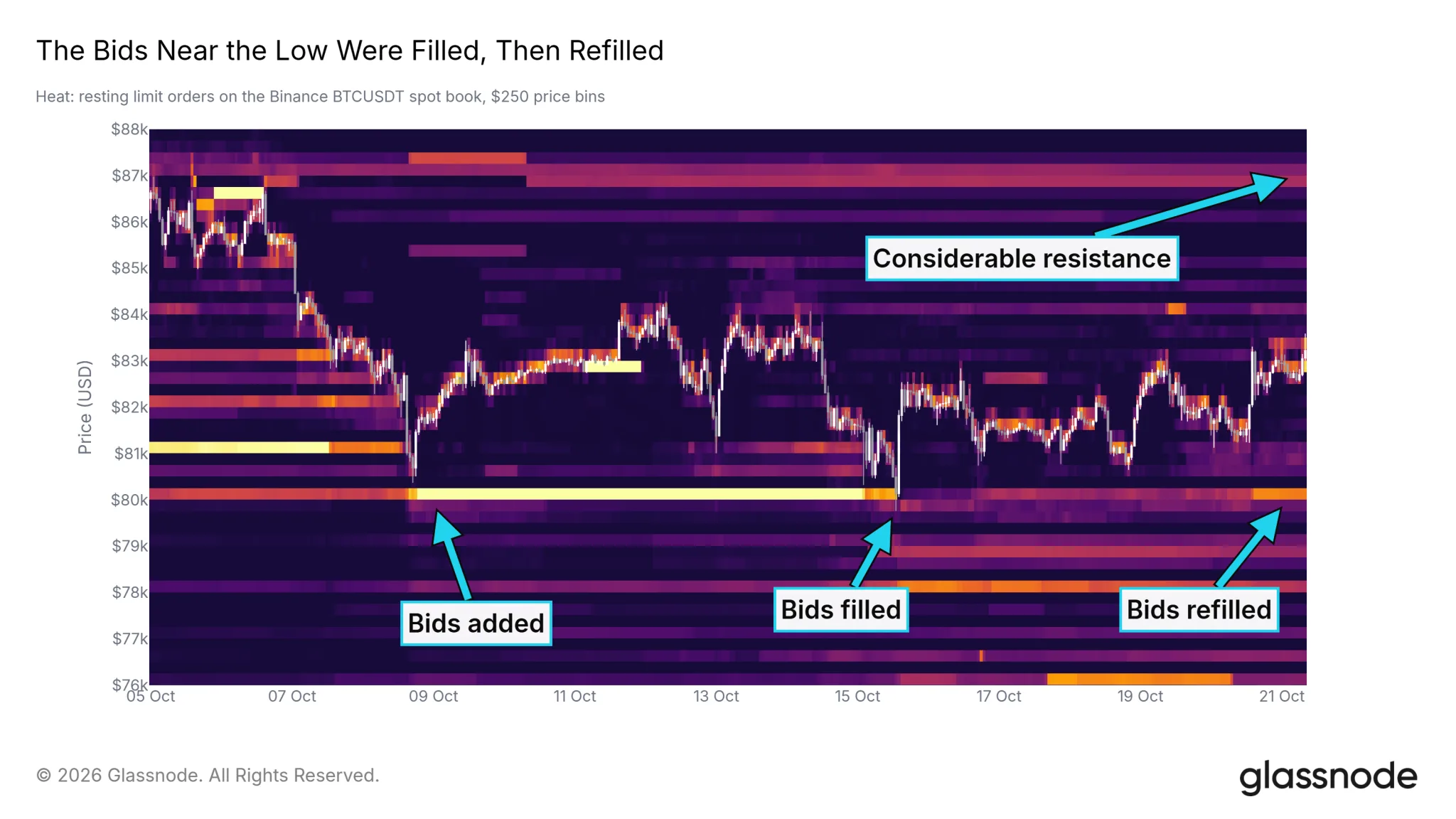
The largest concentration of bids on Binance’s spot order book sat at $80,000, just below the ETF cost basis. The October 15 decline consumed most of those orders, but bids had rebuilt by October 20. Their size remained below the earlier peak, indicating continued buying interest at that price. Glassnode identified the first substantial concentration of sell orders between $86,500 and $87,500.
Sell orders and liquidation clusters overlap near $87,000
Glassnode’s liquidation heatmap, which estimates where leveraged futures positions face forced closure, showed that the October 15 decline cleared a prominent cluster near $80,000. The two largest remaining clusters stood above the market near $85,000 and $87,000. Below the market, a further cluster remained near $79,600, slightly beneath the October 15 low.
The report identified $87,000 as a zone where potential short liquidations overlap with substantial spot sell orders. The cost bases of buyers from the past two years also remained overhead. Coins purchased 6 to 12 months earlier had an average cost basis near $86,700, down from $88,000 in the previous report. Coins purchased 1 to 2 years earlier had a cost basis near $100,000. The younger cohort’s cost basis therefore overlapped with the sell orders and liquidation clusters around $87,000.
Selling pressure from these holders has eased, Glassnode said. Activity by the 1 to 2 year cohort peaked in early October, after the September high, and its daily coin movements have since fallen below a third of that level. The report identified $86,700 as the daily closing threshold for the 6 to 12 month cohort to return to profit on average and for Bitcoin to clear the nearest overhead supply band.
ETF inflows return while trading volume remains subdued
US spot ETFs attracted about $653 million on Monday, October 19, following a week of net outflows. It was the largest daily inflow since September 22 and returned weekly flows to positive territory, according to Glassnode.
Trading activity remained muted. ETF volume that day was below a typical daily level over the preceding year, while the 30-day average was less than a quarter of its level a year earlier. Glassnode said repeated inflows accompanied by rising volume would provide evidence of broader demand.
On-chain profit-taking also slowed. Realized Profit measures gains recorded when coins move at a higher price than on their previous transfer. Over the past week, its pace fell to about half the level recorded during the week of September’s high. Realized losses held steady, with the largest losses of the past week occurring in the 24 hours through the morning of October 15 as Bitcoin approached $80,000. Glassnode highlighted renewed profit-taking near $87,000 as a signal to monitor for returning selling pressure.
John Kim
John Kim reports on the digital-asset business for TokenPost. Send corrections or tips to info@tokenpost.com.