
 Add as a preferred source on Google
Defense Stocks Fall After Democrats Win Congress, Putting 2027 Budget in Focus
Lockheed Martin fell 3.6% Wednesday, while three other major defense contractors also declined as investors focused on federal spending.

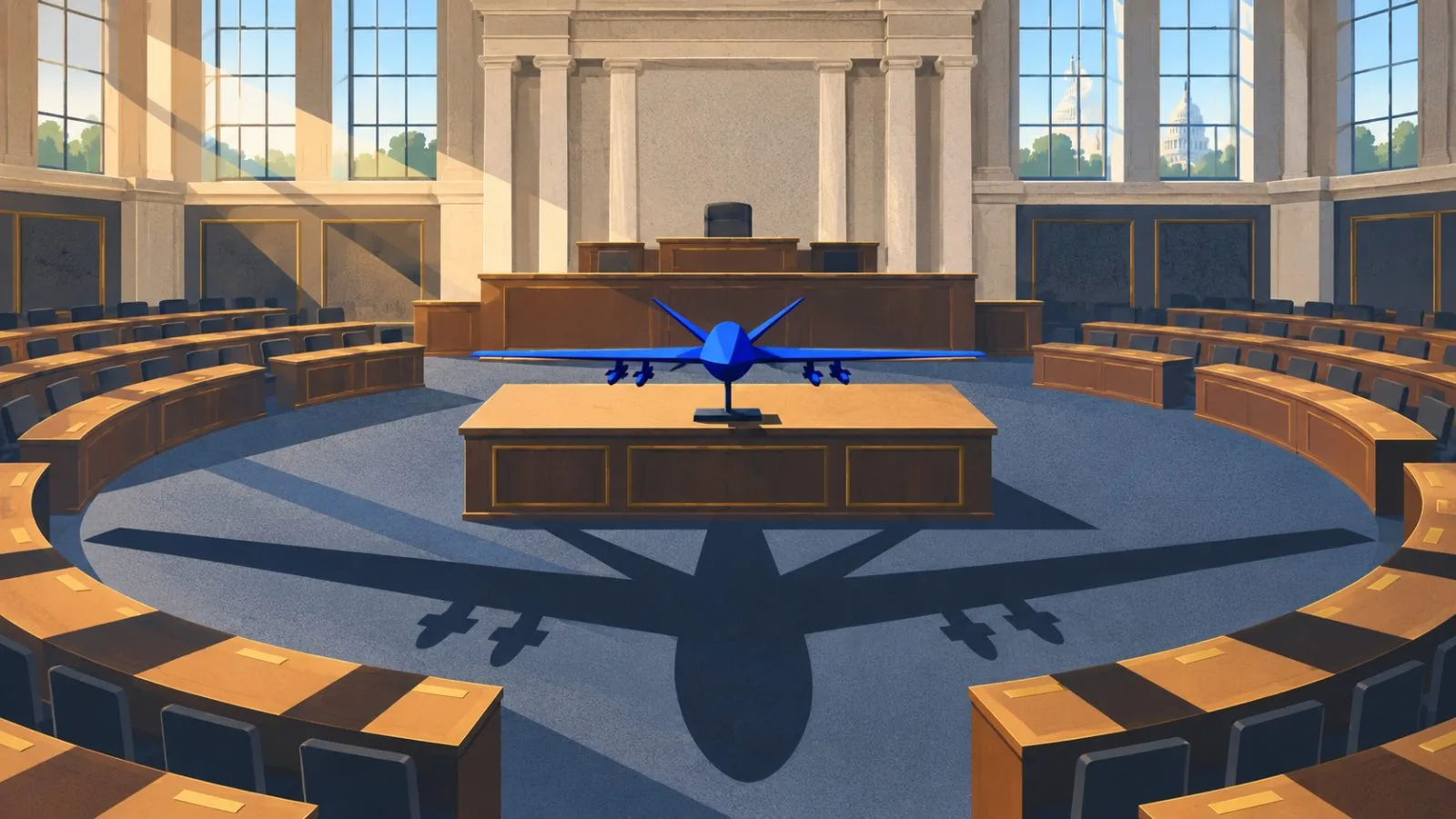
Defense stocks fell Wednesday after Democrats won control of both chambers of Congress, as investors assessed whether the new majority would challenge President Donald Trump’s defense spending priorities.
Lockheed Martin shares fell 3.6% in Wednesday’s session. L3Harris lost more than 2%, while RTX Corporation and Northrop Grumman each dropped more than 3%. The moves followed Tuesday’s midterm results and drew attention to federal budget choices that shape demand for defense contractors’ products and services.
Each company has significant government exposure. About 70% of Lockheed Martin’s sales come from the U.S. government, while U.S. government sales made up 75% of L3Harris’ fiscal 2025 revenue. L3Harris’ figure includes sales through prime contractors, including foreign military sales. RTX and Northrop Grumman also generate significant sales through U.S. government contracts.
That reliance leaves the companies exposed to congressional review of the administration’s spending agenda. Wednesday’s market reaction reflected concern that a Democratic majority could challenge President Trump’s priorities, adding uncertainty for contractors that depend on public funding.
Wolfe Research analyst Myles Walton called the Democratic sweep a “headline negative” for defense shares, but said the first reaction could be “potentially short-lived.” Walton pointed to the 2006 midterms, when Republicans held the White House and Democrats captured both chambers of Congress.
Defense shares initially fell about 2% after that election, then recovered while military budgets continued rising. Democrats later backed increased funding for U.S. operations in Iraq. The episode shows why an election result alone does not settle the direction of defense spending.
The historical comparison comes as the current backdrop includes the Iran war and the Russia-Ukraine war. A roughly 20% decline from the sector’s summer peak had already put aerospace and defense shares under pressure, a pullback discussed in an earlier analysis of a possible tactical bottom for the sector.
The fiscal 2027 defense budget is the next near-term test, with Walton identifying it as a catalyst. Republicans may try to pass a spending package during the lame-duck session before Democrats take control in January.
Enna Lee
ReporterEnna Lee reports on investing and digital-asset markets for TokenPost. Send corrections or tips to info@tokenpost.com.