
 Add as a preferred source on Google
Nvidia leadership risks leave AI investment case intact as demand holds up
Al Dhabi Capital’s Rashmi Garg said Nvidia faces governance and succession risks, while sustained GPU and networking demand supports the broader AI investment case.

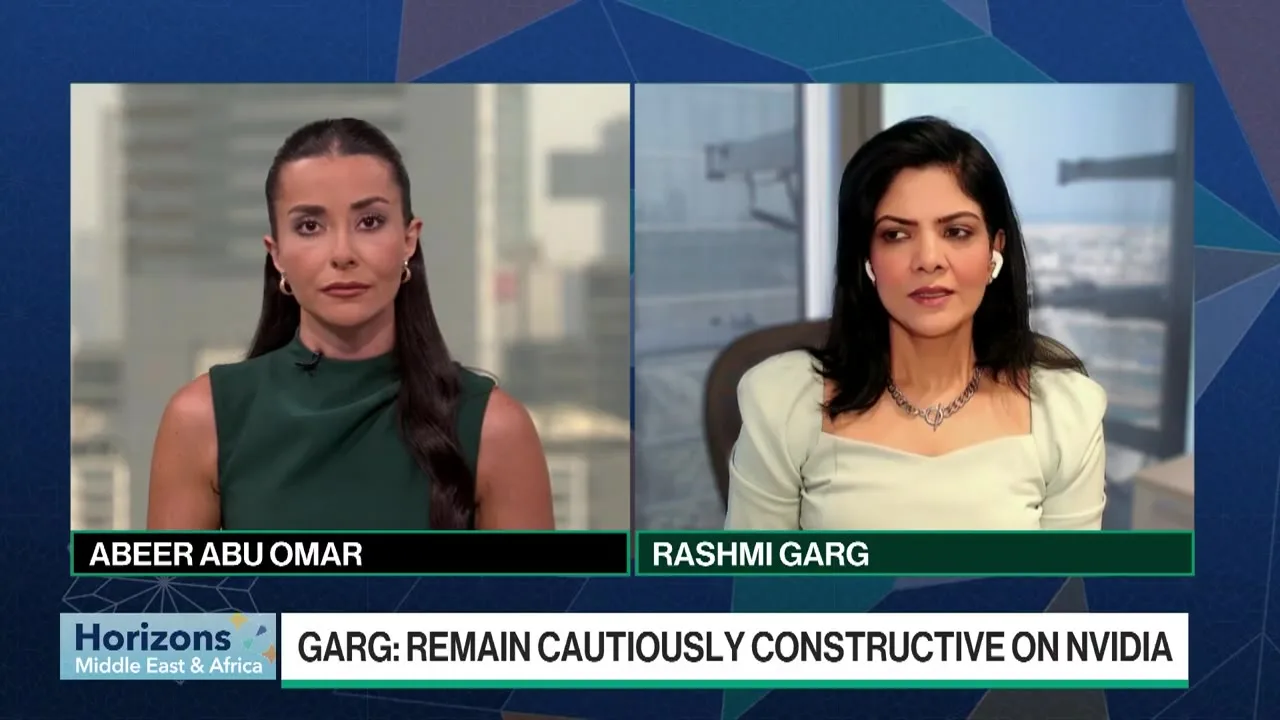
Leadership risks at Nvidia could weigh on its shares, but continued demand for GPUs and networking supports the broader AI investment case. The recent selloff in AI stocks appeared excessive given that underlying demand remained strong.
In a Bloomberg interview on November 10, Rashmi Garg, senior portfolio manager at Al Dhabi Capital, described the allegations surrounding Jensen Huang as a governance and key-person risk. She said investors should assess those concerns separately from Nvidia’s business fundamentals.
Garg said the central issue was whether Huang’s integrity or commercial decision-making had been compromised. Given his prominent role in the AI industry, she regarded allegations involving an alleged foreign agent as a serious concern.
Asked about a hypothetical departure by Huang, Garg identified the lack of a clear succession plan as an important vulnerability. She said replacing him would be difficult and that uncertainty over leadership could expose Nvidia shares to considerable pressure.
Garg nevertheless maintained that the broader AI investment case remained intact. Demand for GPUs continued despite the leadership controversy, supporting her distinction between risks surrounding Nvidia’s management and demand across the industry.
She also considered the selling in AI stocks after the U.S. midterm elections excessive. Although the election outcome raised questions about the continuity of data center construction, she said token usage and demand for GPUs and networking showed no signs of cooling.
Garg attributed the subsequent rebound partly to dip buying and partly to more rational market assessments. She said the scale of the earlier selloff had led her to expect a recovery.
Riza Dagoc
Riza Dagoc reports on regulation, investing and the digital-asset business for TokenPost. Send corrections or tips to info@tokenpost.com.