
 Add as a preferred source on Google
Nvidia decline reflects governance concerns as Jensen Huang’s future comes into focus
CNBC panelists described Nvidia’s weakness as a governance discount rather than weaker AI demand, highlighting uncertainty over Jensen Huang alongside the company’s technology and management depth.

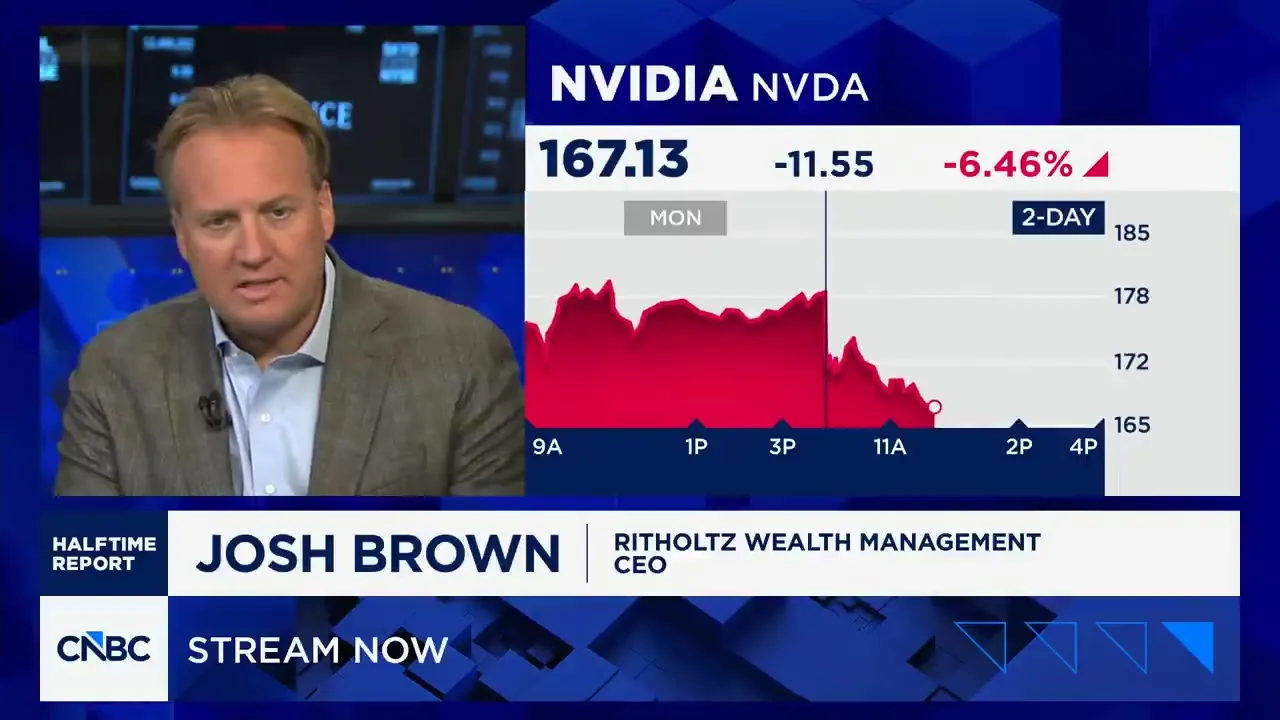
Nvidia’s share-price weakness reflects uncertainty over corporate governance rather than softer AI chip demand, according to investment panelists. Jensen Huang’s future could affect the company’s value, but its development ecosystem and organizational strength also remain central to the discussion.
Speaking on CNBC on November 10, panelists discussed the controversy surrounding Nvidia and the implications of a possible leadership change. They distinguished uncertainty over management from the underlying demand for the company’s products.
Josh Brown said investors were reducing exposure because they could not tell when the uncertainty would clear. For portfolio managers assessing performance through year-end, he said, the issue was a business decision about investor returns. Leverage in long and short technology positions, together with programmatic trading, could amplify price swings.
Brown said he had held Nvidia shares for 12 years and experienced drawdowns of 70% along the way. He said he would reconsider his position if major revelations showed Huang had knowingly engaged in prohibited dealings with other countries, but did not currently believe the board should remove him.
Another panelist argued that Nvidia could be worth less without Huang while retaining its core technological advantages. The company’s development architecture and the AI ecosystem built around it would survive a chief executive’s departure, the panelist said, citing Apple, Microsoft and Alphabet as companies that had remained successful through leadership changes.
A panelist who disclosed buying Nvidia shares in a personal account the previous evening described the weakness as a “governance discount” rather than a “demand discount,” saying there was no evidence of a change in demand. The panelist nevertheless said managed portfolios remained slightly underweight Nvidia and that more information was needed before making broader allocation decisions.
Analyst sentiment had changed little, another panelist noted. The proportion assigning buy ratings remained at 78% from the previous day, while the 12-month price target slipped from $324 to $320. Citing a conversation with a large high-frequency trading firm that focused on price action rather than fundamentals, the panelist said the identity and methods of sellers mattered in assessing the pressure on the stock.
The discussion closed with an emphasis on management depth. One panelist argued that a founder’s vision depends on the people who execute it and said Nvidia had organizational strength beyond Huang. That assessment placed the company’s broader leadership and execution capabilities alongside its founder’s role in evaluating the business.
Riza Dagoc
Riza Dagoc reports on regulation, investing and the digital-asset business for TokenPost. Send corrections or tips to info@tokenpost.com.