
 Add as a preferred source on Google
HSBC starts buying stocks but holds back from maximum allocation as AI concerns persist
HSBC has begun adding to equities but remains below its earlier maximum overweight position. Strategist Max Kettner says revisions to AI capital spending and free cash flow forecasts could help gauge investor concerns.

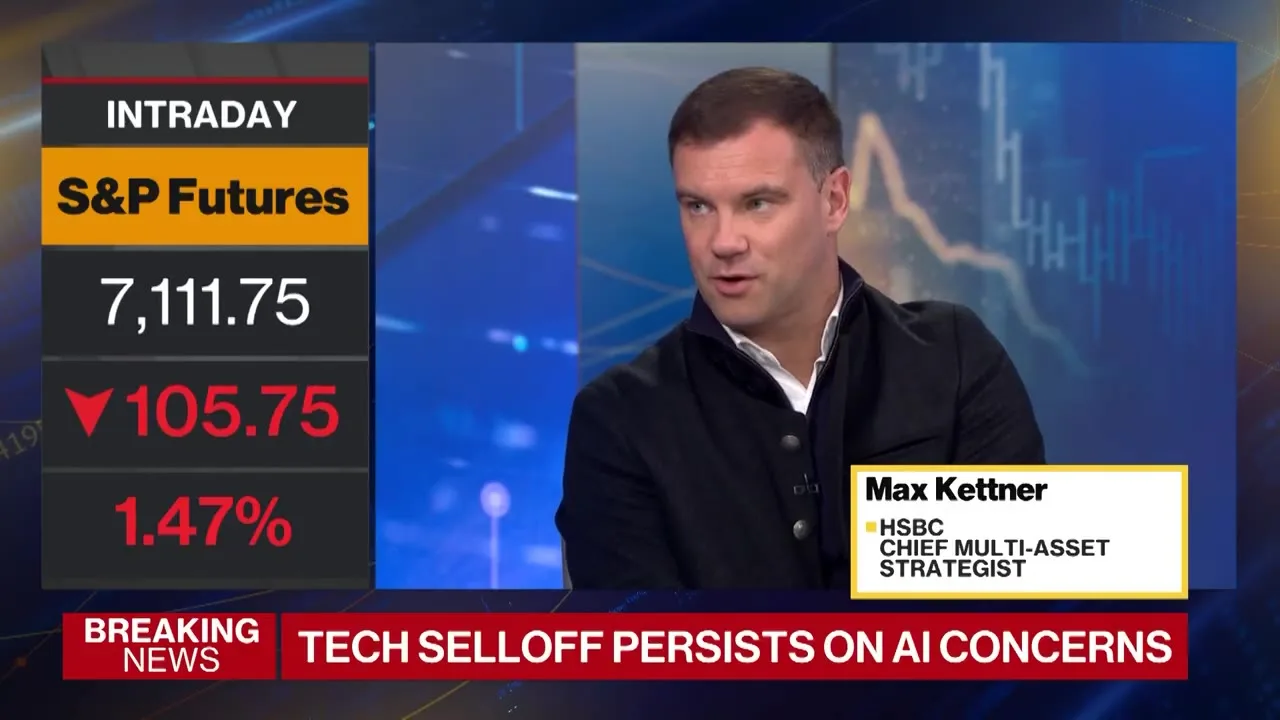
HSBC has begun buying equities in small amounts, but has held back from returning to its maximum allocation as investors weigh the outlook for AI spending and cash flow.
In a Bloomberg interview on Nov. 25, Max Kettner, HSBC's chief multi-asset strategist, said the firm had started adding to equities but was not back to the maximum overweight position it held a month earlier.
Kettner said technical indicators across assets showed oversold conditions for investors with a six- to 12-month horizon. Over the roughly five weeks remaining until year-end, however, he expected short-term positioning by systematic investors to play a greater role.
He said the three- to four-week rate of change in HSBC's positioning measures had fallen from near the 90th percentile three weeks earlier to the 30th percentile, marking the largest reduction in positioning in six and a half years. But the measures had not fallen below the 10th percentile, a level that, alongside very low discretionary positioning, had previously signaled a strong buying opportunity.
On Federal Reserve policy, Kettner said there was no fixed level of market losses that would trigger a change in direction. He said the bar for the Fed to sound dovish relative to its current stance was low, pointing to the possibility of gradual rate increases and concern about a rapid tightening of financial conditions.
Regarding AI investment, Kettner said cuts to capital spending by large technology companies could have differing effects. Lower spending could hurt companies receiving orders, while potentially allowing the technology giants to spend less and buy back shares.
He also pointed to earnings as a measure of the AI trade's outlook. Earnings growth may have peaked and may slow next year, he said, but forecasts still call for nearly 20% growth.
Kettner said a positive turn in the rate of change of hyperscalers' free cash flow would be a key longer-term fundamental signal, though he saw it as more likely in the second quarter than the first. In the shorter term, he said, investors should watch revisions to capital spending and free cash flow forecasts; an improvement in their rate of change could ease concerns about the AI trade.
Riza Dagoc
Riza Dagoc reports on regulation, investing and the digital-asset business for TokenPost. Send corrections or tips to info@tokenpost.com.