
 Add as a preferred source on Google
AI Stock Swings Put Retirement Portfolios’ Tech Concentration in Focus
The five largest S&P 500 stocks account for about 29% of the index’s market value, exposing retirement savers to outsized moves in a small group of companies.

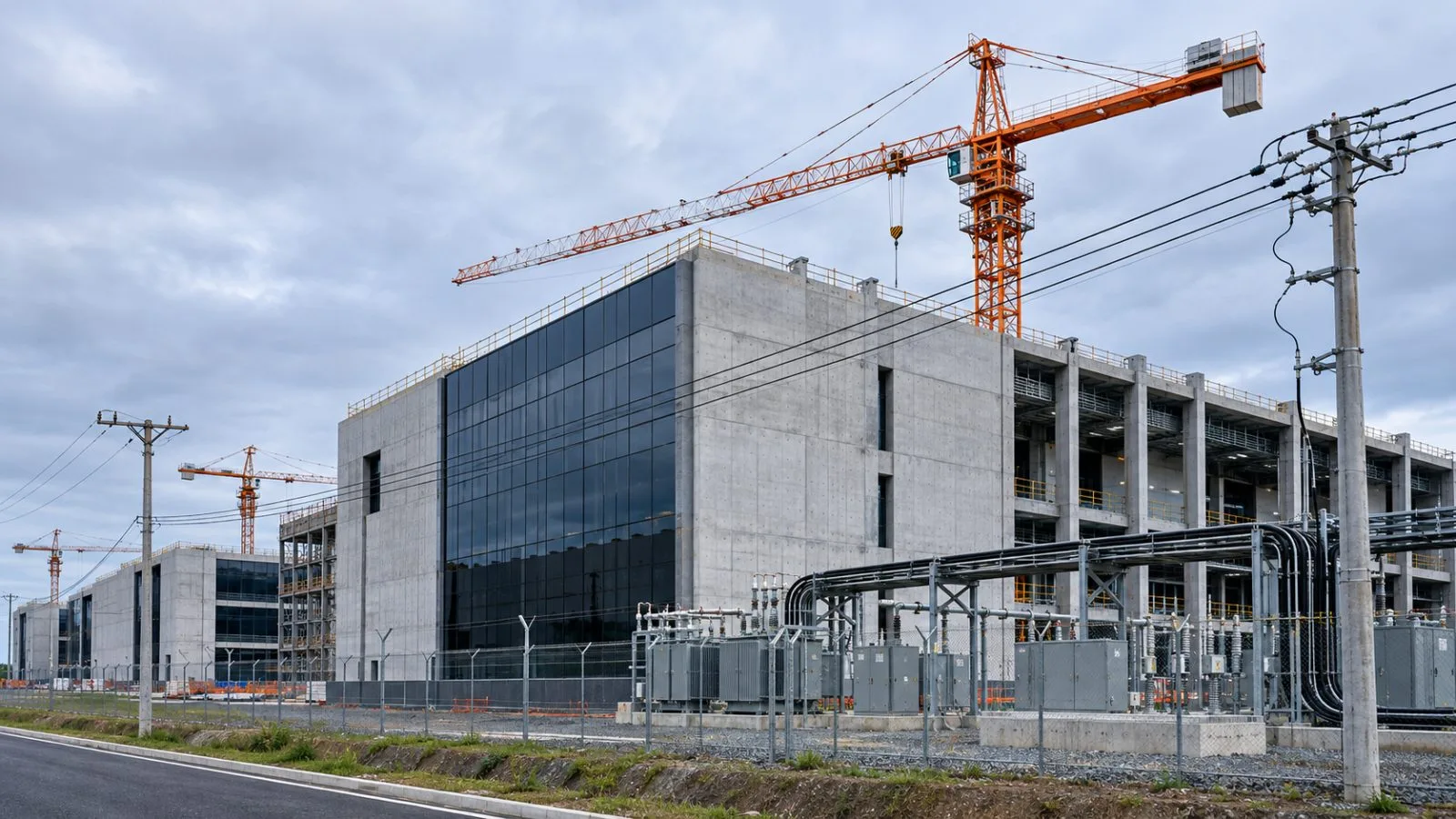
Wednesday’s sharp market swings, which came amid a second day of selling in artificial intelligence (AI) chip stocks, highlighted how heavily U.S. retirement savings can depend on a small group of technology companies.
The five largest stocks in the S&P 500 account for about 29% of the index’s total market value. The 10 largest represent about 39%, meaning an investor with $100,000 in an S&P 500 index fund would have roughly $29,000 tied to the five biggest holdings.
After climbing for years, the market’s concentration is close to its highest level in 35 years. The exposure matters even for investors who do not select individual stocks because many retirement plans rely on funds that track broad market indexes.
A second day of selling in AI chip shares came as the broader market sank early Wednesday. The Dow’s losses topped 1,000 points near the opening bell, while the Nasdaq was down more than 4%. Nvidia shares declined by as much as 8% intraday.
The Dow had moved into positive territory by late afternoon. The S&P 500 was still lower, but only by about 0.5%. By late Wednesday, the index was about 8% below its Oct. 6 record.
The S&P 500 had fallen for seven consecutive sessions through Friday, Nov. 20, a run unmatched since February 2020. It ended that day in a correction, 11.6% under its Oct. 6 record.
“An index fund spreads your money across 500 companies, but it does not spread the risk evenly,” said Martin Mulyadi, an accounting professor at Shenandoah University’s College of Business, Engineering & Technology.
Sean McEvilly, managing partner and founder of Vistamark Investments, said target-date funds and large-cap funds often hold many of the same companies. Roughly two-thirds of Fidelity 401(k) savers have their entire 401(k) in a target-date fund.
Stock gains of just over 50% during the past five years have benefited savers. They helped Fidelity’s count of 401(k) millionaires reach a high of 769,000 in June. The count fell about 2% from the second quarter to the third quarter of 2026 before the selloff began, but remained 15% above its level a year earlier.
About 96% of Fidelity 401(k) participants maintained or increased their savings rate during the third quarter. Sharon Brovelli, Fidelity’s president of workplace investing, said many workers continued saving and remained invested despite market volatility.
The average Fidelity 401(k) millionaire is 58, making the concentration issue especially relevant for savers nearing retirement. The danger comes when a downturn hits early in retirement and forces someone to sell at lower prices to pay living costs. That leaves a smaller investment to participate if markets later rebound.
Enna Lee
ReporterEnna Lee reports on investing and digital-asset markets for TokenPost. Send corrections or tips to info@tokenpost.com.