

 News
News  Coin Information
  About us
  Customer Service


 Add as a preferred source on Google

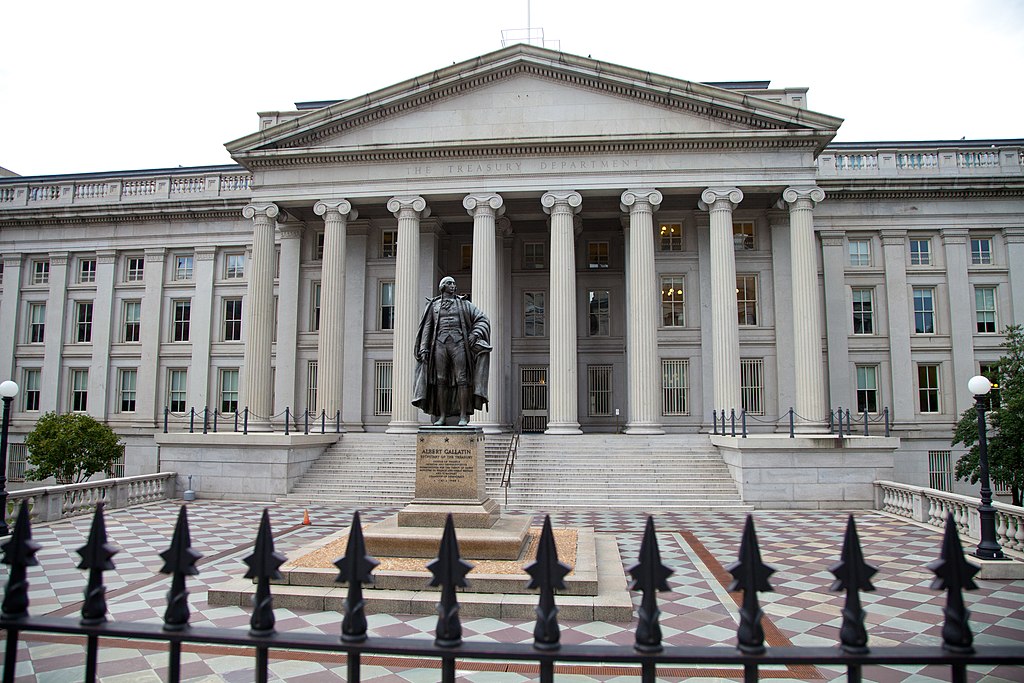
The U.S. Treasury Department is intensifying its investigation into whether cryptocurrency platforms have enabled Iranian officials and state-linked entities to bypass Western-imposed sanctions, according to Ari Redbord, global head of policy at blockchain analytics firm TRM Labs. The focus of enforcement is shifting away from isolated crypto wallets and toward broader crypto infrastructure that can provide repeatable financial access for sanctioned networks.
Redbord explained that while the use of cryptocurrency by sanctioned actors is not surprising, the growing concern lies in the concentration of activity through exchange-linked systems. These systems, which include cryptocurrency exchanges, stablecoin corridors, liquidity hubs, and payment rails, can function as scalable financial infrastructure rather than one-off tools. U.S. authorities tend to intervene most aggressively when sanctions evasion moves beyond individual wallets and becomes embedded in service-layer platforms that sustain ongoing financial activity.
One example cited by TRM Labs is Zedcex, a cryptocurrency exchange allegedly linked to Iran’s Islamic Revolutionary Guard Corps (IRGC). TRM estimates that the platform processed roughly $1 billion in IRGC-related funds, representing more than half of its total transaction volume, with that share peaking at 87% in 2024. Redbord described this as clear evidence of a nation-state actor relying on crypto infrastructure rather than simply laundering funds across multiple wallet addresses.
Concerns in Washington have grown as Iran’s overall crypto transaction volumes surged to an estimated $8–10 billion last year, based on on-chain data from TRM Labs and Chainalysis. In response, the U.S. Treasury recently sanctioned crypto exchanges operating within Iran’s financial sector for the first time, including Zedcex and Zedxion, both registered in the U.K. The Treasury said these exchanges facilitated transactions for the IRGC, which is designated as a terrorist organization by the U.S. and the European Union.
Chainalysis estimates that Iranian wallets received a record $7.8 billion in digital assets in 2025, with roughly half of that activity linked to the IRGC. However, TRM Labs notes that a significant portion of Iran-linked crypto use still comes from retail users seeking to protect savings, access U.S. dollars, and stay connected to global markets amid a weakening rial. Redbord emphasized that sanctions enforcement is most effective when it disrupts liquidity and access points, as rebuilding crypto-based financial infrastructure is far more difficult than creating new wallets.



















Comment 0