

 News
News  Coin Information
  About us
  Customer Service


 Add as a preferred source on Google

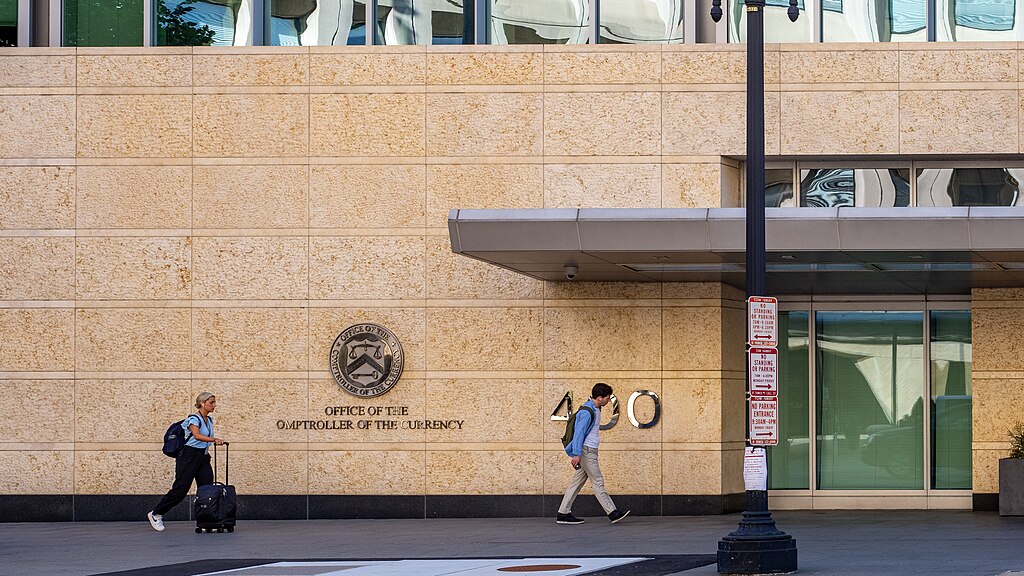
Major U.S. banks are exploring legal action against the Office of the Comptroller of the Currency (OCC) following its decision to expand national trust bank charters to cryptocurrency and fintech companies. The Bank Policy Institute (BPI), which represents roughly 40 large lenders including JPMorgan, Goldman Sachs, and Citigroup, is currently assessing whether a lawsuit could challenge the regulator's licensing approach.
At the heart of the dispute is whether crypto and fintech firms receiving these federal charters are being held to the same regulatory standards as traditional banks. Critics argue the OCC is granting these companies the ability to operate across all 50 states under federal oversight without requiring equivalent supervision. The BPI previously urged the OCC to reject charter applications from crypto companies Circle and Ripple, as well as London-based payments firm Wise, warning that looser standards could weaken existing banking oversight frameworks.
Despite this pushback, the OCC moved forward and issued conditional charters in December 2025 to several crypto-native firms, including Ripple, Circle, BitGo, Fidelity Digital Assets, and Paxos — marking the first time multiple digital asset companies received simultaneous approvals. Additional approvals followed in early 2026, with Crypto.com gaining conditional clearance in February. Morgan Stanley has also filed for a crypto-focused national trust bank charter.
Opposition has grown beyond the BPI. The American Bankers Association called on regulators to pause approvals for firms lacking deposit insurance, while state regulators and community banking groups pressed the OCC to revise its charter framework entirely.
The regulatory debate comes as fintech firm Revolut shifted its U.S. strategy, abandoning acquisition plans in favor of filing fresh charter applications with both the OCC and the FDIC. As digital asset firms gain more regulatory footholds, traditional banks are signaling they may turn to the courts to slow that momentum.















Comment 0